Did dances and whist drives fund Wembley’s 1954 World Championships?
A forgotten funding letter suggests Wembley’s 1954 Worlds may have been powered by club dances and whist drives, not just federation money.
A world championship built on bake-sale energy
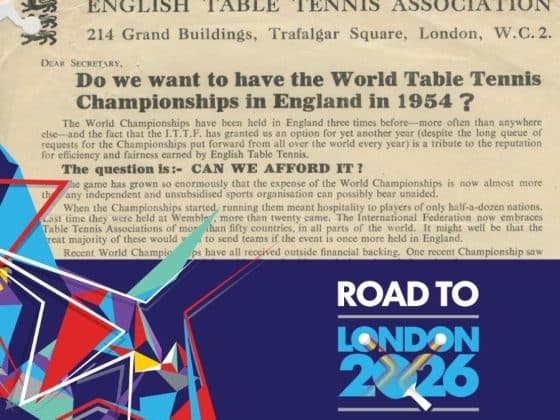
Before table tennis had the polished sponsorship machine it leans on now, the sport’s biggest stages could depend on something far more local: club nights, social drives, and a lot of goodwill. A newly surfaced ETTA letter suggests the 1954 London World Championships may have been held together by that kind of community hustle, with the association unsure it could cover the event and staring at an estimated £4,000 shortfall. The contrast is striking because the sport is now returning to the same Wembley stage for the 2026 centenary finals with official backing, a global calendar, and a far more sophisticated commercial setup.
The letter that turns finance into history
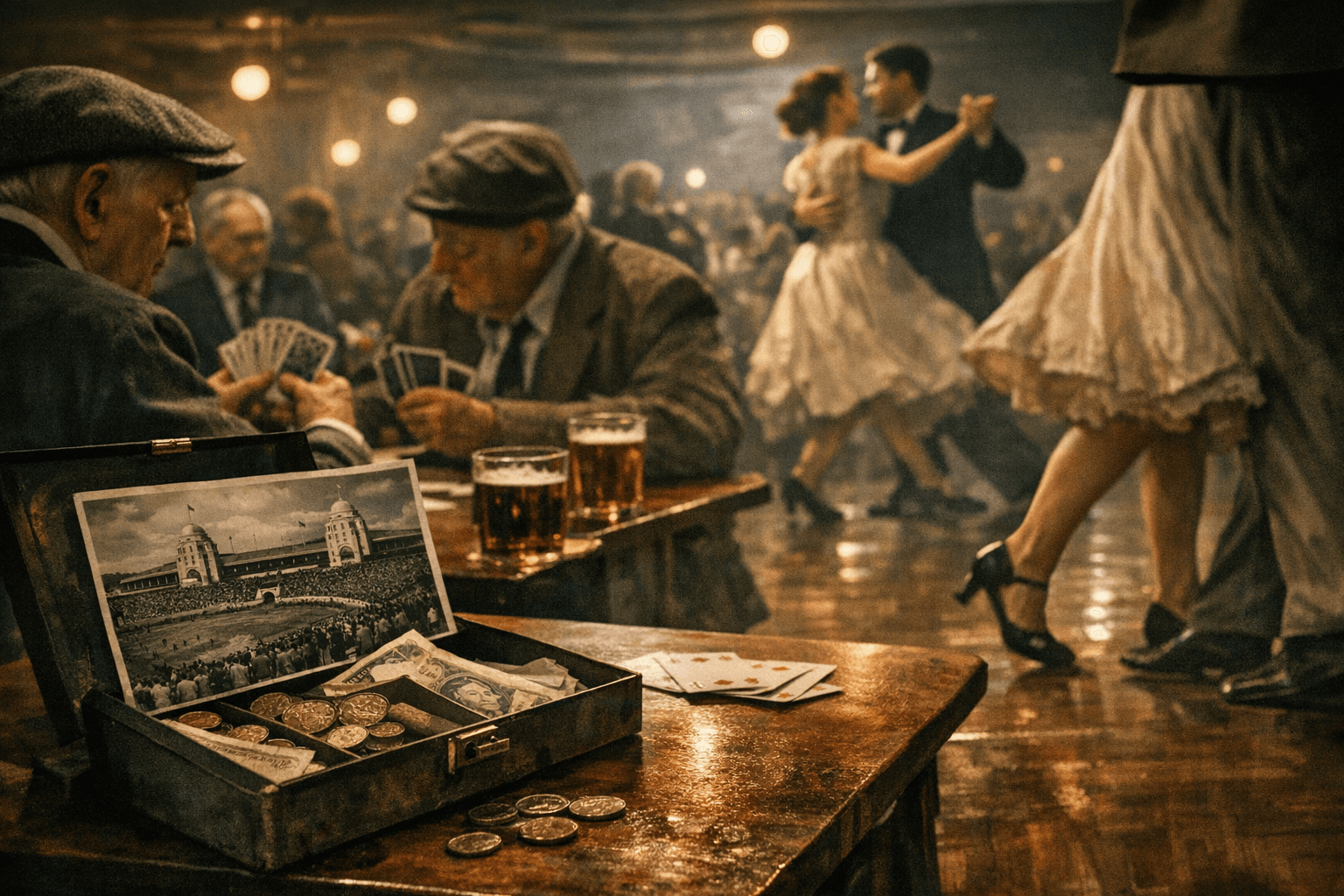
The detail that changes the story is simple and revealing. The letter did not just note the funding gap, it proposed a way to close it: clubs could raise money through special handicaps, dances, or whist drives in 1952 and 1953. That is the kind of suggestion that immediately pulls the 1954 Worlds out of the realm of dry administration and into the lived culture of the sport. It says the people around the game were not only watching elite table tennis, they were being asked to help pay for it.
The same letter also places the 1954 event inside the sport’s bigger growth spurt. It points out that the International Federation now embraced more than fifty national associations, compared with only around half a dozen nations when London first hosted the championships in 1926. That shift matters because it shows why the Wembley event was more than a local rerun. It was part of a sport that had expanded from a small European circle into something genuinely international, even if the money still had to be scraped together with community effort.
Why Wembley in 1954 still feels familiar
The 1954 World Championships ran at Wembley from April 5 to April 14, and the venue already carried the weight of history. London had hosted the championships before, but by the mid-1950s the event had become larger, more demanding, and more visible. The point of the archival letter is not just that the ETTA needed help. It is that the sport’s prestige did not protect it from old-fashioned fundraising methods.
That makes the 1954 story resonate now, because the 2026 ITTF World Team Table Tennis Championships Finals are scheduled for May 1 to May 10, 2026 at OVO Arena Wembley, returning the sport to the same part of London in a completely different era. England was awarded the flagship event at the ITTF Annual General Meeting the previous August, and the tournament has been framed with support from UK Sport and the Greater London Authority. In other words, the same city that once may have leaned on dances and whist drives now hosts a centenary event backed by institutions built for major sport.
The Rowe twins and the human heartbeat of the 1954 Worlds
The best way to understand why 1954 still matters is to look at the players who gave it a face. Diane and Rosalind Rowe won the women’s doubles title on April 14, 1954, and they did it on their 21st birthday. Their victory over Kathy Best and Ann Haydon came in four tight games, 19-21, 21-10, 21-19, 22-20, and it remains the only all-English women’s doubles final ever played at a World Championships.
That final gives the tournament a kind of emotional clarity that a ledger never could. It was not just a title match, it was a landmark moment for English table tennis, staged in front of a Wembley crowd that Diane Schöler later recalled as 10,000 spectators throughout the tournament. For a sport that can sometimes feel hidden in the margins, that is an enormous number, and it helps explain why the 1954 London Worlds still carry such affection.
There is another layer to the Rowe twins’ story that makes their 1954 win even more remarkable. They had already won the women’s doubles title in 1951, when they were 17 years and 320 days old, making them the youngest pair ever to win that event at a World Championships. By the time they reached Wembley in 1954, they were not just promising juniors anymore. They were established stars returning to the biggest stage in the sport.
A sport changing while the old rituals still mattered
The 1954 London Worlds were not only about one famous doubles final. They also featured the first all-sponge men’s singles final, between Ichiro Ogimura and Tage Flisberg, which is a useful reminder that the sport was evolving quickly even as it kept returning to familiar halls. The championships were old enough to carry tradition, but modern enough to show how fast equipment, tactics, and elite play were changing.
That combination is exactly what makes the funding question so interesting. The sport was moving forward technically and internationally, yet the social infrastructure around it still looked deeply local. Special handicaps, dances, and whist drives belong to a world where table tennis was sustained by clubs, members, and community life as much as by governing bodies. The 1954 letter captures that in one neat slice of history: big ambitions, thin finances, and a sport willing to ask its own people for help.
What the centenary return really adds
Seen from 2026, the old Wembley story is not just a piece of nostalgia. It gives the centenary finals a richer frame. The return to OVO Arena Wembley on May 1 to May 10, 2026 is not only a celebration of longevity; it is a chance to measure how table tennis has changed from a community-funded enterprise into a global event with formal support, political backing, and far greater scale. The glamour is still there, the pressure is still there, and the desire to make a memorable world championship still drives everything.
What has changed is the machinery. What has stayed the same is the need for people who believe the event is worth building. In 1954, that belief may have been expressed through a dance hall or a whist drive. In 2026, it arrives through a centenary spectacle at Wembley. The route is different, but the message is the same: table tennis has always depended on the people willing to make it happen.
Know something we missed? Have a correction or additional information?
Submit a Tip