Home Ping Pong Room Setup: Space, Flooring, Lighting, Equipment Checklist
Convert spare rooms into playable ping pong spaces with clear measurements, flooring, lighting and equipment tips that improve play.
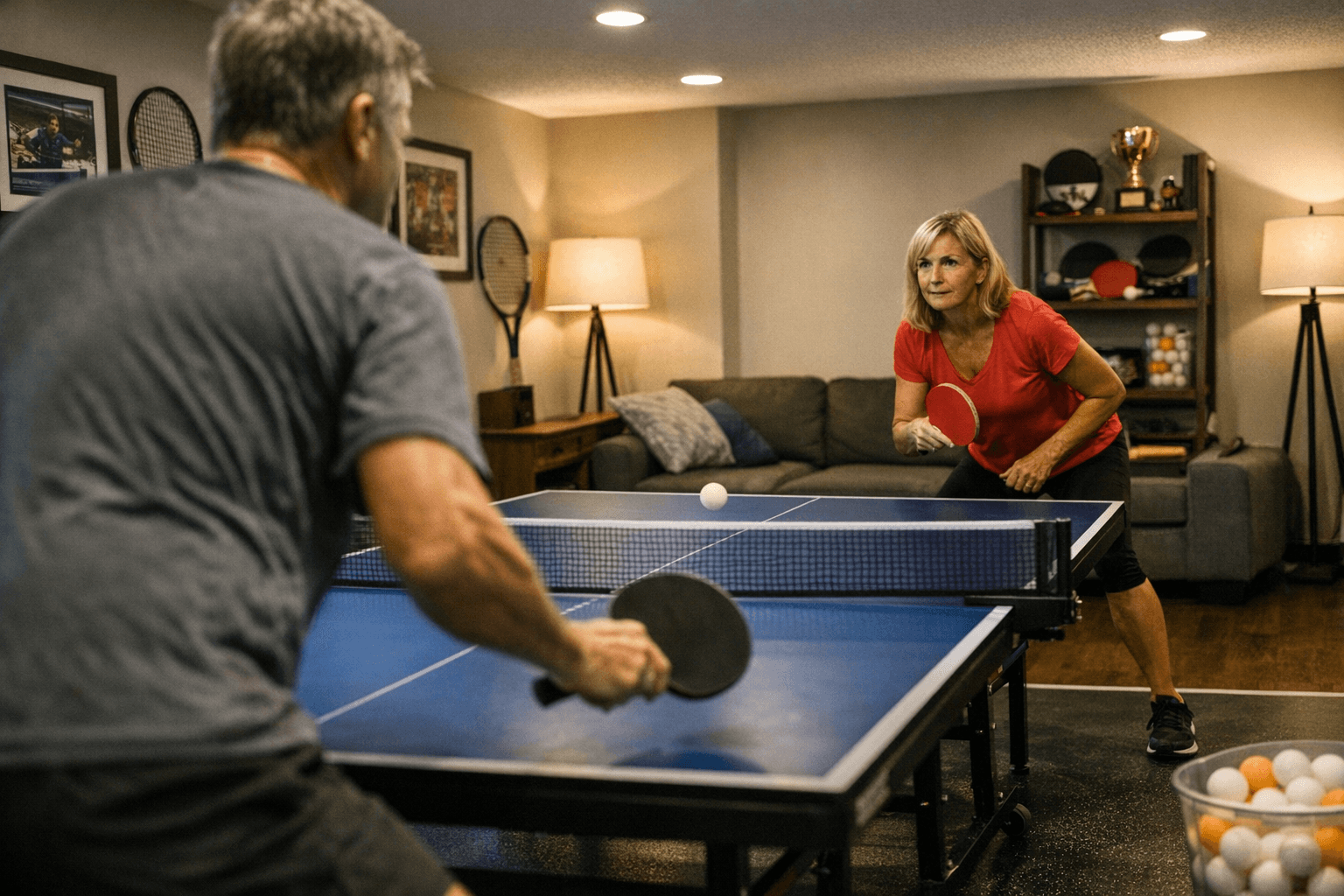
Turning a spare room, garage, basement or multipurpose area into a reliable ping pong space starts with one clear priority: give your footwork room and your eyes a clear view. For regular play, prioritize traction and lighting first, then match table placement, wall color and ventilation to the way you practice and host local rallies.
Measure the space before anything else. Ideally allow 12 ft (3.7 m) of clearance behind each end of the table and 5 to 6 ft (1.5–1.8 m) on the sides for comfortable movement. The absolute minimum for casual play is about 7–8 ft (2.1–2.4 m) behind each end and 4 ft (1.2 m) on the sides. Ceiling height matters too - aim for at least 8–9 ft (2.4–2.7 m) to avoid clipped lobs, and 10 ft or higher for sustained play.
Place the table centered in the room’s best rectangle; when space is tight, diagonal placement can squeeze extra usable movement out of a small footprint. If you own a foldable or tournament table, allow clearance to fold and store it without catching a wall or fixture. Mock up the footprint first: mark the table dimensions on the floor with tape so you can test movement and sightlines before buying flooring or lights.
Flooring determines how long you can practice without sore knees. Avoid slick tile and polished concrete and install a resilient sports floor or interlocking sport tiles to improve traction and reduce joint stress. Rubber mats under the playing area dampen noise, protect the subfloor and give better push-off for footwork. For a phased budget approach, start with quality second-hand tables and rubber tiles, then upgrade to club-grade flooring as usage and funds grow.
Good lighting makes the ball visible and preserves timing on serves and fast rallies. Aim for even, glare-free illumination in the 500-800 lux range for casual to club play. Position lights perpendicular to the table centerline or use diffused LED panels rather than a single overhead bulb that casts shadows. Adjustable diffusers work well in multipurpose rooms where lamps double duty.
Walls and background affect visibility and concentration. Paint or cover nearby walls in a neutral, dark matte color such as navy, dark green or gray so the white or orange ball pops. Avoid glossy surfaces and mirrors behind players. Clip-on or clamp-style nets make the space portable; a tournament net is a better investment for a permanent setup. Keep a stash of 3-star training balls, spare paddles, towels and a small ball bucket within arm’s reach, and store extra gear in a nearby cabinet.
Noise, airflow and safety complete the picture. Acoustic panels or rugs cut echo in basements, and ventilation or a fan keeps players comfortable during long sessions. Remove trip hazards like cords and loose rugs and keep exits well lit. For multi-use rooms, rolling tables or foldable panels let you convert space quickly.
What this means for local players is practical: measure first, prioritize traction and lighting, mock up the table footprint, then add durable equipment and background contrast to level up practice. Start small and upgrade in phases so the room serves both weekend matches and club-style training as your group grows.
Know something we missed? Have a correction or additional information?
Submit a Tip