How to choose the right ping pong paddle for your game
Learn how blade, handle, rubber, and sponge choices affect speed, spin, and control, plus ITTF rules and step-by-step tips for buying or customizing your paddle.
1. Start with your playing goals and style
Choose a paddle based on whether you prioritize control, spin, or outright speed, and be honest about how you play. If you rally, block, and work on placement, prioritize control and a softer sponge; if you loop and attack, look for more spin and a thicker sponge; if you like power drives, weight and carbon layers will matter. Knowing your style saves time and money when you upgrade from a cheap premade bat to a custom setup.
2. Blade construction: plys, carbon, and arylate explained
Blades are typically built from multiple wooden plys; more plys or denser woods usually create a harder, faster feel. Composite layers like carbon add stiffness and pop, giving you faster shots and a larger sweet spot but often reducing dwell time for spin control. Arylate-carbon layers smooth the impact and can soften the feel while keeping speed, which helps players who want power without completely sacrificing touch.
3. Handle types and how they affect grip and touch
Handles normally come in flared, straight, and anatomic shapes, and the choice changes grip comfort and wrist control. A flared handle widens at the butt for a secure shakehand grip and is the most common choice for recreational and club players. Straight handles allow easy switching between forehand and backhand grips and benefit players who like precise wrist adjustments, while anatomic handles curve to fit the palm and can reduce slippage for players with a specific hand shape.
4. Rubbers and sponge thickness: speed, spin, and control trade-offs
Rubber composition and sponge thickness are the core trade-offs between speed, spin, and control. Thicker sponges (e.g., 2.0 mm and above) increase catapult and speed and usually boost spin potential when combined with tacky or grippy topsheets; thinner sponges (less than 2.0 mm) give more control and feedback, ideal for blocking and consistent rallies. The topsheet rubber tackiness and pimple structure (pips-in vs pips-out) also influence spin behavior and defensive options, so match rubber type to your tactical needs.
5. How sponge thickness specifically affects performance
Sponge thickness changes dwell time and launch angle: thicker sponges compress more and then spring back, producing faster shots and higher bounce, but they often reduce fine control on short touches. Thinner sponges give longer contact feel, better placement, and more predictable blocking at the expense of maximum speed. Experiment with small increments of thickness (e.g., 1.8 mm → 2.0 mm → 2.2 mm) to find the balance between your spin generation and control reliability.
6. ITTF approval and colour rules you must know
If you compete, pick rubbers stamped with ITTF approval, those are legal for sanctioned tournaments and avoid last-minute equipment headaches. Also follow the colour rule: one side must be bright red and the other black so opponents can read your spin and anticipate play. Make sure any custom setup retains the certifications and that repaired or replaced rubbers come from ITTF-approved sheets.
7. Pre-assembled paddles versus custom blade+rubber setups
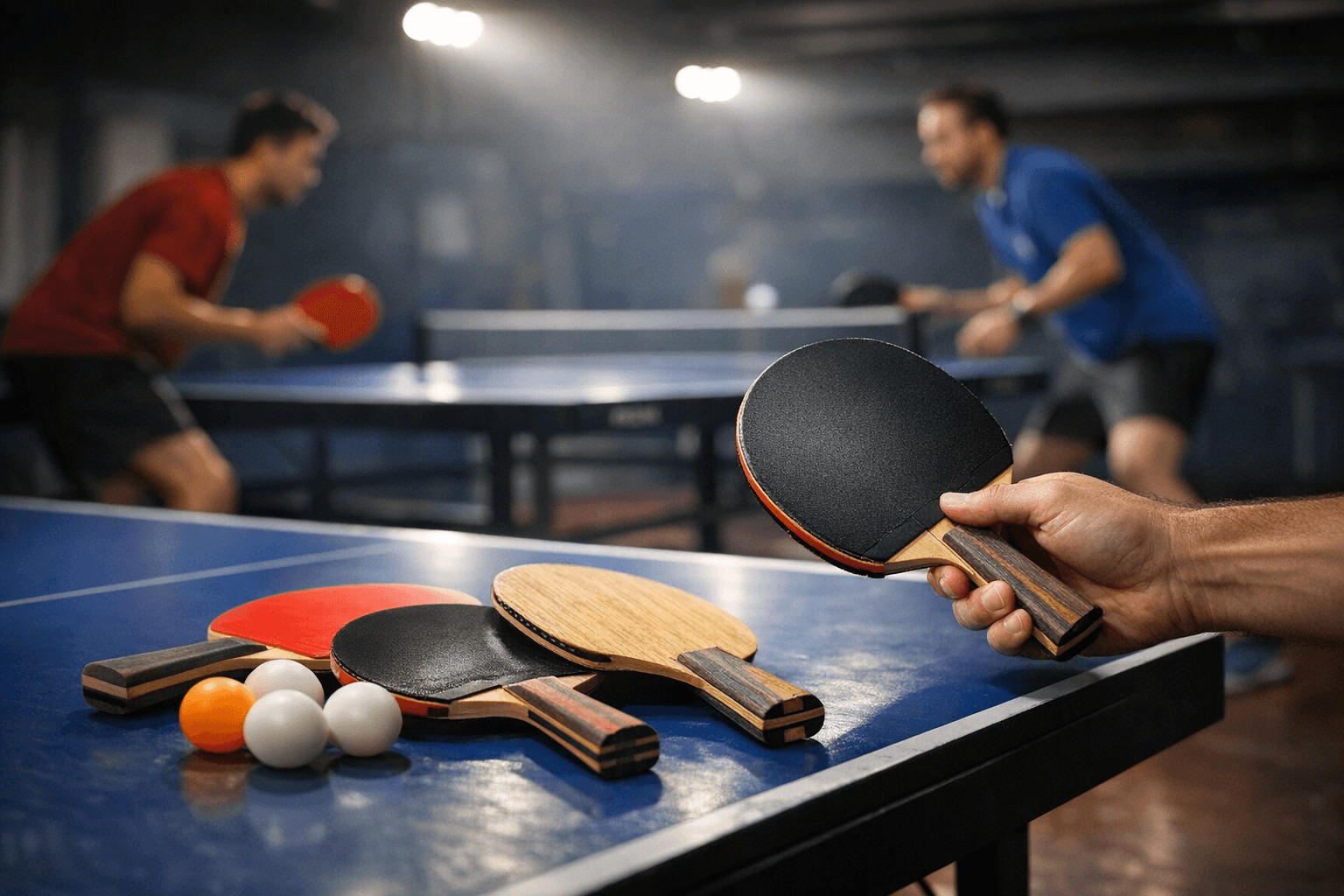
Pre-assembled paddles are convenient and cheaper, offering a consistent, out-of-the-box feel for beginners and casual players. Custom blade+rubber setups let you tailor blade stiffness, weight distribution, rubber type, and sponge thickness for your exact game; they require glueing, trimming, and sometimes edge tape, but they reward you with a higher performance envelope as skills progress. For most hobbyists, start with a quality premade to learn fundamentals, then move to custom when you want measurable gains.
8. Recommendations by skill level
Beginners should choose a balanced, control-oriented premade or a simple custom blade with thin sponge rubbers to emphasize consistency and technique rather than raw speed. Intermediate players benefit from medium-hard blades (5-7 plys or composite with arylate) and medium-thickness sponge (1.8–2.0 mm) to add spin and transition into offensive play. Advanced players can use faster carbon or high-ply blades with thicker sponges (2.0–2.4 mm) and high-spin rubbers, tuned for aggressive looping and sharper angles.
9. Purchase and customization checklist: glue, edge tape, grip mods
When you buy or build, follow these practical steps to finish your paddle properly: use table tennis-specific water-based glue for attaching rubbers to blades and allow proper curing time to maximize adhesion and playability. Apply edge tape to protect the blade from chips and moisture and to keep glue from seeping out; choose breathable tape so it won’t trap moisture. For grip tweaks, sand or add thin grip tape to the handle, or wrap it with a cloth overgrip for better sweat management and comfort.
10. Maintenance, try-before-you-buy tips, and community trade tricks
Store your paddle in a case to preserve rubbers and prevent dust from killing tackiness; replace rubbers when spin noticeably drops or rubber becomes pitted. Try gear at local clubs, swap bats with clubmates, and ask to demo setups, many players are happy to share a bat for a few rallies, which is the best way to feel differences in real play. • Keep a small glue kit and spare edge tape in your bag for quick fixes • Rotate rubbers if you alternate between defensive and offensive styles.
The takeaway? Your paddle should evolve with your game: start safe with control, then trade incremental speed and sponge thickness for more spin and bite as you build technique. Our two cents? Test as you go, lean on club friends for tryouts, and remember the best paddle is the one that makes you want to play one more set.
Know something we missed? Have a correction or additional information?
Submit a Tip