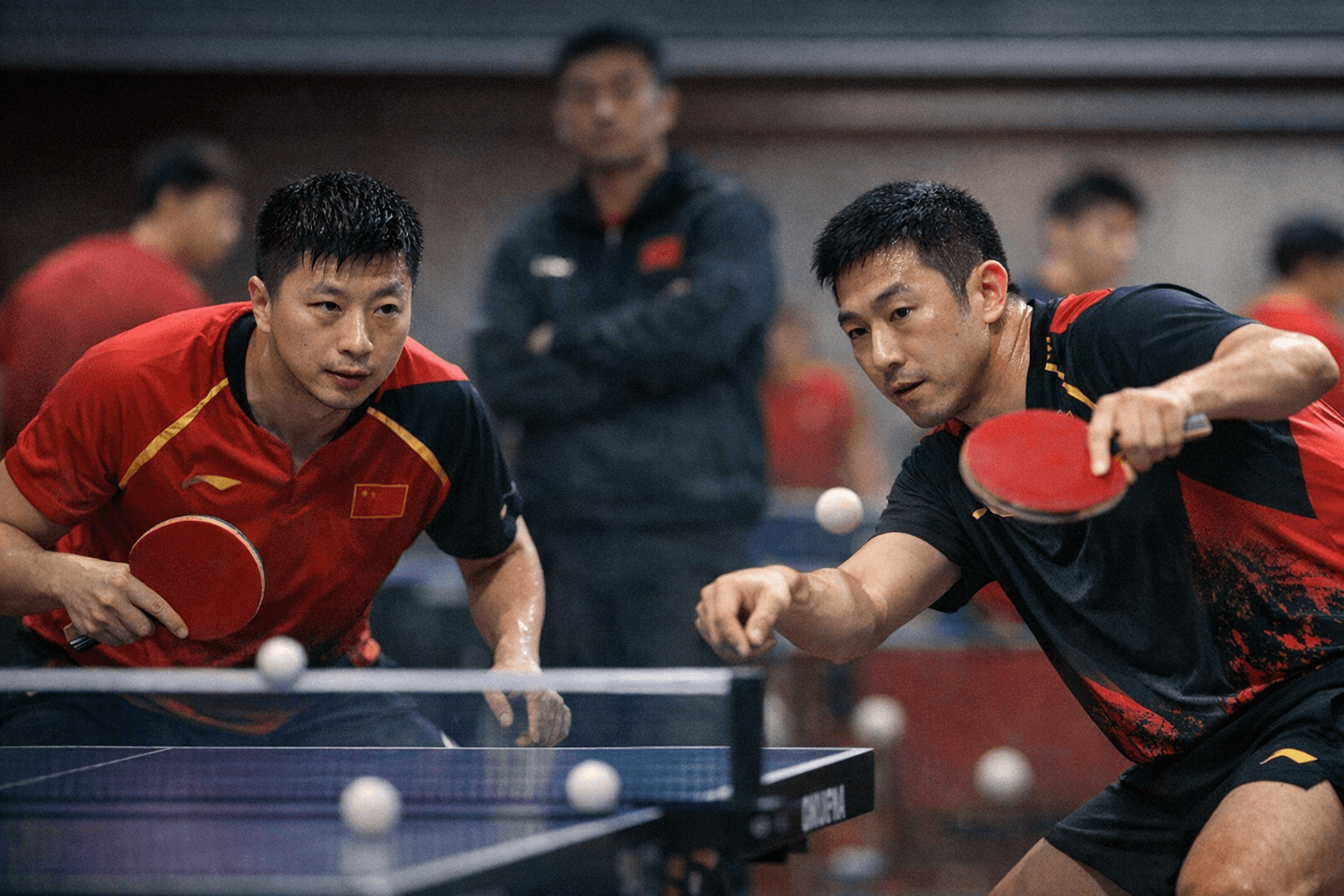
ITTF opens youth events to Russian, Belarusian players under new rules
The ITTF split youth from senior eligibility for Russian and Belarusian players, opening a new pathway for juniors while keeping neutrality rules in place for elites.
The International Table Tennis Federation has drawn a new line in the sand for Russian and Belarusian players: youth and age-group events are moving toward access, but senior elite play remains under the current neutrality regime.
On 15 April, the ITTF Executive Board said it was developing a separate regulatory framework for youth competition that would allow athletes holding Russian and Belarusian passports to enter ITTF-sanctioned age-group events under standard youth protocols. The board paired that move with a clear brake pedal. Implementation depends on defined safeguards being developed, formalized and communicated before the framework is shared with stakeholders.
That distinction matters far beyond one eligibility ruling. By keeping senior neutrality rules in place while opening a pathway for juniors, the ITTF has created a precedent that could shape future fights over who gets to play where, and at what age. For national associations, coaches and event organizers, the practical effect could show up first in youth entry lists, then in ranking pathways, then in long-term development plans as the new rules settle into the calendar.
The board said it took the step after reviewing the changing international picture, including developments at the IOC, the IPC and other federations. Its decision leans on the IOC Executive Board recommendation backed at the 14th Olympic Summit on 11 December 2025 in Lausanne, Switzerland, that youth athletes from Russia and Belarus should no longer be restricted from international youth competitions. That followed an IOC process that began after the 11th Olympic Summit in December 2022, when the IOC was asked to explore a route back for athletes with Russian or Belarusian passports as Individual Neutral Athletes. The IOC then issued recommendations for federations and event organizers on 28 March 2023, and its participation Q&A has been updated repeatedly since.
For table tennis, the timing is especially consequential because the ITTF is not a small circuit operator. Founded in 1926, it says it now has 227 member associations and sanctions about 120 international tournaments every year. Its 2026 calendar already includes a busy youth ladder, with WTT Youth Contender and WTT Youth Star Contender stops across multiple continents. Any rule change in that lane can ripple quickly into draws, selection decisions and development pathways.
The federation’s own rulebook will now matter as much as its political posture. The latest ITTF Statutes point to the 2026 statutes as the place where the sport’s current rules and regulations are carried, which means the youth framework will have to be aligned there before it can function in practice. The message from the board was cautious but unmistakable: junior access may be opening, and that could reshape the next generation of the elite field long before the senior ban structure moves at all.
Know something we missed? Have a correction or additional information?
Submit a Tip