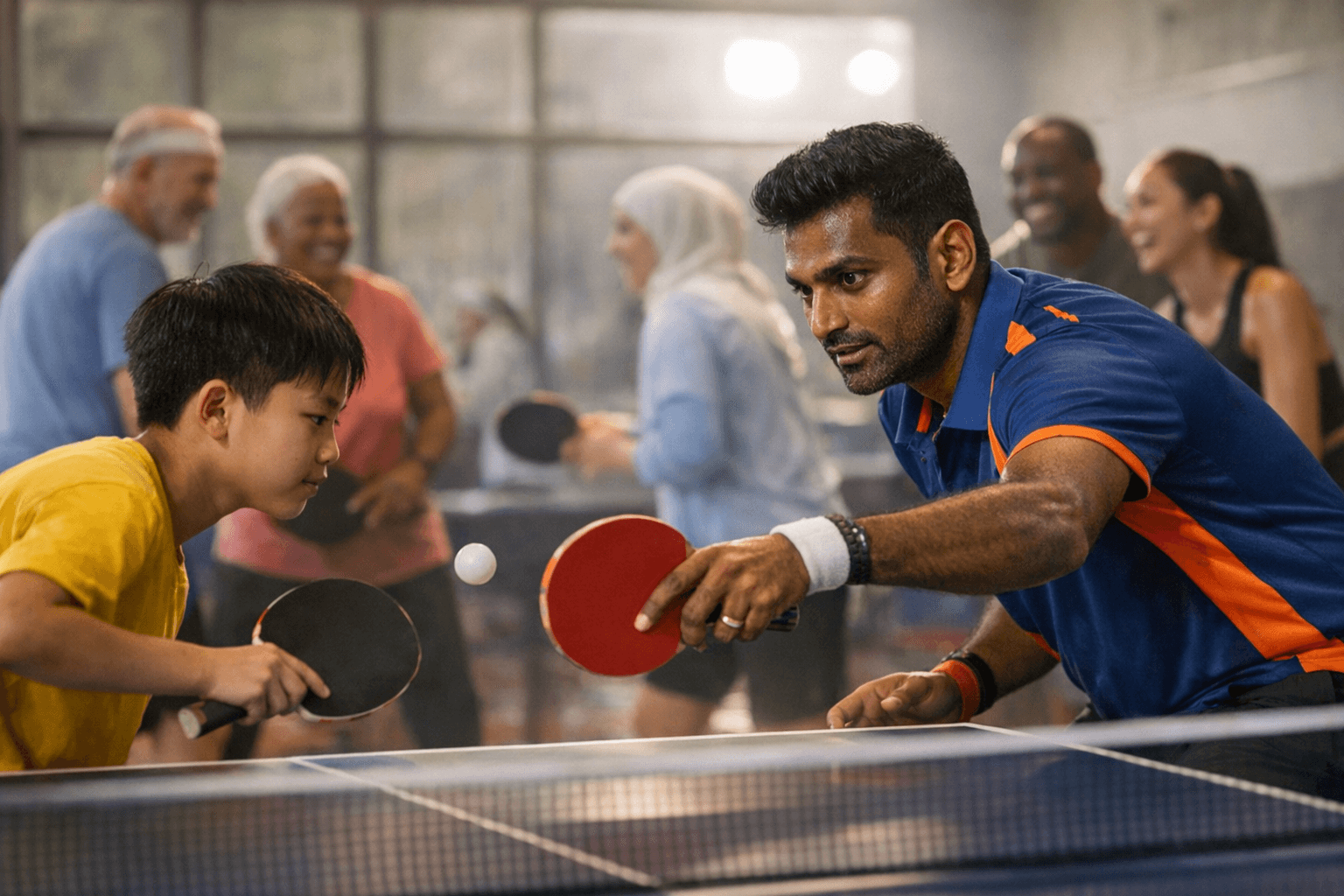
Organizers' Practical Playbook for Launching and Sustaining Community Ping-Pong Nights
A practical playbook lays out step-by-step planning, equipment, programming, and budgeting so organizers can start and sustain weekly or monthly community ping-pong nights.

Organizers can turn casual rallies into a reliable weekly or monthly community ping-pong night by following a compact, repeatable plan that prioritizes throughput, safety, and inclusivity. Choose a clear format up front: social open play, coached beginner night, themed tournament, or a mixed session. Set an age and skill remit, pick a consistent night and time, and reserve a venue with at least 2–6 tables to keep lines moving and maximize court time.
Venue setup matters more than most organizers expect. Install non-slip flooring or temporary mats, provide clear overhead lighting centered on each table, and protect walls and fixtures where soft balls might ricochet. Leave at least 5–6 ft between table edges for movement and recovery. Provide seating for waiting players, a visible scoreboard or whiteboard for sign-ups and rotation, and a basic first-aid kit on site.
Equipment is straightforward and budget-friendly. Use tournament-grade or sturdy recreational tables, or converted tops if space is tight. Keep reliable nets, a loaner set of paddles, and bags for balls. Stock a supply of 3-star plastic balls and replace them as they wear. Carry spare rubbers, edge tape, cleaners, a pump for multi-surface balls if needed, and hand sanitizer for hygiene.
Player management systems should be simple. Operate a short reservation window or accept walk-ins, run beginner-friendly rotations with short games to 11 and rotating partners, and recruit volunteer captains to oversee courts. Post a clear code of conduct and give a brief safety and etiquette briefing at the start of each session. Charge a transparent low-cost entry fee to cover venue, balls, and incidentals; offer donation or business-partnership models for venues reluctant to add fees.
Programming keeps regulars coming back. Rotate formats with a ladder, round-robin socials, coach-the-coach evenings, short skill clinics focused on serve and receive, doubles-only nights, exhibition matches to draw newcomers, family sessions, and occasional charity tournaments. Build community through targeted promotion: local Facebook groups, Nextdoor, community newsletters, posters at gyms and universities, and direct outreach to schools and senior centers. Encourage sharing photos and short clips to social media to attract beginners.
Prioritize accessibility and safety. Run low-cost or free first-timers’ nights, offer sessions for seniors and adaptive players, provide adjustable tables or ramps when needed, and recruit multilingual volunteers where relevant. Maintain hygiene by cleaning rubbers, rotating paddles, inspecting floors and tables for hazards, and replacing worn balls.
Track attendance metrics, collect feedback, and run a quarterly mini-tournament to refresh interest. Use a simple per-night budget template that sums venue, utilities, balls, and marginal advertising, and cover costs with nominal fees, donations, or local sponsorships. Follow these practical steps and you will keep the spin alive, grow a dependable core of players, and turn a one-off ping-pong night into a sustainable community fixture.
Know something we missed? Have a correction or additional information?
Submit a Tip