Para Table Tennis World Future Series Gets Underway in Yalova, Türkiye
Classification day reshuffled brackets before a ball was struck in competition, as para athletes from China, Türkiye, Brazil and across Europe descended on Yalova chasing Future-tier ranking points.
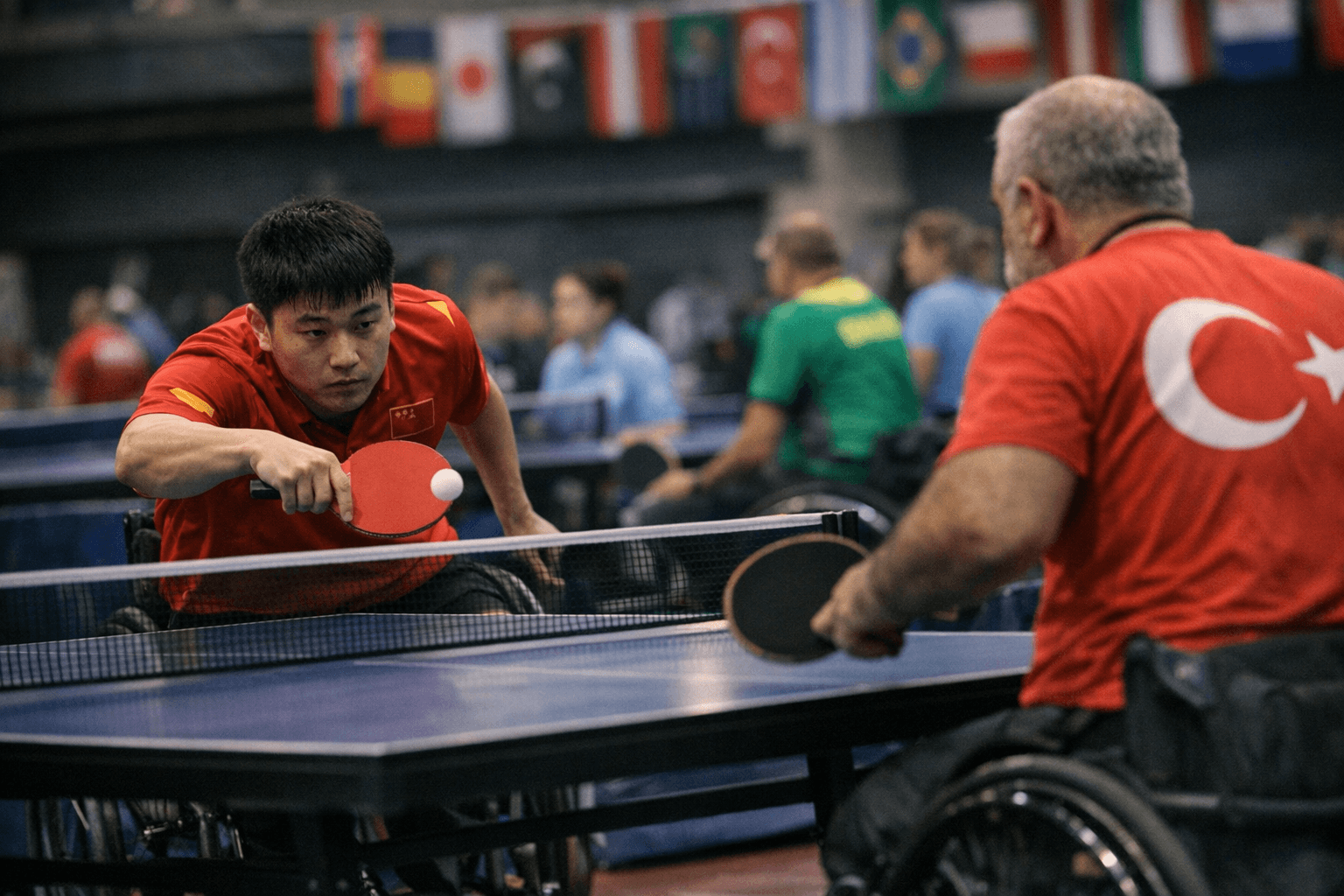
Classification day in Yalova carried real weight before a single rally was played. When athletes arrived at the Grand Thermal Hotel Sports Hall for the ITTF World Para Future Yalova 2026, the classification windows running 31 March through 1 April were not a formality: a player's confirmed sport class determines their draw, their opponents, and the world ranking points they are eligible to collect. For anyone whose classification status was new or under review, those two days shaped the entire week.
The tournament spans classes 1 through 11, which cover the full breadth of para table tennis. Classes 1 to 5 are wheelchair divisions, separated by the degree of sitting balance and arm function; a Class 1 player has minimal trunk control and a significantly affected playing arm, while a Class 5 athlete has full sitting balance and normal hand function. Classes 6 through 10 are standing divisions for players whose impairments allow them to compete on their feet, and Class 11 is reserved for athletes with intellectual disabilities. Within each class the competition is self-contained, meaning a powerful Class 3 wheelchair player never faces a standing Class 9 athlete; the structure exists precisely to produce meaningful, equitable results.
Three classes in particular are worth tracking through the knockout rounds. Class 3 and Class 5 in men's singles have historically drawn large international entry fields at Future-level events, and both were populated here by athletes from China, Türkiye, and Brazil, three of the more active nations on the entry list. The Turkish contingent, competing at home in Yalova, an established regional venue for international para events, had an obvious motivation to perform with national federation selectors watching. Class 9 in the standing divisions, meanwhile, tends to surface players with explosive footwork and aggressive topspin games that can cause upsets deep in the draw.
Group-stage play ran 2 and 3 April, with quarterfinal and round-of-16 pairings posted to the ITTF live-results platform as brackets compressed into knockout play. The scheduling model is deliberately compact: groups finish, draws update publicly, and coaches at pitchside or halfway across the world can pull up opponent analysis in real time on the results page at results.ittf.com. Singles competition concludes before doubles and mixed doubles take centre stage on 4 and 5 April, giving athletes with multiple entries a genuine second route to points.
The stakes of a Future-tier finish extend well beyond the Grand Thermal's scoresheets. Yalova sits third on the nine-stop 2026 Future calendar, after Gold Coast and Costa Brava and ahead of Santiago and Buenos Aires later in April. Points earned here feed directly into seedings for Challenger and Elite-tier events later in the year, and with the ITTF World Para Table Tennis Championships set for Pattaya in November, every ranking calculation between now and then carries qualification weight. For smaller federations with tight travel budgets, a Future stop accessible by road or short flight is frequently the most practical way to bank international points without the expense of a Grand Smash-level event.
Follow the live draw and updated results at the official ITTF tournament page, where group tables, knockout brackets and final placements for all 11 classes are refreshed continuously through 5 April.
Know something we missed? Have a correction or additional information?
Submit a Tip