Ping Miami Launches Three-Month Adaptive Table Tennis Pilot for Seniors
Ping Miami rolled out a three-month adaptive table tennis pilot to make play accessible for seniors and people with limited mobility.

A new pilot program is bringing lowered tables, foam balls and larger-handled paddles to Tuesday morning sessions aimed at older adults and players with limited mobility. Ping Miami designed the three-month pilot to prioritize accessibility, gentle exercise and social connection as organizers gauge demand and plan future offerings.
Sessions focus on hand-eye coordination and light aerobic activity rather than competition. Coaches are using a slower-pace curriculum that scales drills and rallies to individual comfort levels, and volunteer helpers set up modified equipment and assist players during play. Partnerships with local senior centres will provide transport for some participants, removing a common barrier to joining community sport programs.
Ping Miami program director Roberto Sánchez said: “Table tennis is uniquely inclusive, it can be scaled to many ability levels. We’ve had early interest from seniors who used to play years ago and want to return in a supportive setting.”
The pilot runs weekly on Tuesday mornings and will last three months. Organizers will collect participant feedback throughout the trial to decide whether to adopt the adaptive program long term and to allocate possible scholarship spots for participants who need financial support. Attendance, player comfort with modified gear, and social engagement are expected to be central measures in that review.
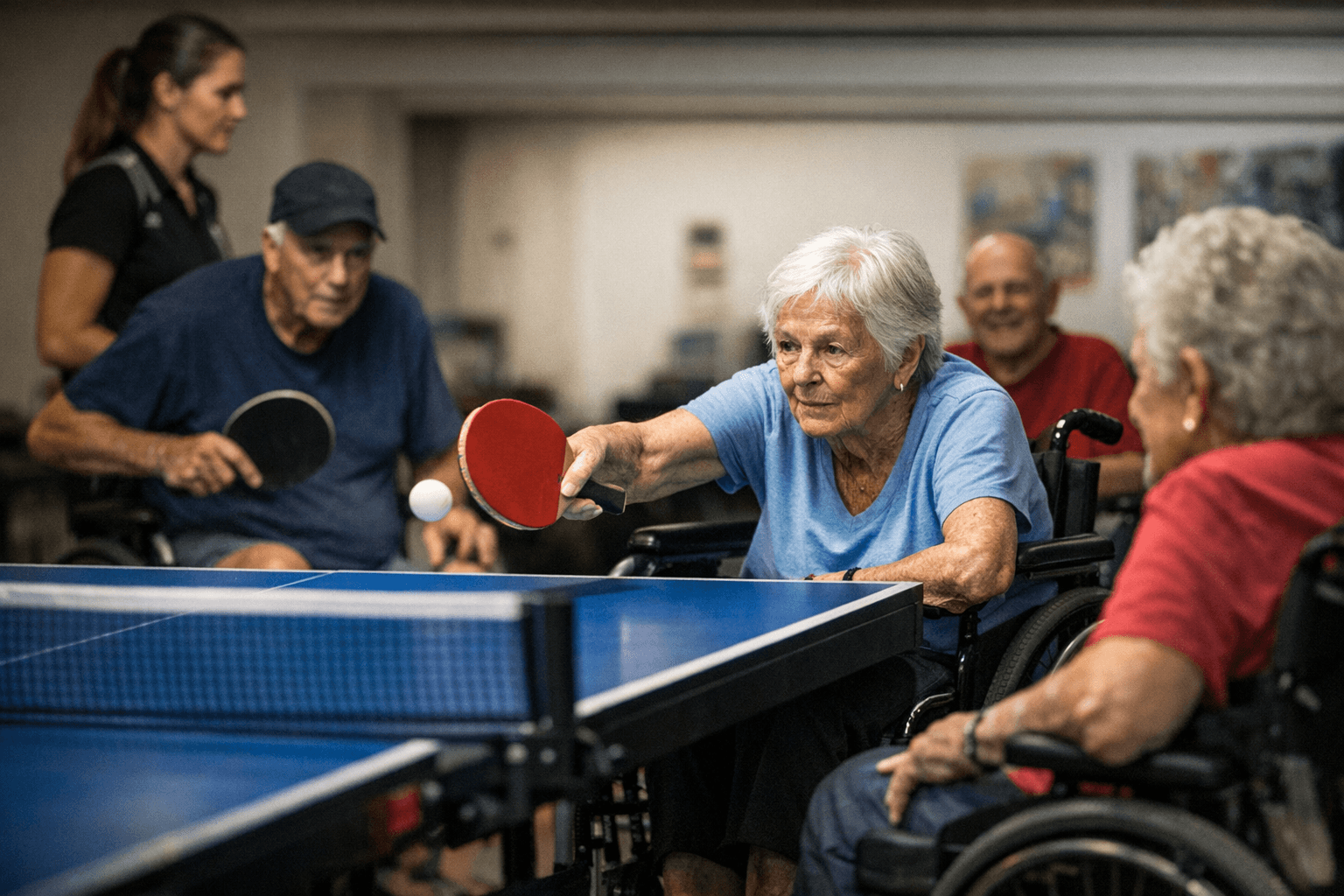
For players who have not picked up a paddle in years, the gear adjustments change the experience. Lowered table heights shorten reach and reduce strain on shoulders, foam balls slow the pace of play and reduce risk of injury, and larger-handled paddles make grip changes easier for hands with arthritis or reduced dexterity. Coaches are adapting basic serves, forehands and short rallies so newcomers can build confidence before attempting longer rallies or more spin-oriented shots.
The program also aims to strengthen community ties. Volunteer helpers operate as on-court support, making logistics smoother and providing one-on-one encouragement, while senior-centre partners coordinate transport and outreach. Those elements make the pilot practical for seniors who want exercise, social time and safe play without needing to commit to high-intensity training.
Ping Miami’s adaptive pilot positions table tennis as an inclusive recreational option that accommodates varying mobility and fitness levels while preserving familiar elements of the game. If feedback supports expansion, organizers may extend sessions beyond the pilot, add more time slots, and offer subsidized places through scholarship spots. For players ready to return to the table or try ping pong for the first time in years, this pilot offers a low-pressure way to reconnect with the sport and the local table tennis community.
Know something we missed? Have a correction or additional information?
Submit a Tip