Ping-Pong Paddle Buying Checklist for Beginners: Style, Budget, Goals
A practical checklist breaks down how to pick a first ping-pong paddle based on play style, budget and goals, giving beginners clear steps to avoid common gear mistakes.
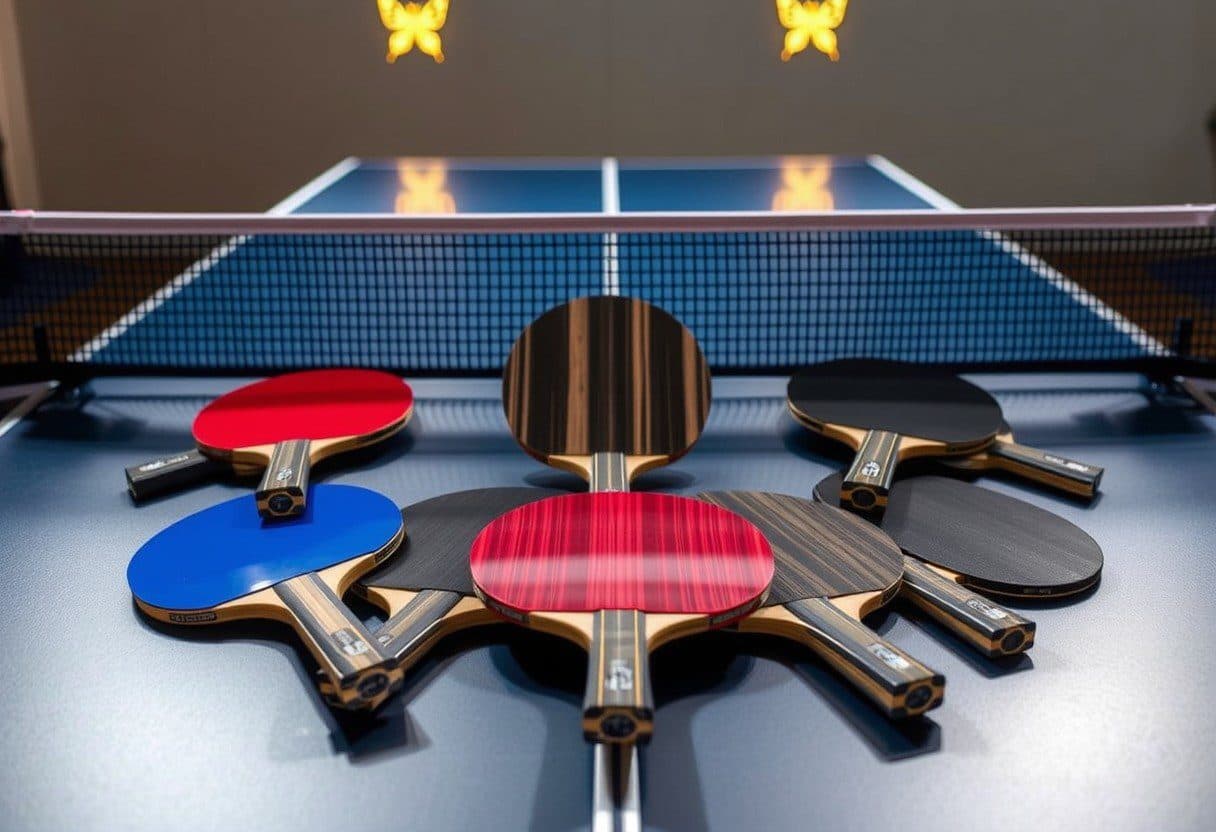
Choosing your first ping-pong paddle can feel like navigating a spin cycle of options, but a focused checklist cuts through the noise by matching paddle type to play style, price range and development goals. The most important choice is whether to buy a pre-assembled paddle or build a modular setup; pre-assembled paddles are fine for absolute beginners who play socially, while a blade plus separate rubbers gives room to grow for club players and competitors.
Prioritise control over raw speed. Beginners make faster progress when their setup favors consistency and feel. Look for blades rated medium to slow and rubbers with mid to low sponge firmness to tame pace and make learning topspin, blocks and serves more reliable. High-speed, hard-sponge combinations amplify mistakes and can slow skill development.
Grip and blade dimensions affect comfort and stroke mechanics. Choose a grip shape that fits your hand: flared handles offer secure wrist support, straight handles let you adjust grip during rallies, and anatomic handles fit curved palms. Test a handle in-hand if possible; playing a 10- to 15-minute rally is the quickest way to spot grip fatigue or slippage.
Start with inverted rubbers for allround versatility. Inverted faces provide predictable spin and rebound across drives, loops and pushes. Avoid specialty rubbers such as short pips, long pips or anti-spin until you understand basic ball behaviour; those surfaces excel in niche tactics but mask fundamental technique if used too early.
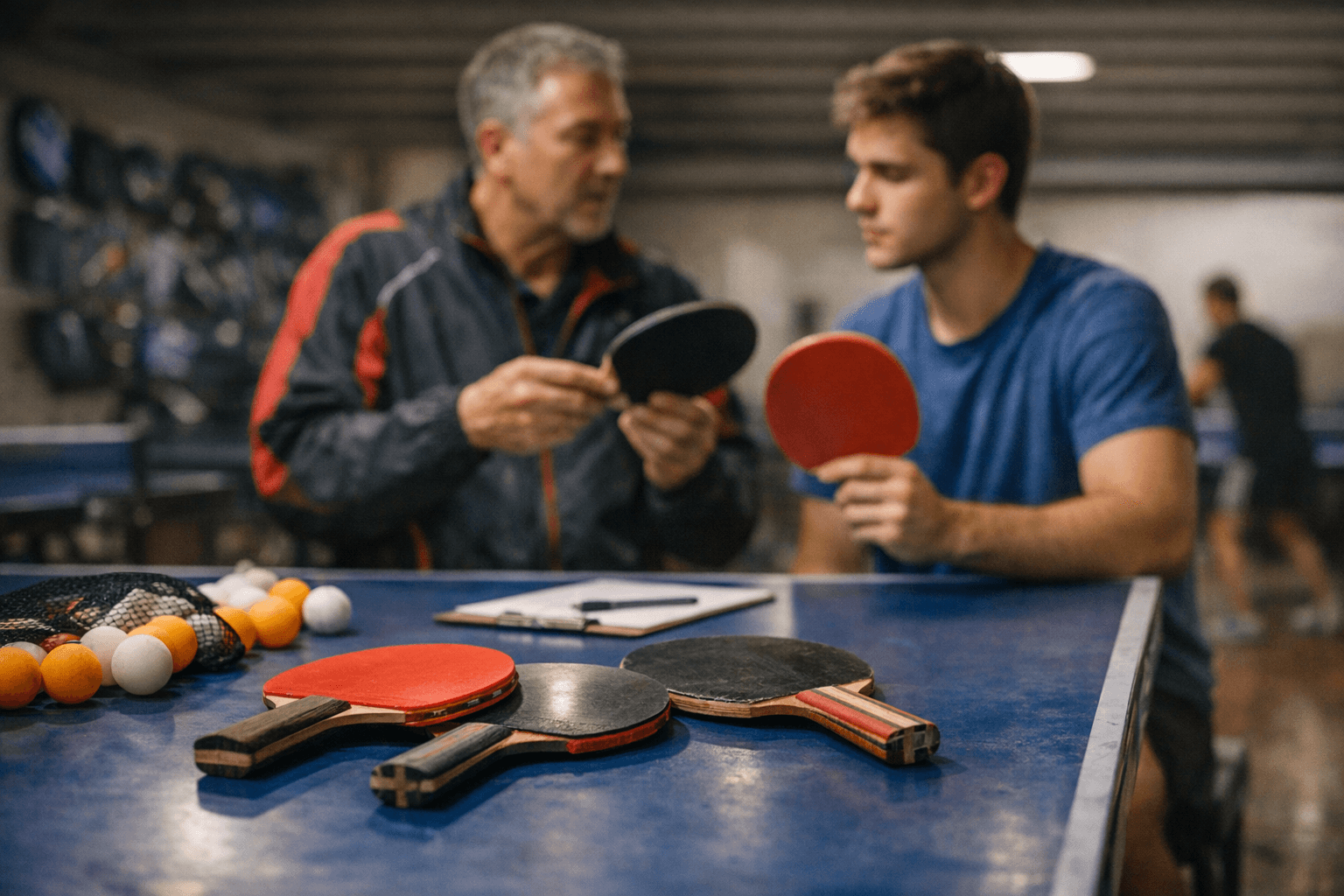
Daily care keeps a paddle consistent. Clean rubbers after play with a soft sponge or a purpose-made cleaner, store paddles in a case away from direct heat and sunlight, and keep them flat to protect the glue joint. Plan to replace rubbers after 6 to 12 months of regular play; replacement frequency depends on hours per week and how aggressively you train.
Match equipment to goals with a simple decision flow. Social player equals low-cost pre-assembled paddle for casual fun and immediate playability. Club player equals a mid-price blade plus separate rubbers to fine-tune feel and spin without overspending. Aspiring competitor equals investing in a quality blade and tournament-grade rubbers to gain equipment consistency at higher levels.
What this means for you: start with control, get comfortable with grip and feel, keep rubbers clean, and upgrade deliberately as your game demands. That approach saves money, reduces gear-acquisition temptation and puts practice time where it matters most.
Know something we missed? Have a correction or additional information?
Submit a Tip