Table Tennis Canada Builds Officials Pipeline Through Arctic and Canada Winter Games
Table Tennis Canada is turning multi-sport events into an officials factory, linking volunteers from Québec City and beyond to sport chair roles at the 2027 Canada Winter Games.
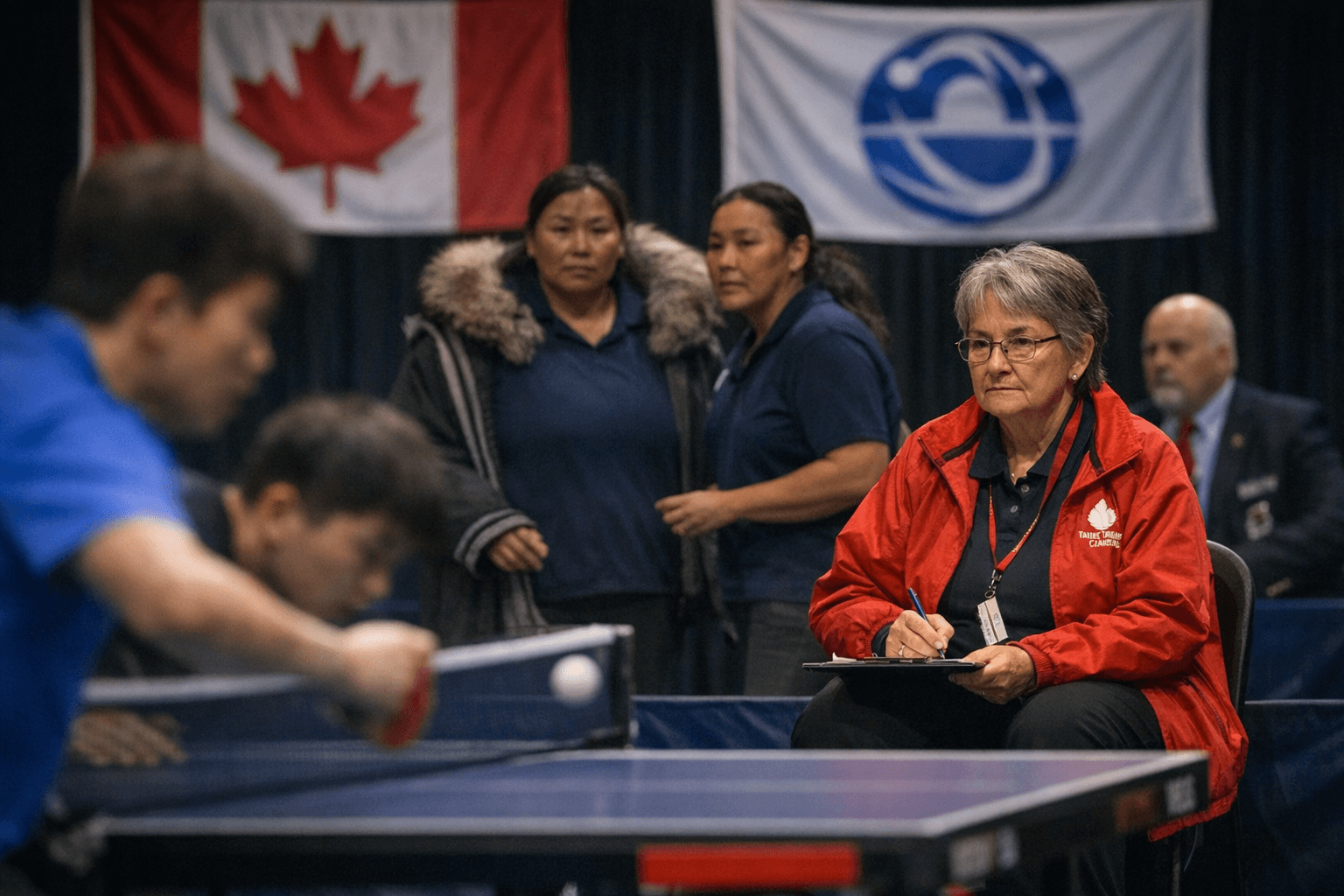
Table Tennis Canada's latest push to develop the next generation of officials runs straight through two of the country's most storied multi-sport platforms: the 2026 Arctic Winter Games and the 2027 Canada Winter Games. The federative model being built around these events is less about prestige matchplay and more about something the sport needs just as badly: trained, experienced humans who can run a table tennis operation from the ground up.
Building Officials Where the Sport Needs Them Most
Technical officials are the invisible scaffolding of competitive table tennis. Without qualified umpires, referees, and sport chairs, events stall, competitive integrity erodes, and athletes don't get the experience they came for. Table Tennis Canada's March 2026 feature puts this problem front and centre: the pathway to developing those people doesn't start at a national championship. It starts at events like the Arctic Winter Games, where the field is smaller, the stakes are regional, and the learning curve is survivable.
The federation has been deliberately connecting volunteers and officials to leadership roles at these multi-sport events. That means positions like sport chair and local organizing committee responsibilities, not just line judging or scorekeeping. Giving early-career officials actual administrative authority is what separates this model from simply putting someone through a certification course and calling it development.
The Arctic Winter Games as a Proving Ground
The 2026 Arctic Winter Games serve as the live training environment in this pipeline. Northern and provincial circuits don't always generate the match volume that major metropolitan centres do, which makes structured roles at a multi-sport event particularly valuable. An official gaining experience at the Arctic Winter Games is learning to coordinate across sports, work with organizing committees from different disciplines, and manage the logistical reality of running a sport in a context where table tennis is one of many moving parts.
That cross-sport collaboration is a specific competency that routine club or provincial tournament work rarely develops. When a sport chair has to communicate with a broader games organizing committee, negotiate court time, manage athlete processing alongside other sports, and represent table tennis at a planning table full of other federations, the experience translates directly to higher-level event management.
Québec City and the Real-World Pathway
Table Tennis Canada's feature names a participant from Québec City as a concrete example of this development model in action. That detail matters because it grounds the initiative in geography: this isn't exclusively a program for officials already embedded in national structures. The pipeline is pulling in people from provincial centres and giving them a ladder to climb, connecting their early experience at a multi-sport event to a defined role ahead of the 2027 Canada Winter Games.
The logic is straightforward. The Canada Winter Games represent one of the largest domestic multi-sport competitions in the country, and table tennis needs qualified, experienced officials to run the discipline well when that stage arrives. Building those officials two years out, through the Arctic Winter Games circuit, means the 2027 event isn't being staffed by people encountering multi-sport administration for the first time.
What the Placements Actually Develop
The roles being offered through this initiative are not ceremonial. Table Tennis Canada frames the placements as covering three distinct competency areas:
- Event planning: officials are embedded in pre-event organization, not just brought in for match days
- Match oversight: the core technical function, with officials gaining supervised reps in competitive settings
- Multi-sport collaboration: working within a broader games structure where table tennis must advocate for its own needs while fitting into a shared operational framework
Each of these is a transferable skill. An official who has chaired a sport at the Arctic Winter Games understands how to write a competition schedule, manage draws, handle protests, and report upward to a games organizing committee. That official is categorically better prepared to support a national or eventually international championship than one whose experience is limited to single-sport provincial events.
A Blueprint for Provincial Associations
The broader implication of Table Tennis Canada's approach is that regional multi-sport events, often overlooked in favour of national championships as development venues, are structurally well-suited to this kind of official training. They offer real competitive stakes without the unforgiving pressure of a national title event. They force officials into administrative roles rather than purely technical ones. And they create relationships between table tennis officials and the wider sport administration community.
For provincial associations looking to convert a one-off event opportunity into something with lasting impact, this model provides a clear template. The key is intentionality: actively placing officials in roles with genuine responsibility, creating a documented progression from smaller events to larger ones, and connecting those placements to specific future events, as Table Tennis Canada has done by threading the Arctic Winter Games experience directly into preparation for the 2027 Canada Winter Games.
The Long View on Staging Capacity
Official development is slow work. Certifications matter, but the hours logged running actual events matter more. Table Tennis Canada's decision to invest in that experiential layer through the Arctic Winter Games and the Canada Winter Games pathway signals an understanding that competitive integrity at the top of the game is only as strong as the pipeline of qualified people supporting it from below.
The officials being developed right now in northern circuits, including that participant from Québec City who represents the human face of this initiative, are the same people who will be staffing domestic championships and eventually supporting international events held on Canadian soil. Starting that journey at the 2026 Arctic Winter Games, with a defined next step at the 2027 Canada Winter Games, is exactly the kind of long-range planning that turns a volunteer pool into a professional officiating corps.
Know something we missed? Have a correction or additional information?
Submit a Tip