Top-50 table tennis stars test 100-year-old bats ahead of London 2026
Two top-50 players discover how much modern table tennis depends on rubber and carbon fibre, as London 2026 revives the sport’s 1926 roots.
Why the 100-year-old bat challenge hits harder than a novelty clip
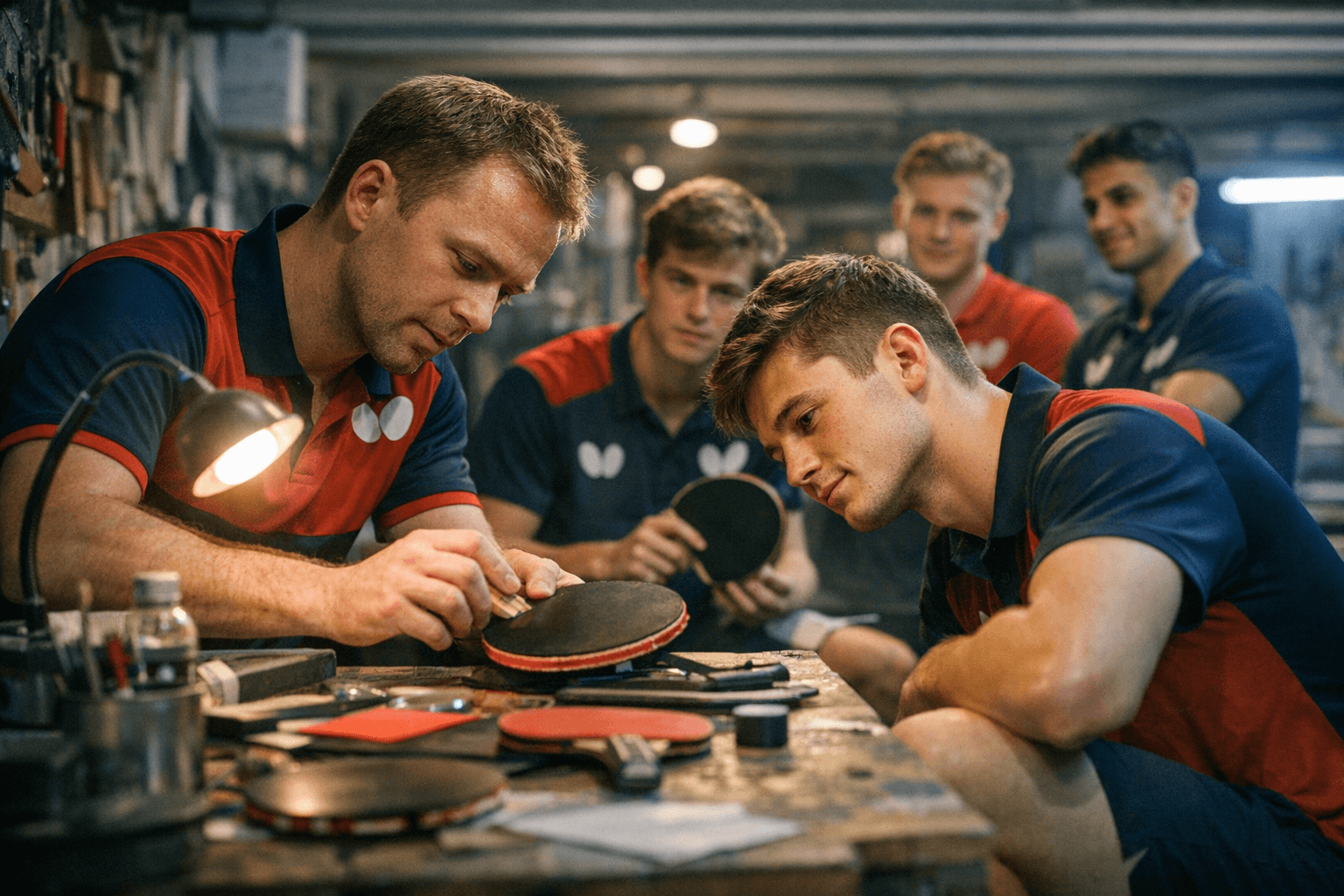
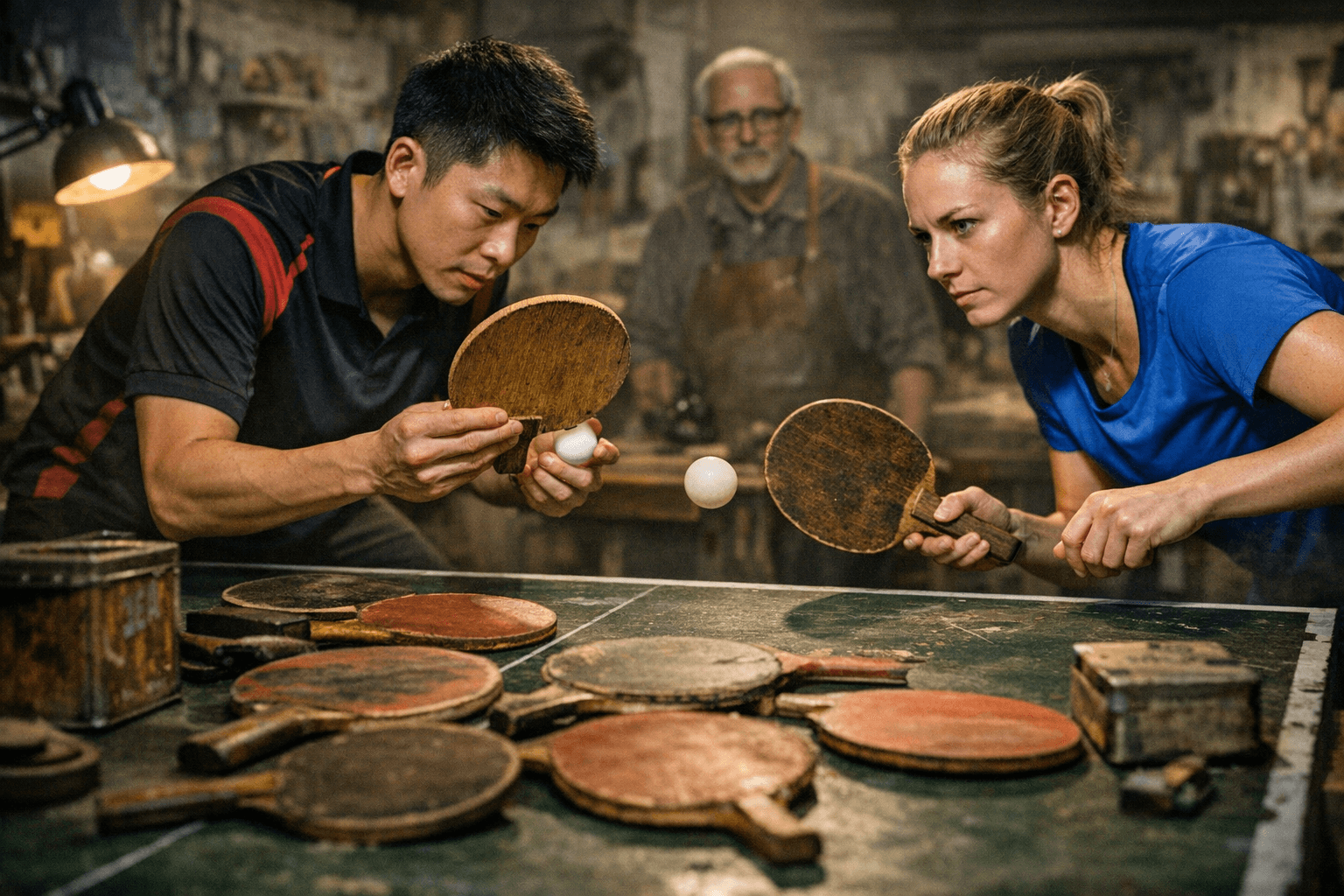
Sathiyan Gnanasekaran and Finn Luu did not just pick up a quirky piece of kit for a laugh. The top-50 pair were handed yesterday’s equipment to show exactly how much modern table tennis now depends on the bat as much as the athlete, and the contrast is stark enough to make even seasoned club players rethink what “feel” really means.
That is the real value of the 100-year-old bat challenge. It turns a playful film into an equipment lesson, exposing how much speed, spin and control today’s game gets from advanced blades and rubbers. Strip that technology away, and the same shots become harder to execute, less forgiving on contact, and much more dependent on pure touch and timing.
London 2026 brings the sport full circle
The timing matters. The ITTF World Team Table Tennis Championships Finals London 2026 are scheduled for 28 April to 10 May 2026, with play spread across Copper Box Arena and OVO Arena Wembley. The event will feature 64 men’s teams and 64 women’s teams across 13 days, making it the largest team competition in the event’s history.
The centenary framing gives the challenge extra punch. The international federation was founded in London in 1926, and the inaugural World Table Tennis Championships were held there the same year, so the 2026 finals are being positioned as a return to where the sport’s global story began. That is why this film lands as more than promotion: it gives the championships a clear identity, one rooted in history as much as elite performance.
What changes when modern rubber disappears
The easiest way to understand the challenge is to look at what the modern bat does for a player. Today’s competition rackets are built around highly engineered blades and approved rubbers, which allow far greater grip on the ball than older wooden or sandpaper-style bats ever could. That extra grip is what lets top-level players load up on sidespin, topspin and sharp changes in pace while still keeping the ball on a tight line.
The ITTF rulebook allows a racket to be any size, shape or weight, so long as the blade is flat and rigid. In practice, though, modern players rely on materials that turn that simple frame into a precision tool. Remove those layers of technology and the game shifts immediately: serves bite less, loops lose their venom, countering from distance becomes less explosive, and touch shots become even more valuable.
That is why the film works so well as an equipment analysis. It shows the difference between a racket that helps create the shot and a racket that mostly asks the player to manufacture everything from the hand. For fans, that is the most revealing part of the experiment: table tennis has always been a skill sport, but modern rubber has pushed the ceiling far higher.
Sathiyan and Finn make the contrast easy to see
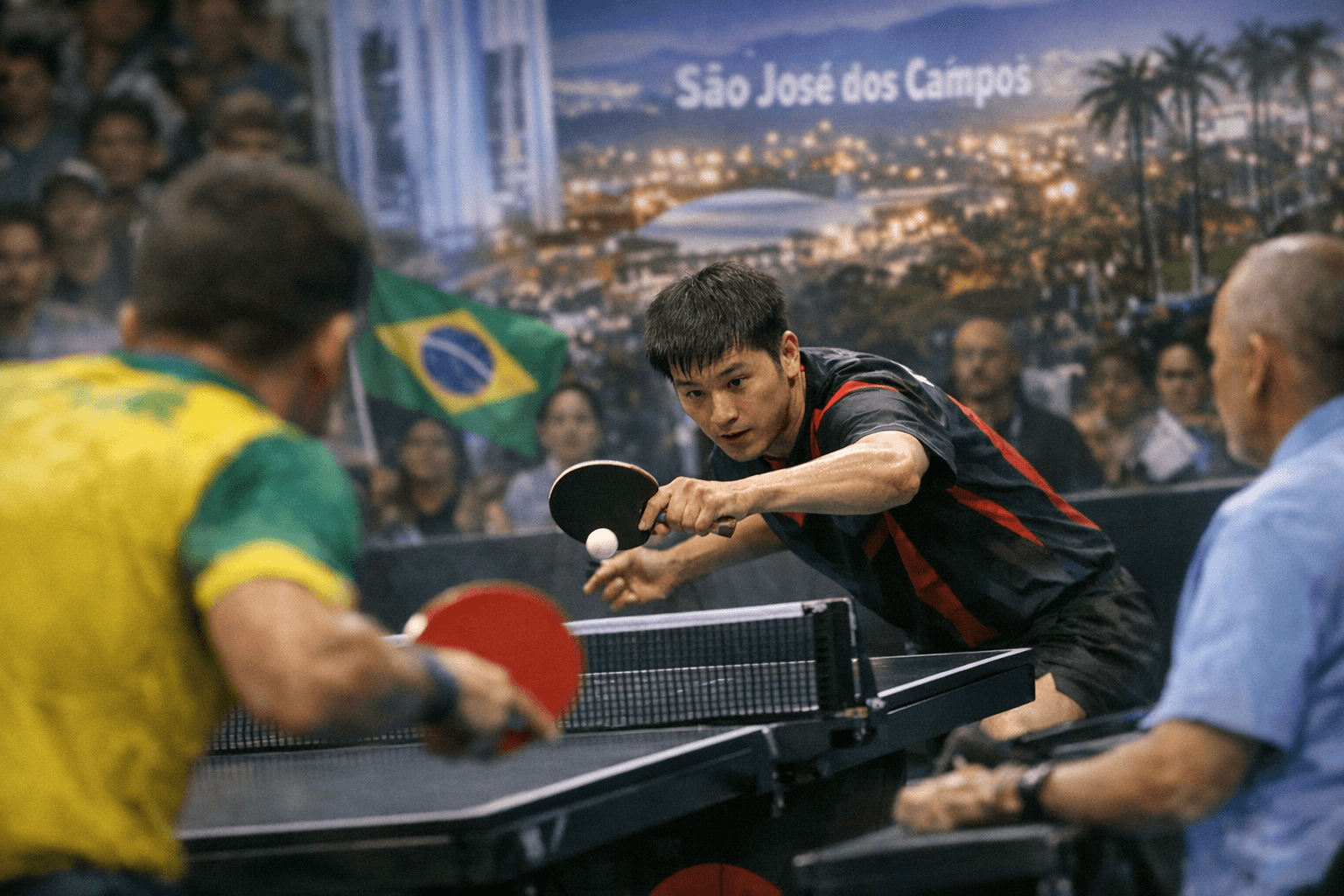
The choice of Sathiyan Gnanasekaran and Finn Luu gives the film credibility. They are not novelty guests, but genuine elite players, with the ITTF’s men’s singles rankings dated 20 April 2026 listing Sathiyan at No. 42 and Finn at No. 45. That matters because the challenge is only interesting if the players already know how the modern game should feel.

Their attempts with older equipment make the central point visible in seconds. When the bat no longer supplies the same spin potential or speed, the shot selection narrows fast. Big opening loops become less automatic, short game becomes more about surviving awkward contact, and rallies take on a different rhythm because the ball does not jump off the racket in the same way.
For club players, that is the practical lesson. The film is not only about nostalgia or a one-off stunt; it is a reminder that the modern game many people train for is built on a layered relationship between technique and equipment. The bat is not the whole story, but it changes the whole story.
The long road from parlour games to a world championship
The historical backdrop stretches well beyond 1926. The ITTF Museum points to David Foster’s 1890 patent for Parlour Table Games as one of the earliest surviving examples of a table-tennis-style set, showing how far back the sport’s roots reach into Victorian England. That kind of detail matters because it explains why the centenary year feels bigger than a standard championship cycle.
By the time the London Congress met on Tuesday 7 December 1926, with the foundation meeting held at the Duke of York’s Room, the sport was already moving from parlour pastime to formal international competition. Table Tennis England’s history material also notes that triple events were planned in London that December, a reminder that the game’s early structure was built around organization, identity and the question of how the sport should be governed.
That history makes the 2026 return to England feel especially neat. The championships are not just coming back to a familiar market; they are returning to the place where the federation itself began, which gives the tournament a clear narrative spine for fans, media and the broader table tennis community.
Why this film matters beyond the launch hype
This is the kind of feature that does more than advertise a tournament. It helps newer viewers understand why a modern rally looks so fast and why equipment debates still matter in a sport that can seem deceptively simple from the outside. It also gives long-time players a concrete way to explain what changes when speed glue-era power, carbon-fibre construction and grippy rubbers define the baseline.
Table Tennis England’s decision to frame the piece as a film on its YouTube channel gives it another layer of usefulness. It is easy to watch, easy to pass around inside club circles, and easy to use as a conversation starter about how the sport evolved from Victorian parlours to the high-speed, high-spin era that will define London 2026.
The bigger takeaway is simple: this challenge shows that table tennis history is not just about old photographs and anniversary dates. It is about how much of today’s game depends on technology, and how different the sport feels when that technology is taken away.
Know something we missed? Have a correction or additional information?
Submit a Tip