TTGearLab Finds Design Differences Affect Performance in DONIC Whiper Blades
TTGearLab's lab review found veneer and fiber-layer placement in the DONIC Whiper Outer Carbon and Inner Carbon change playing characteristics, guiding players' blade choices.

TTGearLab's lab-style review examined the new DONIC Whiper series and concluded that clear differences in construction translate into different on-table behavior. The report focused on two variants, DONIC Whiper Outer Carbon and DONIC Whiper Inner Carbon, and evaluated build structure, veneer layout, and the placement of synthetic fibre layers to see how those design choices affect performance.
The testing, published February 8, 2026, broke down the Whiper models by where carbon layers sit relative to the wood veneers. TTGearLab measured and compared the two architectures rather than treating the Whiper line as a single, uniform product. That approach exposed how Outer Carbon and Inner Carbon configurations change stiffness, feel and energy transfer in typical strokes, which matters to players choosing a blade for specific styles or rubber pairings.
For practice players and club coaches, the practical takeaway is straightforward. Blade construction is not cosmetic; veneer thickness and the position of carbon layers influence dwell time, sweet spot behavior and feedback on push and counterloop shots. Players who already have a sense of how a blade should respond will notice differences when switching between Outer Carbon and Inner Carbon, and should factor that into rubber selection and training sessions.
The review gives actionable context for equipment decisions without turning into a buying guide. TTGearLab’s lab setup allowed side-by-side comparisons, giving clubs and players a repeatable way to assess blades: test drives in live rallies, attention to touch on short game exchanges, and observation of trajectory and control during high-speed loops. Those steps will help you confirm which Whiper variant suits your game before investing in rubbers or making a full equipment change.
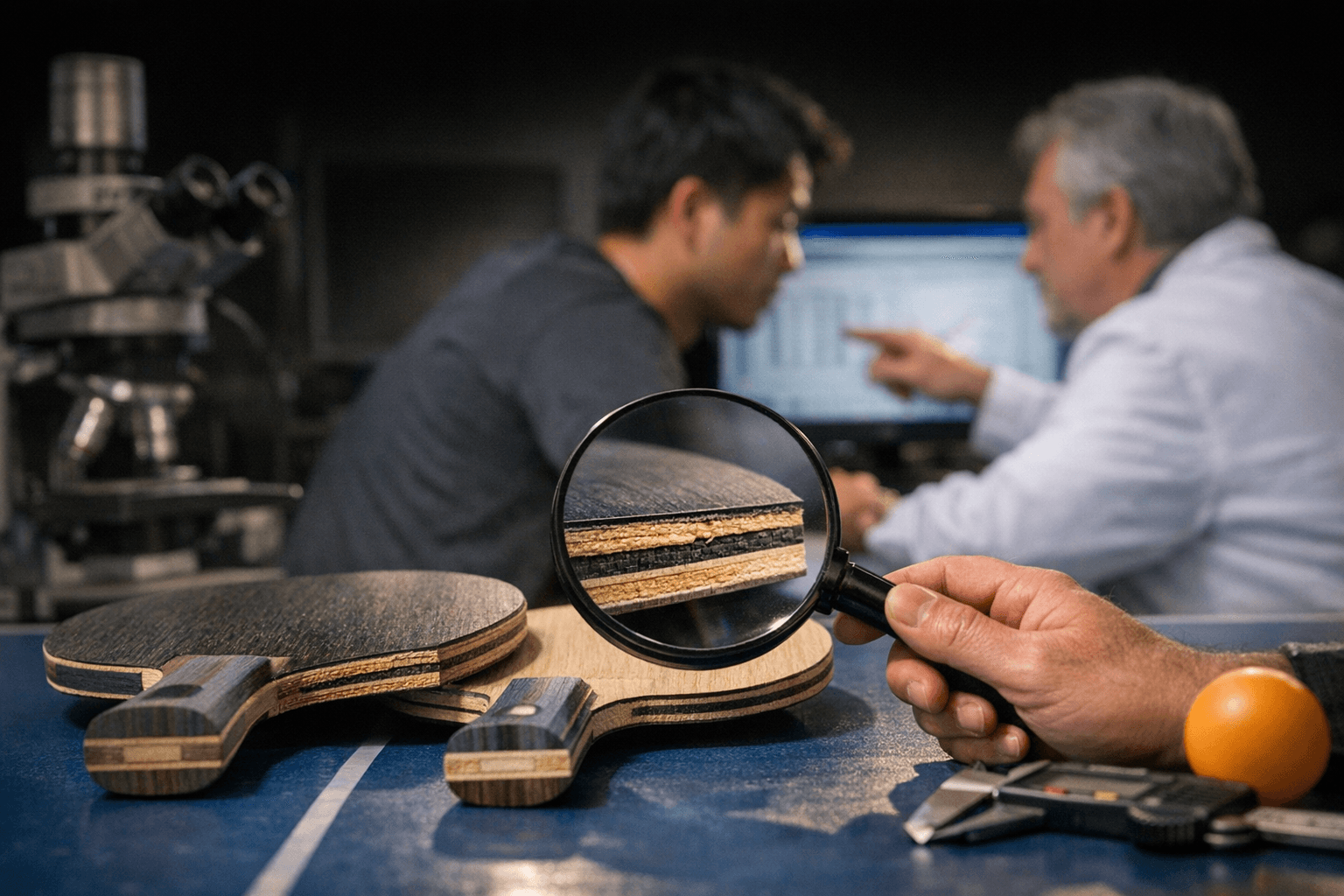
Manufacturers and coaches will also find the report relevant. The Whiper results underline that small shifts in layer placement produce meaningful changes in playing characteristics. That detail is useful when advising younger players who are switching from allround blades to carbon options, or when coaches tailor equipment to refine timing and contact point.
TTGearLab’s findings mean you should not assume two blades from the same series will feel identical. Test both the DONIC Whiper Outer Carbon and Inner Carbon in the hall, pay attention to dwell and feedback, and pair rubbers with those characteristics in mind. Expect further follow-up testing and longer-term durability checks as players put these blades into regular club rotation.
Know something we missed? Have a correction or additional information?
Submit a Tip