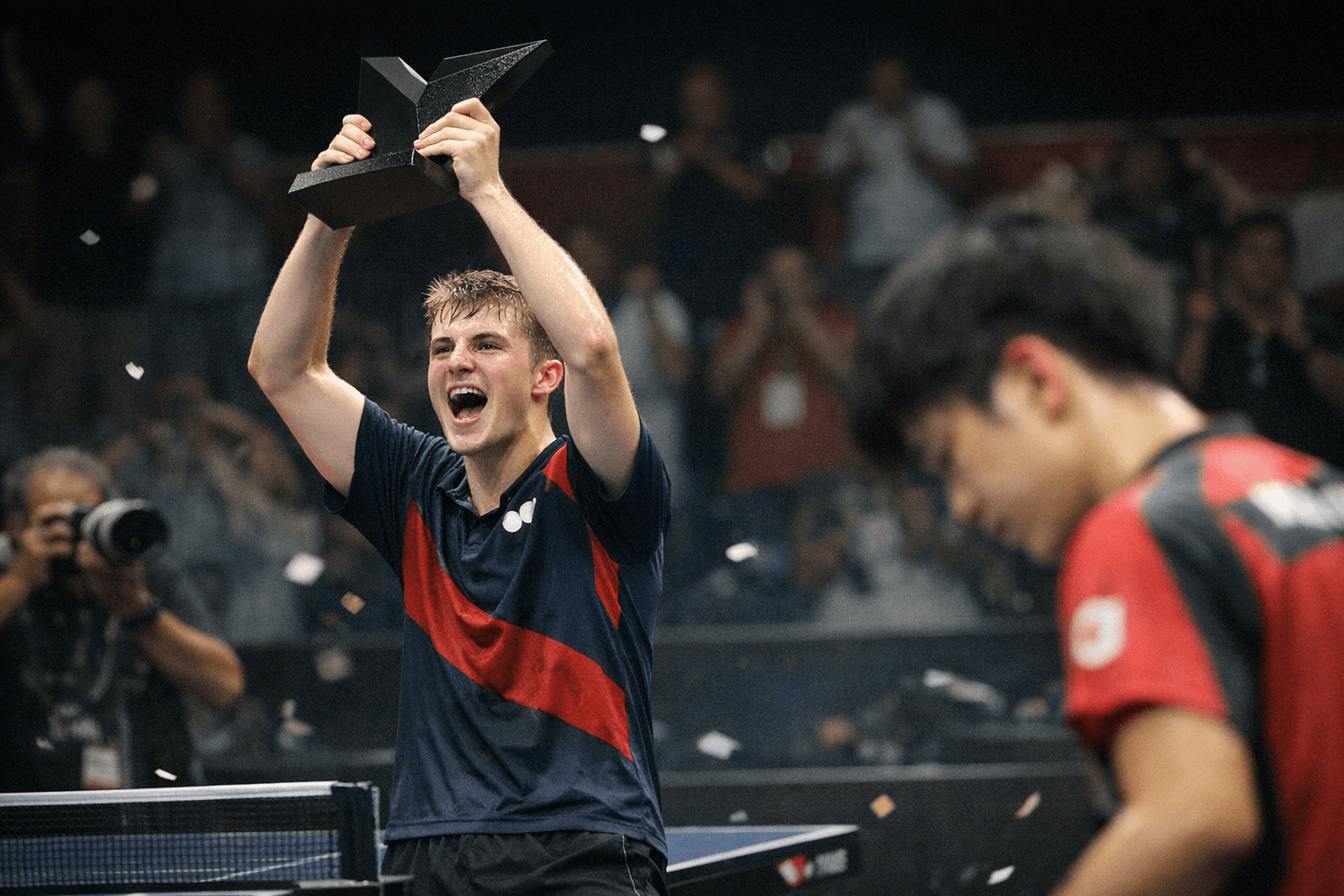
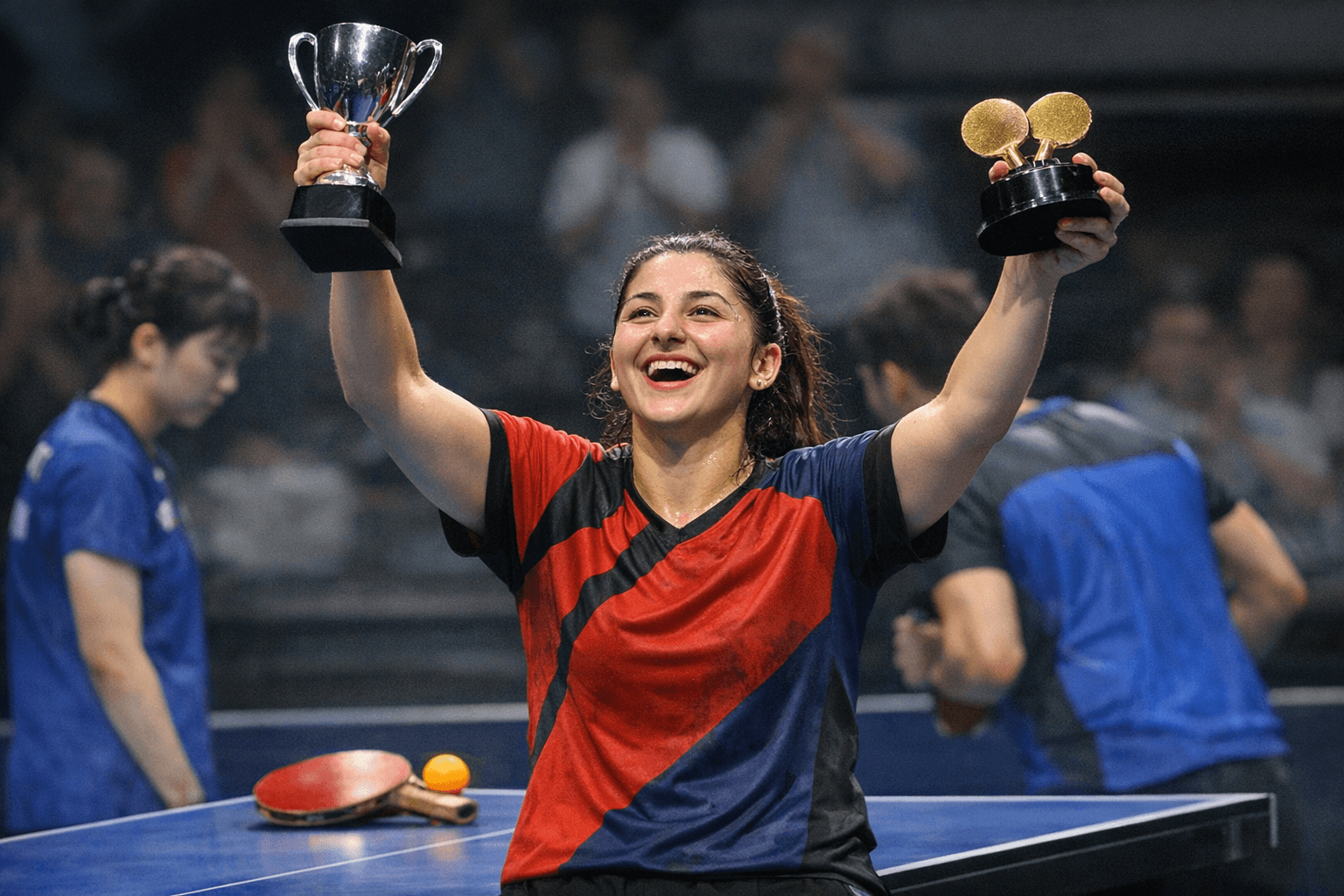
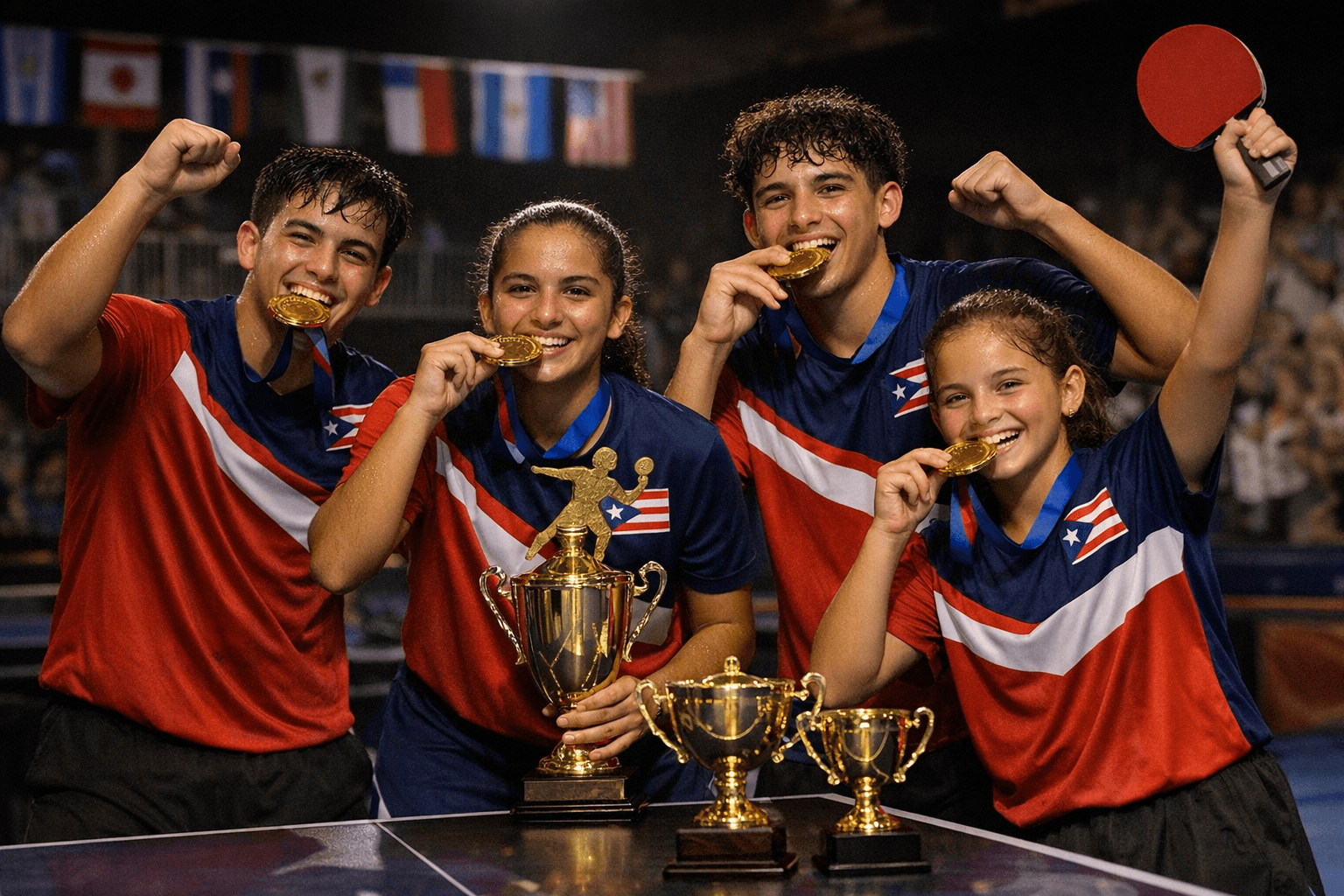
Xiao and Robles Upset Top Seeds to Claim Tunis Mixed Doubles Title
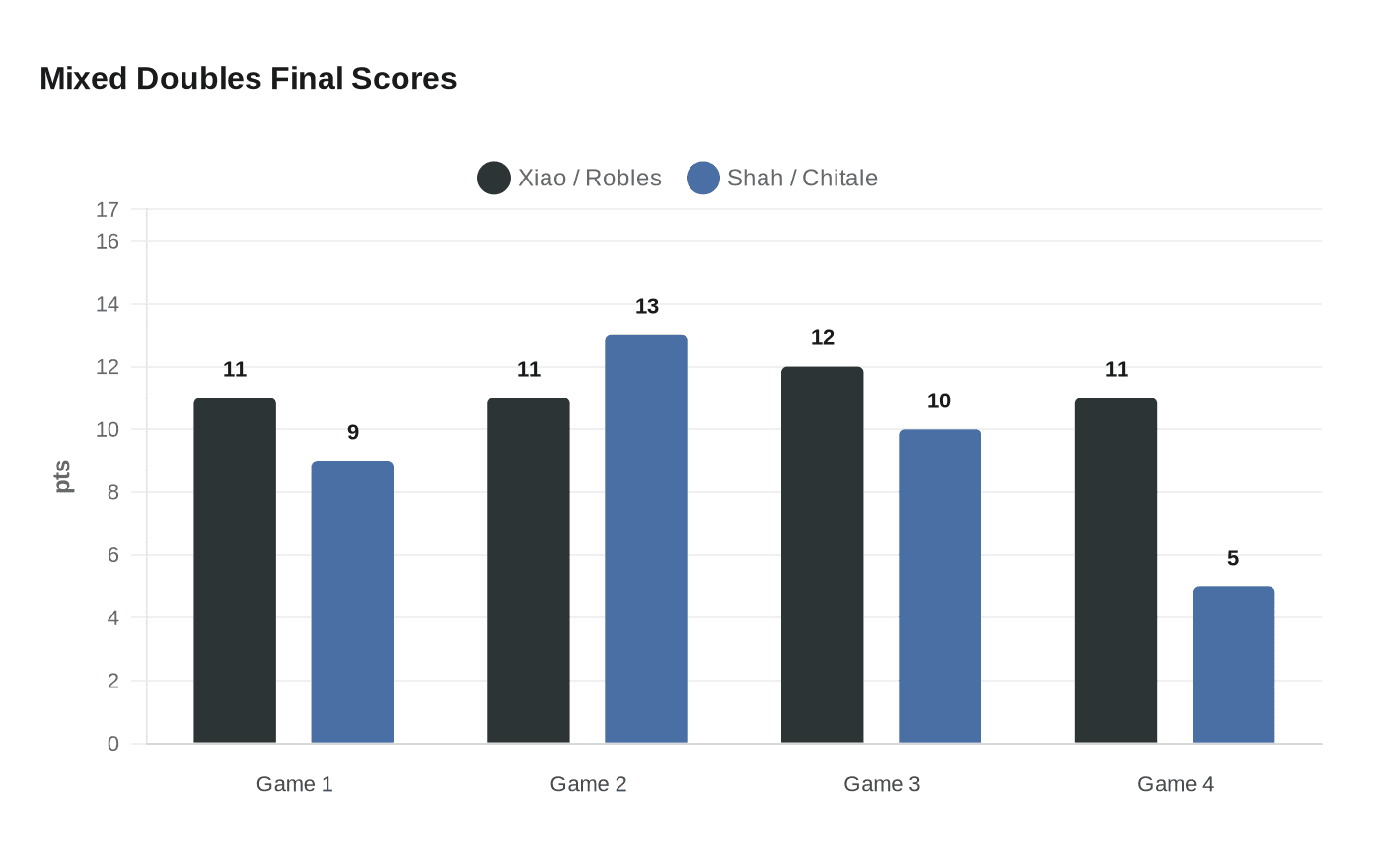
Xiao and Robles flipped the Tunis mixed doubles final 11-9, 11-13, 12-10, 11-5 to upset No.1 seeds Shah and Chitale at the $100,000 WTT Contender.
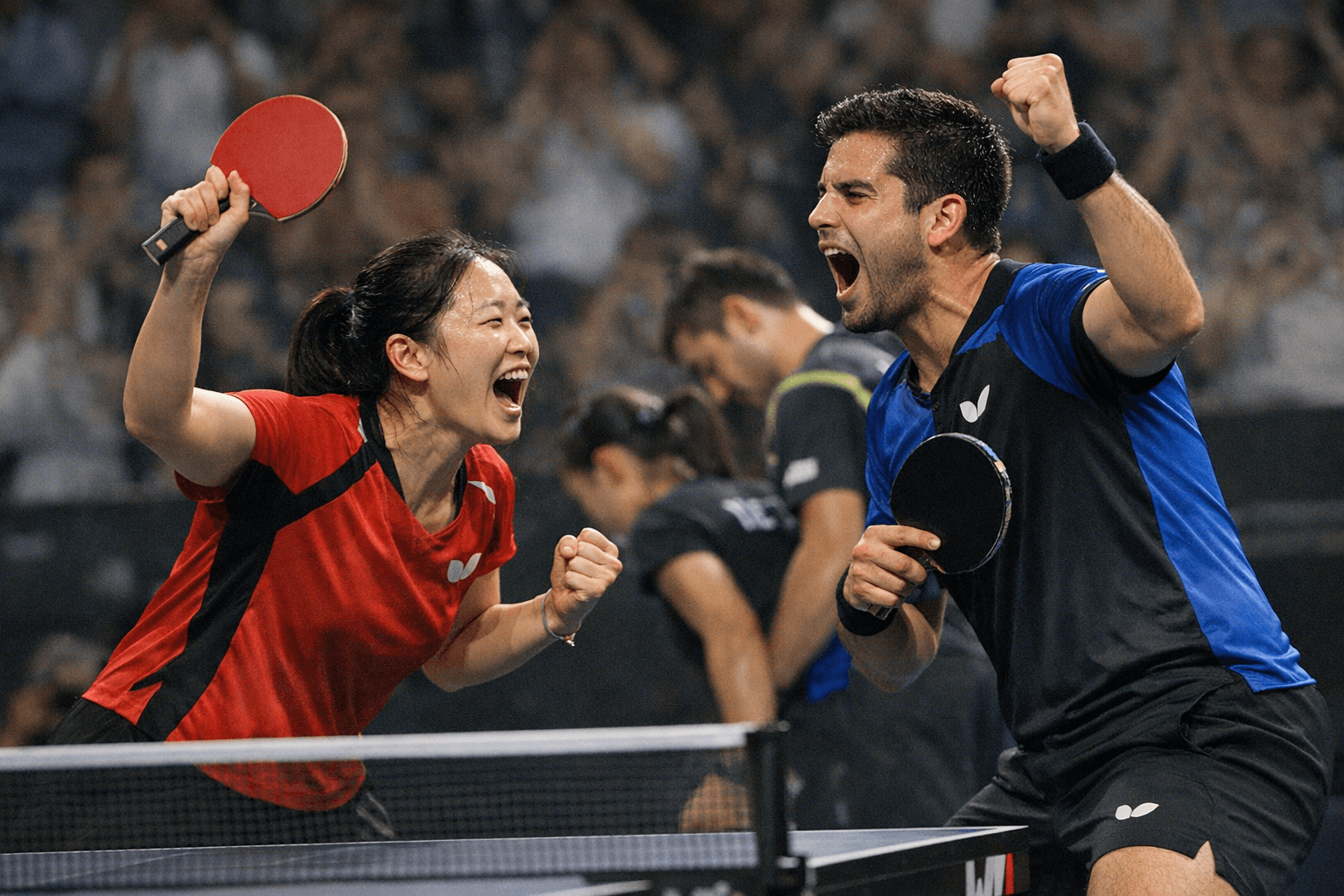
At the Palais des Sports el Menzah in Tunis on Sunday, March 29, the final day of the $100,000 WTT Contender Tunis 2026 produced its biggest upset: Maria Xiao (USA) and Álvaro Robles (ESP), the second seeds, dismantled No.1-seeded Manush Shah and Diya Chitale 11-9, 11-13, 12-10, 11-5 to claim the mixed doubles title.
The scoreline is a tactics map. Xiao and Robles opened with a 11-9 first game built on serve discipline and sharp transitions into the table's middle, the most contested strip of felt in any mixed doubles final. Shah and Chitale adjusted wide-ball coverage and clawed back the second 13-11, the kind of counter-adjustment that derails pairs who are executing a pattern without owning it. Xiao and Robles owned theirs. According to WTT's coverage of the match, the pair's effectiveness came from their use of service variation to generate mid-table returns, which fed directly into Robles's forehand third-ball sequences. As a shake-attack player ranked as high as 30th in the world, Robles is precisely the finisher a mixed doubles serve architect wants behind them. At a club level, that third-ball chain is the drill to run: one partner serves with angle to pull the return short, the other covers the middle while the server loops the third ball before either player steps back from the table. Fifteen minutes on that rotation in a Tuesday-night session will show quickly which partner controls the middle and which one clears it.
The third game at 12-10 settled the final. That margin is the fingerprint of a pair who refused to let the pivotal game go to scramble, kept returning to their serve-game structure, and trusted each other's read on when to go wide versus when to commit to the elbow. The elbow, the contested seam between a right-hander's forehand and backhand, was the pressure point Xiao and Robles kept revisiting on third-ball approaches. Pairs who want to replicate that effect in practice can run a simple two-zone redirect drill: serve to the opponent's wide backhand, then redirect the next ball to the elbow. The discomfort that creates is exactly what the third game showed Shah and Chitale managing, and ultimately not resolving.
Once the third game was banked, the fourth was a rhythm exhibition. An 11-5 final-game margin does not reflect a collapse from Shah and Chitale so much as Xiao and Robles imposing tempo with the confidence that only comes from a locked-in pattern. That final-game gear, where the pair stopped reacting and simply executed, is worth reproducing in practice: spend the last five minutes of a session playing points where the rule is to serve the same target every time and win the exchange on the third or fifth ball. The constraint forces the kind of decisiveness Robles showed in the fourth game.
What made the pattern stick was the partnership itself. Xiao functioned as the serve architect and transition trigger; Robles as the forehand finisher. Those roles are not negotiable mid-match, which is the partnership lesson Tunis demonstrated most clearly. Cross-national chemistry sounds like a soft variable, but in a best-of-five final where Shah and Chitale had home seeding and a straight-sets path to the title, role clarity proved to be Xiao and Robles's most durable weapon.
The result adds WTT ranking credits for both players and positions them as a legitimate threat to top seeds in Contender-level mixed draws for the rest of 2026. For Robles and Xiao, who reached the quarterfinals together at the 2025 World Table Tennis Championships, Tunis looks less like a surprise and more like overdue confirmation.
Know something we missed? Have a correction or additional information?
Submit a Tip