Blaiz Fayah’s Basshall Party EP pushes reggae dancehall into club lanes
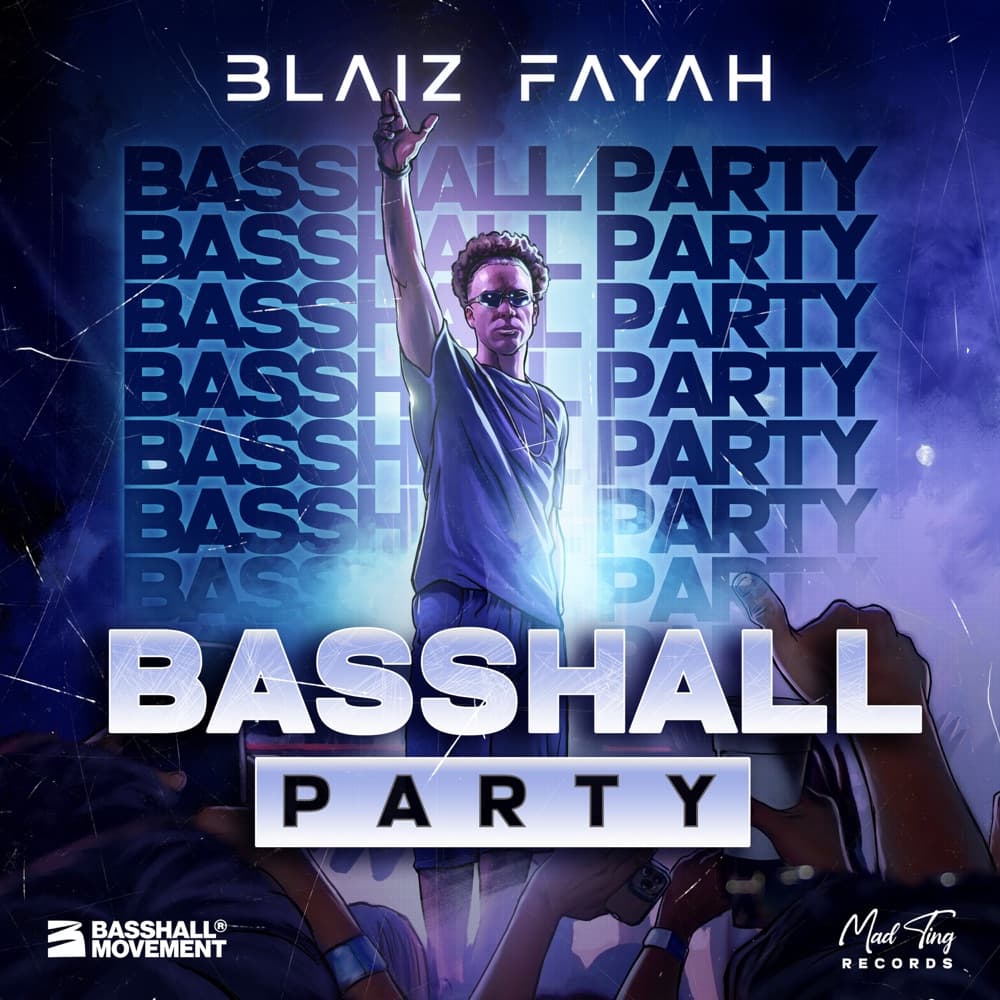
Blaiz Fayah’s six-track Basshall Party EP landed May 1 with a tight basshall sprint built for clubs, streams, and fast-moving dancehall crowds.
1. A release that lands with no wasted motion
Blaiz Fayah’s Basshall Party arrived as a digital Sun West release on May 1, 2026, and the format tells you almost everything you need to know. Six tracks in about 13 minutes is not a sprawling statement, it is a quick, high-voltage dispatch built to hit hard and keep moving. In basshall terms, that compact shape is part of the appeal: the music is meant to be replayed, rewound, and pushed back into circulation fast.

That brevity also gives the project a very current kind of urgency. Instead of stretching for a long concept arc, Basshall Party behaves like a club-ready snapshot, the kind of release that fits streaming habits, DJ sets, and short attention spans without losing its identity. The title itself sets the tone plainly: this is a party record with bass at the center.
2. The tracklist reads like a dancefloor map
The six-song sequence is built for momentum: Gwaan So, Hot Spot, Murda Whine, Basshall Party, Hotta, and Ma Cherie. Even on paper, those titles point toward motion, swagger, and a direct relationship with the dancefloor. There is no mistaking the intent here. This is music designed to move bodies before it asks anyone to overthink the message.
The opening cut, Gwaan So, sets the frame immediately by pairing Blaiz Fayah with Kybba and Limitlezz. That opening move matters because it signals collaboration and scene fluency from the first track onward. Rather than leading with a lone artist flex, the EP opens as a shared basshall conversation, which gives the whole project more weight in a lane where collective energy often carries as much power as individual star presence.
3. The collaborators make the basshall network visible
Bandcamp’s credits show that Basshall Party is wired through a wider producer and vocalist network, not just Blaiz Fayah’s solo identity. Gwaan So is credited to Blaiz Fayah, Kybba, and Limitlezz; Hot Spot to Blaiz Fayah, Kybba, and Gyzmo; Murda Whine features Titony; Basshall Party and Hotta connect with Tribal Kush; and Ma Cherie pairs Blaiz Fayah with Kybba. Beatport reinforces that same framework by listing Kybba, Blaiz Fayah, Limitlezz, Gyzmo, Titony, and Tribal Kush among the release credits.
That matters because basshall has grown through repeat link-ups, not random guest spots. Kybba and Tribal Kush have already moved in Blaiz Fayah’s orbit on Basshall Session #3, alongside Kalibwoy and Jahyanai, so this EP feels less like a sudden reinvention and more like the tightening of an established crew. In a scene built on producer links, rhythmic signatures, and shared shorthand, those names are part of the sound itself.
4. The release is built for streaming, DJ sets, and quick return trips
The way Basshall Party appears across platforms reinforces its club-first logic. Bandcamp lists it as a 2026 EP with six songs and a total length of about 13 minutes. Apple Music also shows it as a 2026 EP with six songs and a 13-minute running time, while Spotify lists it in the same six-song EP format. Beatport ties it to Sun West with the May 1, 2026 release date, which gives the project a clean digital footprint across the places where this music is most likely to travel.
That consistency matters in a scene where a short release can do more work than a longer one. A 13-minute EP can loop in a set, get tested in a club, and move through playlists without asking for a full listening appointment. Basshall thrives on immediacy, and this project is built like it understands exactly how modern listeners, selectors, and dancers consume a tune.
5. Blaiz Fayah already has the numbers to make this strategy work
The scale behind the release helps explain why a short EP makes sense here. Blaiz Fayah’s official site says he has 1.4 million monthly Spotify listeners, more than 50 million streams on Bad, and over 20,000 TikTok videos using Best Gyal. Those are not the stats of a fringe act trying to break through. They are the numbers of an artist already operating in a fast-moving digital lane where songs can travel far beyond their first scene.
That reach matches how he is described elsewhere as a major figure on the international dancehall scene, with momentum stretching through Colombia, Kenya, the Netherlands, Costa Rica, and France. Billboard has also previously highlighted him talking about the French Caribbean music scene and TikTok’s role in dancehall, which fits the logic of this release almost too neatly. Basshall Party is not built for slow revelation; it is built for the kind of instant recognition that digital audiences reward.
6. Basshall has become a real lane, and Blaiz Fayah is leaning into it
What Basshall Party makes clear is that basshall is no longer just a label people throw around for convenience. It has become a recognizable ecosystem of artists, producers, DJs, and dancefloor expectations, and Blaiz Fayah is treating it as a real identity rather than a loose tag. The EP’s short runtime, networked credits, and party-forward titles all point in the same direction: this is music made for club circulation, streaming momentum, and immediate reaction.
For reggae listeners, the bigger story is how the genre’s orbit keeps widening without losing its Caribbean rhythmic core. Basshall Party is not roots reggae, and it does not pretend to be. It sits in the current dancehall-reggae-club crossover space where the bass is heavy, the hooks are quick, and the audience is global enough to meet the song in a club in one city and on a phone screen in another. Blaiz Fayah is not just riding that shift, he is helping define how it sounds right now.
This article was produced by Prism’s automated news system from verified source data, official records, and press releases, then run through automated quality and moderation checks before publishing. The system is built and supervised by the people who set the standards it runs under. Read our full AI policy.
Did this article answer your question?