Bloom Festival Malta 2026 spotlights reggae, dub, and sound system culture
Bloom Festival Malta 2026 doubles down on reggae, dub, and sound system culture, with Hempress Sativa, King Shiloh, and Mistical Sound System sharpening its boutique identity.

Bloom Festival Malta 2026 is not trying to be the biggest thing on the island. It is trying to be the most intentionally built one. With Hempress Sativa & Paolo Baldini DubFiles, O.B.F x Charlie P, King Shiloh & MC Brother Culture, Mistical Sound System, 90 Degree Sound, and Dub Harp on the bill, the festival is leaning hard into reggae, dub, and heavy bass culture rather than chasing a generic multi-genre crowd.
Bloom is set for April 17 to April 19, 2026 at Ta’ Qali National Park, and the shape of the weekend matters as much as the names on the flyer. The festival is being sold as a three-day camping event with three stages, an expanded campsite, premium options, and a dedicated wellness and workshops zone. First-release tickets start from €35, with 3-day passes and camping tickets already on sale, which tells you exactly what kind of trip this is meant to be: a destination weekend with a scene attached, not a one-night concert series.
A reggae and dub identity with real weight
Bloom’s current lineup makes the event’s personality much clearer. Hempress Sativa brings the conscious roots side of the story, while Paolo Baldini DubFiles adds a producer-led dub dimension that reaches back into Italy’s reggae and dub network. O.B.F x Charlie P points straight at heavyweight bass pressure and vocal fire, and King Shiloh & MC Brother Culture adds one of the most recognisable sound system pairings in the package.
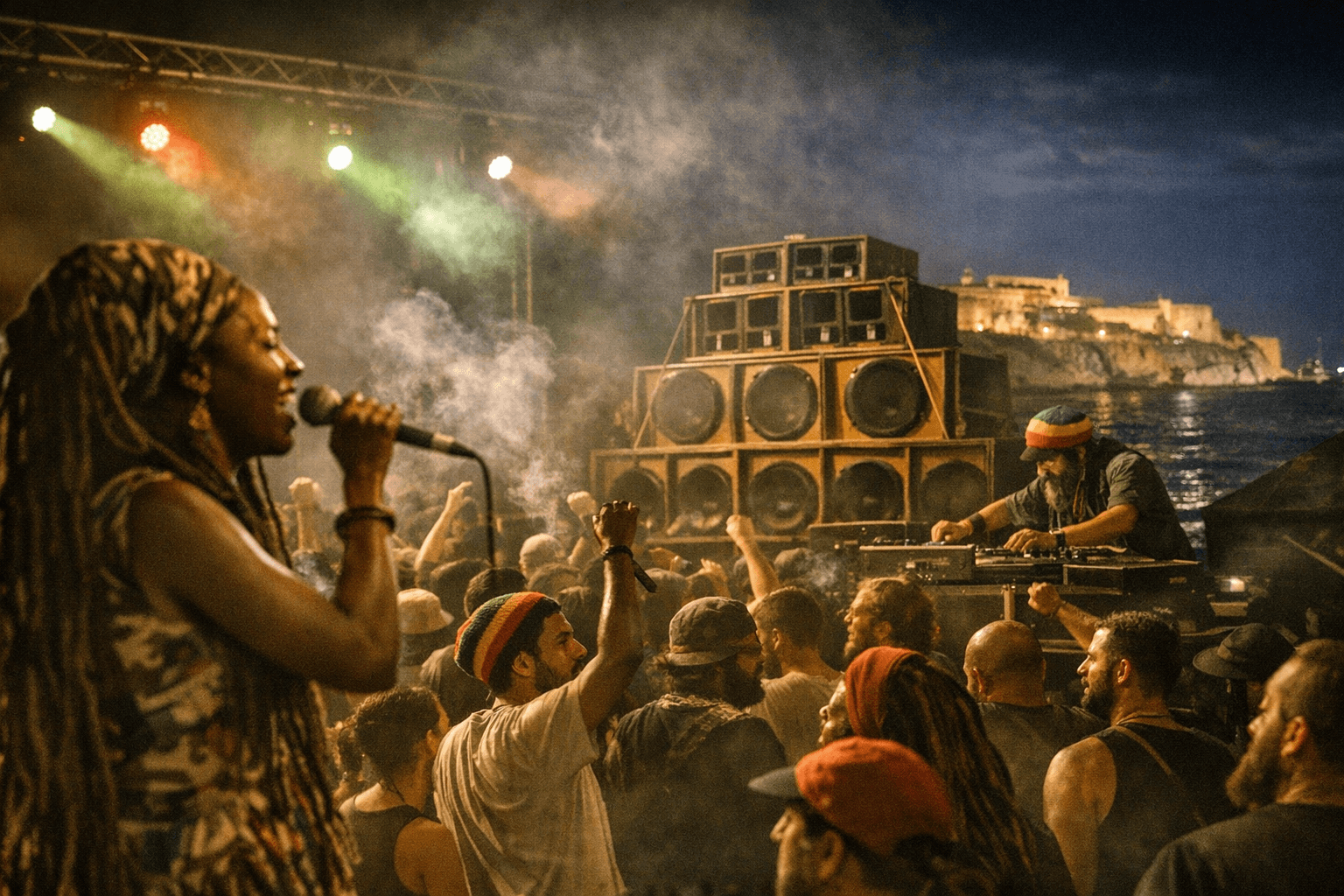
That matters because Bloom is not framing Bass Grove as just another stage. The festival calls it the spiritual heartbeat of the event, and the curation backs that up. On the 2026 lineup page, Mistical Sound System, 90 Degree Sound, and Dub Harp sit alongside the bigger names, reinforcing that this is a sound system-led weekend built around selection, weight, and message as much as performance.
For reggae and dub heads, the return of Mistical Sound System is a strong signal on its own. Bloom says the crew is coming back to Malta after making its festival debut there last year, which gives the 2026 edition a continuity that many short-lived festival lineups never manage. A returning system is a sign that the organisers are building a scene, not just booking acts.
Why the stage split gives Bloom its shape
Bloom’s stage identities help explain who this festival is really for. Bass Grove is pitched as the festival’s spiritual centre, while TreeHouse moves in a different direction with house and techno. That split gives the weekend a rare kind of balance: rooted listeners can stay deep in dub and sound system culture, while club-minded visitors still have a lane to follow without turning the entire event into a compromise.
The result is a boutique festival that feels curated rather than crowded. Bloom is advertising 50-plus artists across the weekend, but the real point is not volume. It is the ability to move from conscious reggae into bass-heavy sound system sessions and then out toward house and techno without losing the festival’s core identity. In a crowded market, that kind of clarity is often more valuable than a longer headliner list.
The names on the bill tell the story
Some of the booking choices come with useful context that sharpens the pitch. King Shiloh Sound System describes itself as an Amsterdam-based roots reggae and dub system founded in 1991, built around a 40kW 6-way stereo rig. That is not a decorative detail. It is the kind of hardware that tells a crowd this is about physical bass culture, not just playlists and branding.
Hempress Sativa’s official bio positions her as a Jamaican conscious roots reggae singer-songwriter, which places her exactly where Bloom wants to stand: message-driven, rooted, and connected to the foundation side of the genre. Paolo Baldini’s DubFiles project began in 2014 after years in Italy’s reggae and dub scene, including work with Africa Unite, giving the pairing a credible producer-vocalist chemistry that fits Bloom’s sound system-first approach.
O.B.F x Charlie P and MC Brother Culture add another layer of authority for listeners who follow the UK and European dub circuit closely. This is the kind of line-up detail that tells regulars the booking is coming from inside the culture, not from a promoter trying to borrow it.
More than music: camping, wellness, food, and the village feel
Bloom is also pushing the everyday festival experience as part of the sell. The event highlights camping passes, showers and toilets for campers, pre-pitched accommodation options, vegan and vegetarian food, a wellness area with yoga and breathwork, and a market for handmade goods and local creators. That combination tells you the festival is building a village atmosphere where people can actually stay, eat, reset, and move through the weekend without leaving the site behind.
That broader lifestyle framing fits the festival’s own mission. Bloom says it was created as Malta’s homegrown celebration of music, culture, and conscious living, that it “bloomed into life” at the beginning of 2024, and that it hosted Malta’s first-ever 420-inspired festival soon after launch. It also says it wants to grow into one of Europe’s most exciting and conscious festivals, which is a bold claim, but one that makes sense when the programming, camping, and wellness offer are all working in the same direction.
The Malta context gives the story stakes
Bloom’s move to Ta’ Qali National Park makes this edition more than a simple venue change. Ta’ Qali already has festival history: Earth Garden has used the site before, and Times of Malta has described Earth Garden as Malta’s biggest non-mainstream festival, drawing about 20,000 attendees in 2016. That legacy gives Bloom a more established canvas to work with, and it places the festival inside a venue that local music fans already recognise as festival ground.
The move also matters because Bloom’s previous edition in Mġarr stirred real tension. The organiser’s own account, as cited by Times of Malta, said the 2025 event drew just over 2,500 people, while residents filed noise complaints after music reportedly ran until 2am under a police permit. The Mġarr mayor said he did not want the festival to return, even as organisers pointed to positive feedback from nearby businesses that benefited from the weekend.
That makes 2026 a test of whether Bloom can scale its boutique model without losing its community-first promise. Ta’ Qali may give the festival room to breathe, but the real challenge is the same one that sits behind every conscious festival claim: can the event keep its bass-heavy identity, serve its audience well, and avoid becoming a problem for the people living nearby?
What Bloom is offering this year is clear enough. It is not selling a random collection of acts. It is selling a reggae-and-dub destination built around sound system culture, conscious living, camping, and a carefully shaped atmosphere. If the festival lands the way it is being planned, Ta’ Qali could become the place where Malta’s boutique bass culture finds its strongest footing yet.
This article was produced by Prism’s automated news system from verified source data, official records, and press releases, then run through automated quality and moderation checks before publishing. The system is built and supervised by the people who set the standards it runs under. Read our full AI policy.
Did this article answer your question?