Compact Vinyl Reggae and Dub Playback Setup: Speakers, Turntables, Mixers
Build a compact reggae/dub rig with a pair of 5-8 inch active monitors or two passive 8-12 inch PA speakers, a 100-300W amp if passive, a phono preamp for MM/MC, and a 4-channel mixer with 2-4 aux sends.

For a compact vinyl reggae and dub playback setup focus first on speakers: choose active nearfield monitors with 5-8 inch drivers for tight bass control in small rooms, or two passive PA speakers with 8-12 inch drivers if you need more SPL for house parties. Match passive speakers to an amplifier in the 100-300 watt RMS range per speaker for reliable headroom; active monitors remove the amp step and free up space in cramped venues or home studios.
Next, the playback chain requires a phono preamp and appropriate amplifier matching. Vinyl rigs need a dedicated RIAA phono preamp set for MM or MC cartridges; set gain to avoid clipping and use a ground lift if hum appears. When using passive mains, choose an amplifier whose RMS rating matches or slightly exceeds the speaker rating and keep headroom - do not drive a 200 watt speaker with a 50 watt amp at club levels.
Turntable and cartridge choices define sound and robustness for reggae basslines. A belt-drive turntable with a heavy platter and S-shaped tonearm helps steady low-frequency tracking for roots and dub; if you play back-to-back or perform on the fly, a direct-drive with adjustable torque can be preferable. For cartridges, start with a moving magnet (MM) for forgiveness on worn vinyl and higher output; moving coil (MC) gives detail but needs specific preamp gain and loading. Cueing technique matters: set cartridge tracking force according to manufacturer spec and check anti-skate to keep bass centered on heavy basslines.
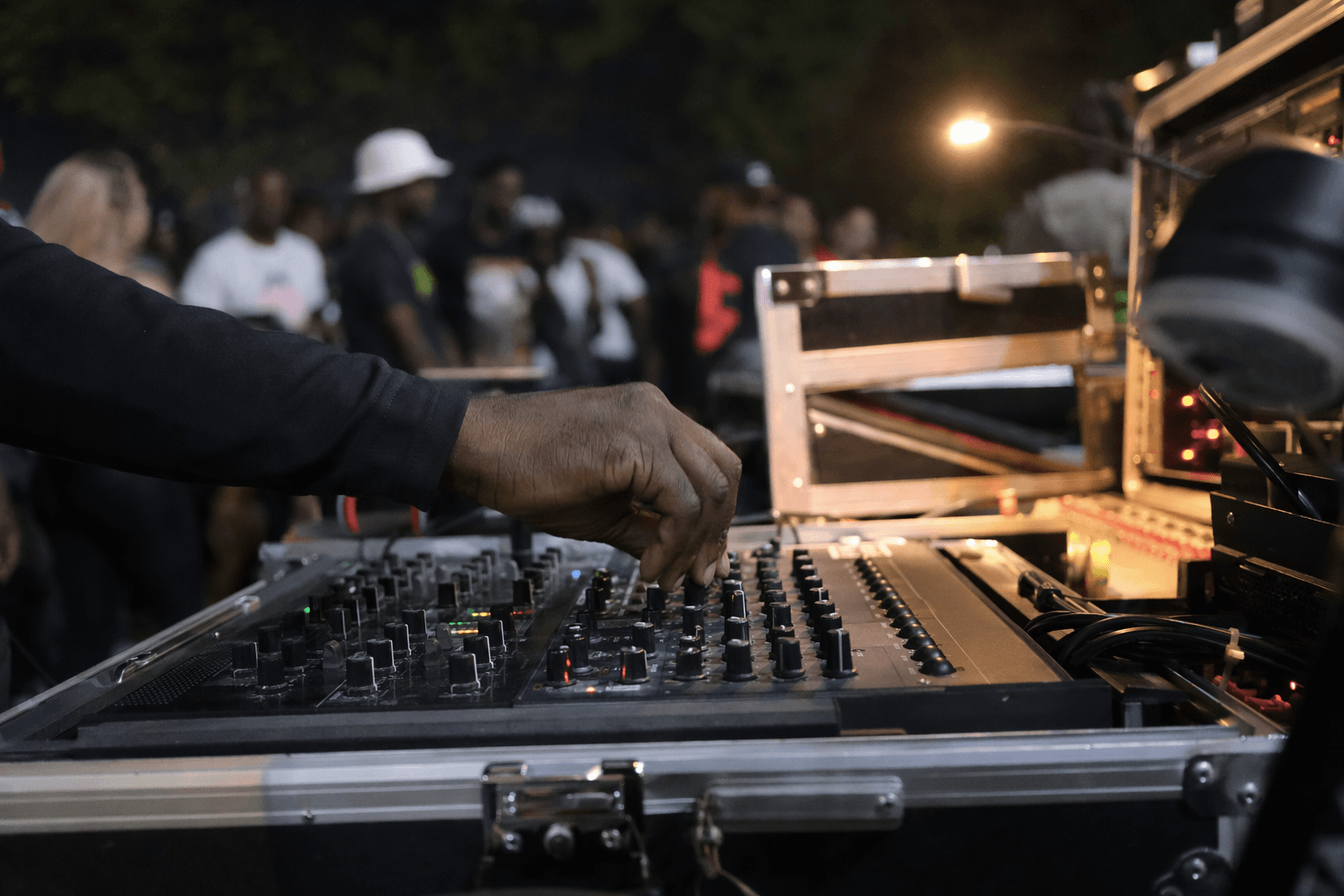
Mixer features shape dub effects and session flow. Aim for a compact 4-8 channel mixer with at least three-band EQ per channel and sweepable mids for carving space around bass and snare. Look for 2-4 aux sends so you can route channels to independent delay and reverb returns; use one aux for dub delay and another for spring-style reverb or external pedals. An insert per channel is useful for outboard compression or saturation boxes used on vocal or toasting mic channels.
Effects and routing decisions complete the sound. Put a dedicated echo/delay unit on an aux send with tempo-sync or tap tempo so echo repeats lock to the riddim; run reverb on a second aux with pre/post switching to control decay relative to channel fader. Use balanced XLR or TRS for mixer-to-active monitor runs and high-quality RCA phono cables from turntable to phono preamp to minimize noise.
Placement, gain structure, and bass management finalize the setup. Position monitors or PA speakers at ear height and roughly 1-1.5 meters from the listening position with slight toe-in for imaging; trim mixer gains so peaks hit green LED range and avoid constant red clipping. With a compact rig built around 5-8 inch active monitors or a matched passive 8-12 inch speaker and 100-300W amp, a phono preamp for MM/MC cartridges, and a 4-channel mixer with 2-4 aux sends, you get a portable, dub-friendly playback system ready for small sessions, soundclashes, and home dub shows.
Know something we missed? Have a correction or additional information?
Submit a Tip