Noel Ellis honors reggae roots with My Father’s Art album
Noel Ellis turns Alton Ellis classics into a 12-track covers set, using familiar reggae and pop-soul songs to keep foundational repertoire in motion.
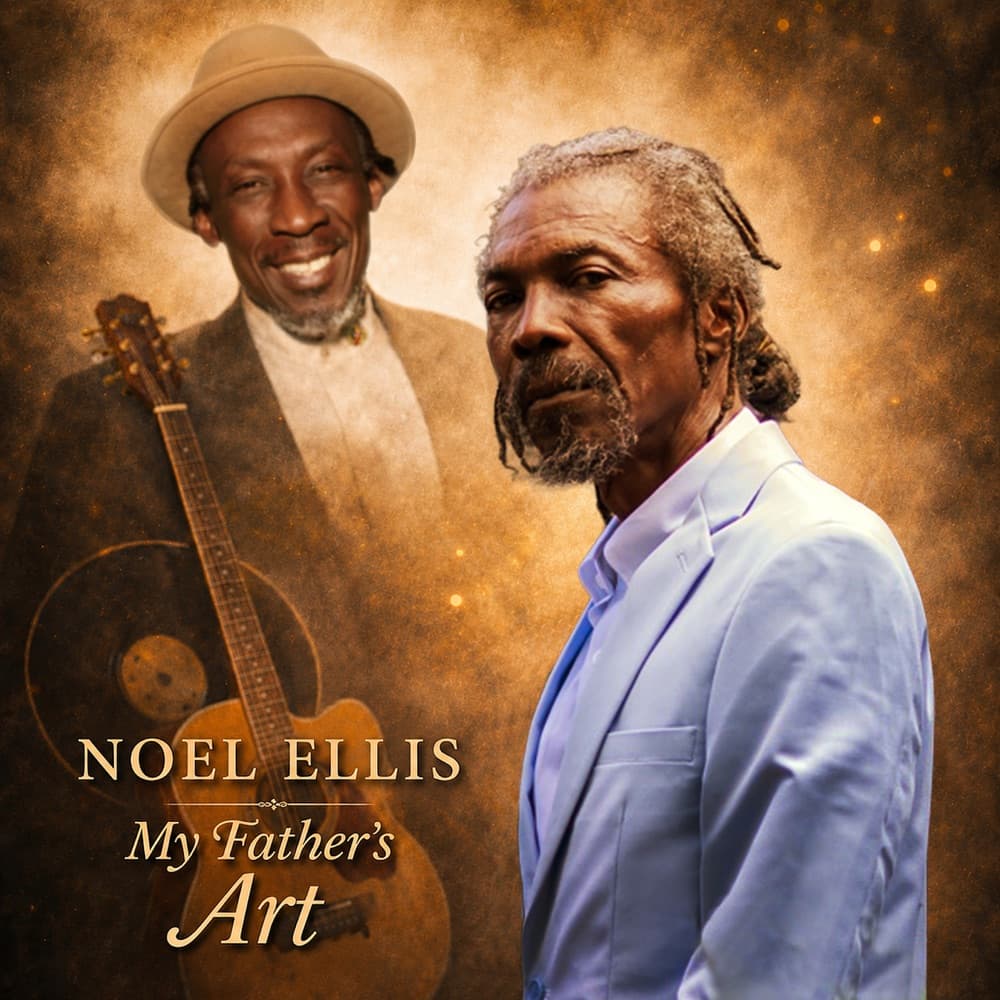
Noel Ellis is not arriving with a conventional batch of new compositions on My Father’s Art. He is stepping back into his father Alton Ellis’ world through a 12-track digital set that leans on songs listeners already know, including “Girl I’ve Got a Date,” “Rock Steady,” “Ain’t That Loving You,” and “I’m Still in Love With You.” Released June 30, 2026 through Fifty Fifty Records, the album frames that catalogue as something still alive, still usable, and still worth hearing in a modern reggae context.
The songbook at the center
The track list makes the project’s intent plain from the start. Alongside the core reggae touchstones, Noel Ellis reaches into pop-soul and crossover territory with “Breaking Up Is Hard to Do,” “You’ve Made Me So Very Happy,” and “What Does It Take,” while also folding in “I’m Just a Guy,” “Willow Tree,” “Never Love Again,” “Let Him Try,” and “Mad Mad.” That spread moves the album across Jamaican rocksteady, lovers rock, and broader soul material, giving the record a shape that depends on familiar melody more than on surprise.
That choice matters because covers can be handled in very different ways in reggae. Some projects use old songs as a shortcut to recognition; others use them to test how much room a voice, a rhythm section, and a new arrangement can create around a known tune. My Father’s Art lands closer to the second model. The album reads like an interpretive set built to honor memory while still giving the material enough shape to stand in the present tense.
Faithful, but not frozen
What gives the release its weight is the balance between reverence and renewal. The songs are recognizable enough to anchor the listener immediately, but the project is not framed as a museum display. Instead, Noel Ellis treats the repertoire as living material, the kind that can still breathe when it is voiced with intention and placed in a current reggae setting.

That approach suits the title. My Father’s Art signals inheritance, but it also points to craft, and craft is the key word here. A project built from standards and family legacy has to do more than rest on nostalgia. It has to show how those songs continue to work, how they carry across generations, and how they can still speak to listeners who came up long after the originals first circulated through the scene. Ellis’ set does that by leaning into melody, memory, and the steady pull of songs that already have a place in reggae consciousness.
There is also a broader genre logic at play. Reggae has always made room for interpretation, versioning, and re-voicing, whether through ska, rocksteady, lovers rock, roots, or dub-adjacent treatments. A covers-driven album like this sits comfortably inside that tradition. It does not need to reinvent the wheel to matter. It needs to show that the wheel still turns.
Why the release lands now
The timing of My Father’s Art gives the album another layer of meaning. In a release calendar crowded with singles and fast-moving digital drops, a full-length project devoted to older songs stands out because it asks for attention in a different way. Instead of chasing novelty, it reinforces the idea that foundational reggae repertoire can still be actively curated, heard, and reintroduced.
That is especially important for fans who track how classic songs survive across generations. A set like this works as a bridge between the original era of the music and the present audience hearing it through Noel Ellis’ voice. The album’s 12-song structure gives enough room for the range of the repertoire to register, from the rocksteady pulse of “Rock Steady” to the smoother emotional pull of lovers-rock leaning material like “I’m Still in Love With You.” It also keeps the focus on songs that already carry history, which makes every interpretation part of a longer conversation rather than a standalone cover exercise.

The rollout before the full album
The album did not appear out of nowhere. Reggaeville had already been surfacing material from the project before the June 30 release, including a video for “Willow Tree” on May 30 and another for “Rock Steady” on June 13. That staggered rollout helped build the album’s identity one song at a time, giving listeners a preview of the approach before the full 12-track set arrived.
That kind of pacing makes sense for a record built around classic material. When the songs are already known, the artist has to create a narrative around interpretation, sequencing, and context. By releasing videos in advance, Ellis gave the project more than a single launch moment. He turned it into a series of entry points, each one reinforcing the idea that these songs still have motion in them.
For reggae followers, that is the real point of My Father’s Art. It is not just a family tribute or a nostalgia piece. It is a working example of how reggae’s deep catalogue can be brought forward without being flattened, and how an artist can honor a legacy by performing it as a living repertoire. The album’s strength lies in that combination of devotion and use, with Noel Ellis placing Alton Ellis’ songbook back into circulation for today’s listeners and letting the music do what it has always done: travel, adapt, and stay in play.
This article was produced by Prism’s automated news system from verified source data, official records, and press releases, then run through automated quality and moderation checks before publishing. The system is built and supervised by the people who set the standards it runs under. Read our full AI policy.
Did this article answer your question?