Studio One shaped reggae as Jamaica’s hit-making academy
Studio One was reggae’s training ground: Coxsone Dodd’s Kingston studio turned out the Wailers, "Simmer Down," and a sound that bridged ska to reggae.
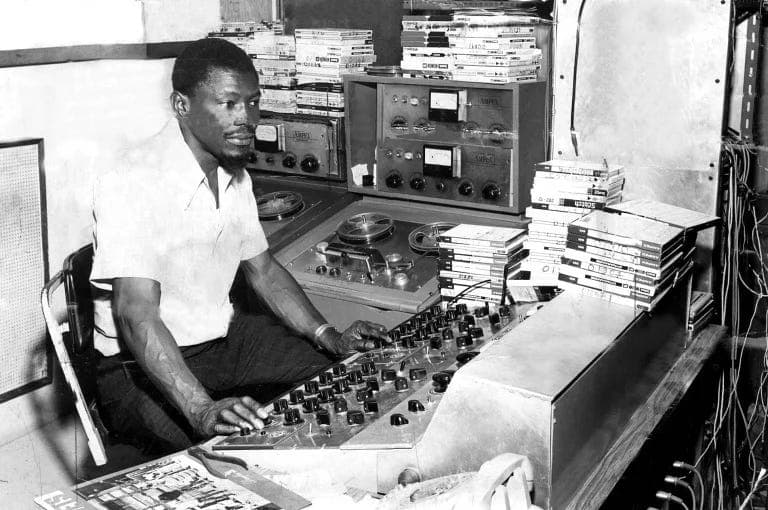
Studio One turned reggae into a system, not just a sound. Clement "Coxsone" Dodd founded the Kingston operation in 1963 after working with rhythm and blues in the United States and returning as one of Jamaica’s early sound-system operators. From that base, the studio became a hit factory, a pressing plant, and the place where artists learned how to make records that could win the dance floor first.
How Coxsone Dodd built the pipeline
Dodd’s background matters because Jamaican music in the 1960s was never confined to formal studio walls. Street dances, mobile discos, sound-system rivalry, and the chase for exclusive songs all shaped what people wanted to hear, and Dodd understood that world from the inside. Studio One fit that system instead of resisting it, which is why it could move so quickly from a local operation to one of the central engines of Jamaican popular music.
That connection to the dance floor made Studio One feel less like a boutique recording room and more like a working classroom. Artists were not just cutting sides for release, they were learning how to make a record that would survive the pressure of a crowd, a selector, and a dub plate economy built on immediacy. In that sense, the studio was Jamaica’s original talent pipeline.
Why the one-track setup mattered
Studio One’s early setup was famously crude and tiny, with a one-track studio and a pressing plant attached to it. Those limits did not hold the music back. They forced tight arrangements, clean performances, and recordings with enough impact to cut through on sound systems where weak mixes disappeared fast.
That production discipline helped define the Studio One sound. Basslines had to be strong, the rhythm had to lead, and the relationship between producer, singer, and backing band had to be direct and efficient. The result was a blueprint that helped bridge ska, rocksteady, and reggae without losing the music’s street-level force.
The Kingston address that became a school
The Reggae Museum places Studio One at 13 Brentford Road in Kingston and describes it as the first Black-owned recording studio in Jamaica. That address matters because it ties one of reggae’s most important institutions to a specific place in the city, not an abstract idea of musical innovation. It was a real working hub where Jamaican records were made, pressed, and pushed back into the same community that judged them.
That physical setup also explains why Studio One keeps coming up in conversations about reggae’s roots. It was not only a studio in the technical sense, but a local institution that linked recording, manufacturing, and performance in one place. For fans trying to understand how the island’s sound system culture became recorded music, 13 Brentford Road is one of the clearest starting points.
The records that taught the island
A few names and recordings show how that academy functioned in practice. In December 1963, the Wailers entered Coxsone Dodd’s Studio One facilities to cut "Simmer Down," a Marley song that had already won a talent contest. That session captures the Studio One model perfectly: a young act, a sharp song, and a studio built to turn local momentum into a record with reach.
Studio One is also credited with helping launch the careers of Bob Marley and the Wailers, and with shaping the sound of ska, rocksteady, and reggae. Those are not separate achievements. They are part of the same process, where the studio helped artists adapt to the demands of the local market while refining the rhythmic language that would later carry Jamaican music far beyond Kingston.
A few traits came out of that process again and again:
- strong basslines that held up in dance settings
- rhythm-first arrangements that left no room for slack playing
- close coordination between producer, singer, and backing band
- records designed to move a crowd immediately, not just sound polished in isolation
That is why Studio One functioned like a Jamaican academy. It taught the practical side of making records that worked where Jamaican music lived most powerfully, in the dance.
Why the academy label still fits
Britannica’s Studio One article was retitled "Studio One: Jamaican 'Academy'" on Jan. 11, 2024, and the edit history also lists revisions in 2010 and 2007. That continuing attention says a lot about the studio’s standing: it is not treated as a footnote, but as a central institution in the story of reggae, ska, dub, and the wider Jamaican music business.
The label still fits because Studio One shows how reggae’s star system was built from the ground up. A tiny one-track room at 13 Brentford Road helped train the artists, shape the records, and set the rules for what a hit could sound like in Jamaica. That is why Studio One remains one of the clearest ways to trace reggae back to the place where its sound and its system were made.
This article was produced by Prism’s automated news system from verified source data, official records, and press releases, then run through automated quality and moderation checks before publishing. The system is built and supervised by the people who set the standards it runs under. Read our full AI policy.
Did this article answer your question?