The Mighty Diamonds' Right Time Reappraised as Roots Reggae Essential
Right Time hits 50 years old in 2026, and a new deep-dive reappraisal is the perfect excuse to pull together your crew for a proper listening session with this roots landmark.
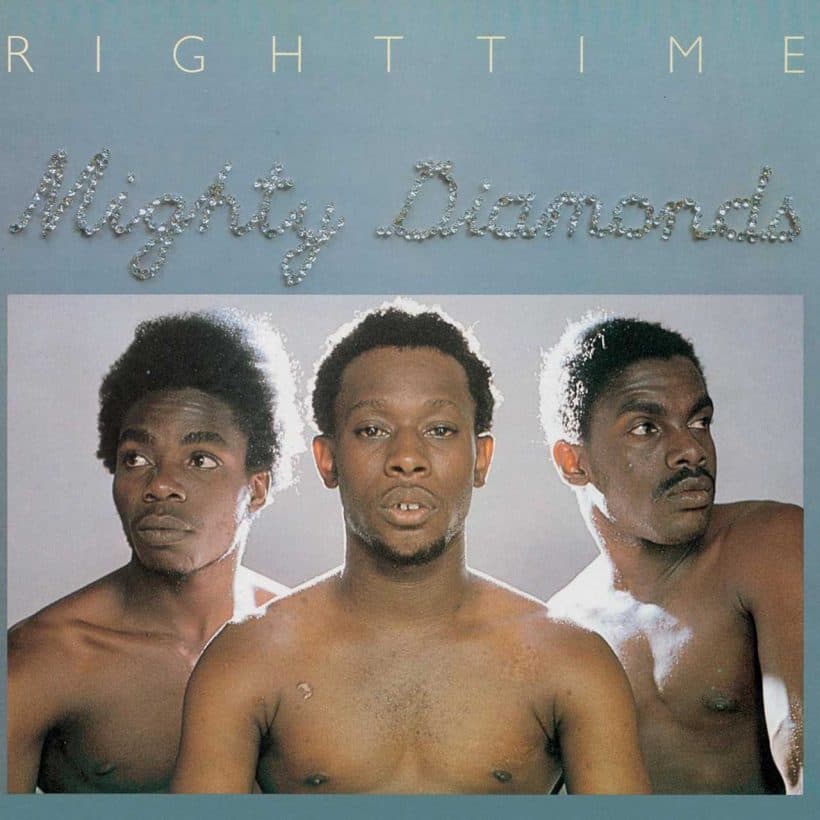
*Right Time* is the 1976 studio album debut of the Mighty Diamonds, critically regarded as a reggae classic and a landmark in the roots reggae subgenre. It turns 50 this year. That alone earns it a full-room play-through. But a freshly published reappraisal, timed with quiet precision to land on March 29 — the fourth anniversary to the day of lead singer Donald "Tabby" Shaw's death — makes the case with new urgency: this is not just an album to admire from a distance. It is one to hear together, loudly, in the way it was meant to be heard.
Who Were the Mighty Diamonds
Formed in 1969 in the Trenchtown area of Kingston, the group comprised lead vocalist Donald "Tabby" Shaw and harmony vocalists Fitzroy "Bunny" Simpson and Lloyd "Judge" Ferguson. They had become friends at school in the mid-1960s and were originally called The Limelight, adopting "Mighty Diamonds" after Shaw's mother started referring to them as "The Diamonds." Before arriving at their signature sound, they worked with producers including Lee "Scratch" Perry, absorbing the breadth of Kingston's studio culture before everything clicked into place at Channel One.
The Channel One Blueprint
Their sound wouldn't truly coalesce until they began working with producer Joseph Hoo Kim and his brother engineer Ernest Hoo Kim at the siblings' Channel One recording studio and label. The Hoo Kims were likewise still establishing themselves when they recruited the musicians that would become their in-house band, the Revolutionaries. Appropriately named, the ensemble's newly paired drummer Sly Dunbar and bassist Robbie Shakespeare would advance an innovative, and subsequently extensively mimicked, rhythmic template at Channel One. Meanwhile, Tabby, Bunny, and Judge penned songs that merged the influence of popular Stateside soul groups like the Stylistics and Chi-Lites with the lyrical immediacy the era demanded.
Several of the album's socially conscious songs were hits in the band's native Jamaica, with a few becoming successful in the UK underground. The album helped secure the success of Channel One Studios and the rhythm team of Sly Dunbar and Robbie Shakespeare. The Mighty Diamonds were among the first artists signed to the Virgin record label after it entered the reggae music market.
The Listening Session Roadmap: Key Tracks First
The reappraisal lays out a clear sequence for first-timers and returning listeners alike. Here is how to build a session that earns the album's full emotional range:
Start with the title track. "Right Time" announces everything the group is about: prophetic phrasing over a locked-in Revolutionaries groove, with Tabby's lead riding high above Bunny and Judge's lower harmonic bed. Play it at real volume and you will hear why the rhythm template here was copied for years afterward.
From there, run directly to "Go Seek Your Rights," where the group's falsetto range opens up and the empowering message cuts through with striking directness. Then pull back for "I Need a Roof," the album's most plaintive moment, where the three-part blend drops its militancy and leans into pure vocal tenderness. The contrast between those two tracks alone explains why the album has lasted.
"Africa" follows naturally as the session's spiritual anchor, its repatriation theme a direct line to the Rastafarian influence that shaped the Trenchtown scene in this era. Round out the session's second half with "Them Never Love Poor Marcus," a tribute to Marcus Garvey that weaves spiritual critique into a vocal arrangement so accessible it almost disguises its weight, and "Gnashing of Teeth," which pushes the social commentary further without ever sacrificing the group's melodic instinct.
What to Listen For: A Short Guide
A few specific things reward close attention during the session:
- The bass and drum interplay on virtually every track: Robbie Shakespeare sits deep in the pocket while Sly Dunbar places accents in unexpected places, creating the tension that gives the vocals room to breathe.
- The three-voice construction: Tabby takes the lead, but Bunny and Judge are not simply padding. Notice how the harmony parts carry independent melodic lines that comment on the lead rather than just shadowing it.
- The production space: Ernest Hoo Kim's engineering leaves air around the instruments. Nothing crowds the mix, which is what allows harmonies recorded in a Kingston studio in 1976 to still feel present and immediate.
- The lyrical range: the album moves between personal struggle ("I Need a Roof"), political history ("Them Never Love Poor Marcus"), and spiritual aspiration ("Africa") without any tonal inconsistency. That coherence is rarer than it sounds.
The reappraisal frames this balance well, concluding that *Right Time* "managed to mix gorgeous group vocals with some of the most revolutionary reggae music ever."
Collector and Format Roadmap
For vinyl collectors, the original 1976 Virgin Records gatefold LP is the most sought-after pressing and turns up regularly on Discogs, though condition varies widely. A Shanachie Records reissue appeared in 1983 and is typically more affordable while preserving the original sequence. A 2001 Virgin/EMI CD remaster, digitally remastered under the Virgin Records catalog, is the cleanest way to hear the album if vinyl is not the priority. For streaming and digital purchase, the album is available in full on Bandcamp directly through the Mighty Diamonds' page, which named the album among its featured picks as recently as August 2025. That page is also the most direct way to support the group's estate.
A note for DJs: the original Channel One rhythm tracks from these sessions have been versioned and riddim-cycled dozens of times. Owning the source recording is the reference point that makes all those versions make sense.
Why the Session Matters Now
On March 29, 2022, Donald "Tabby" Shaw was shot dead in a drive-by shooting. On April 1, 2022, Fitzroy "Bunny" Simpson died, and the group disbanded shortly afterwards. The reappraisal ran exactly four years after Tabby's death. That the reggae community is still returning to *Right Time* on that date says something that no critical argument needs to spell out.
The 50th anniversary of *Right Time* is a fixed calendar moment. Gather whoever in your circle needs to hear this properly, get the format that works for your setup, put "Right Time" on first, and let the Revolutionaries do the rest.
This article was produced by Prism’s automated news system from verified source data, official records, and press releases, then run through automated quality and moderation checks before publishing. The system is built and supervised by the people who set the standards it runs under. Read our full AI policy.
Did this article answer your question?