Women's History Month Celebrates Sonia Pottinger, Reggae's First Lady
Before Marcia Griffiths cut her finest sides, Miss P was already running the studio, the shop, and the pressing plant — and reggae history still owes her the credit.
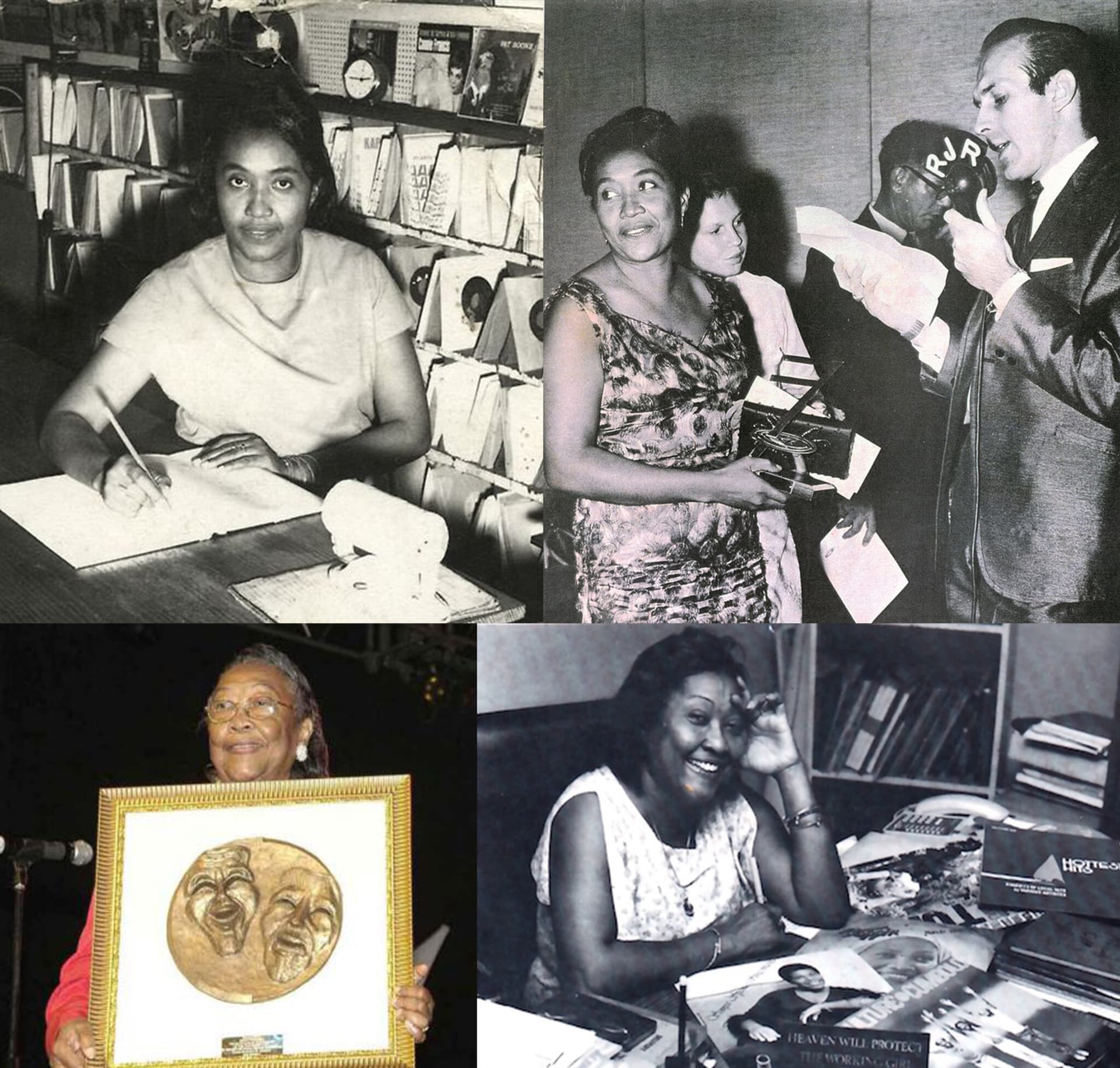
Before the names Lee "Scratch" Perry, Clement "Coxsone" Dodd, and King Tubby became shorthand for Jamaican music's golden age, a woman from St. Thomas was quietly building the infrastructure that made it all possible. Sonia Pottinger, born Sonia Eloise Durrant on June 21, 1931, didn't stumble into the record business. She engineered her way into it with an accountant's precision and an entrepreneur's nerve, and she did it in an industry that gave women precious little room to operate. Women's History Month is an appropriate moment to revisit her story, and Good Black News did exactly that with a Music Monday feature published on March 9, 2026, assembling a curated playlist and contextual notes celebrating Pottinger's contributions as one of Jamaica's pioneering female producers.
Before the Studio: A Businesswoman in Formation
Nothing about Sonia Pottinger's path into reggae was accidental. She attended St. George's girls school in Kingston, where she studied business and accounting, a foundational education she would put to relentless practical use for the rest of her life. Before she ever touched a recording console, she had already run a bicycle shop and a bakery, learning the rhythms of inventory, customer relationships, and cash flow in trades that had nothing to do with music. That grounding in real-world commerce gave her something most producers of her era lacked: a structural understanding of how a business actually survives.
Building the Foundation With Lindon Pottinger
In the early 1960s, Sonia married businessman Lindon Pottinger and channeled that business education into Jamaica's nascent music industry. Together, the couple launched what sources describe as Jamaica's first black-owned recording studio, established labels including Gaydisc Records, SEP (the acronym drawn from Sonia's own initials), and Golden Arrow, and ran one of the first pressing plants in the country. The scale of that infrastructure is worth pausing on: at a moment when most Jamaican artists were entirely dependent on a handful of established operators for studio time, pressing capacity, and distribution, the Pottingers were building an end-to-end operation. Some accounts frame the enterprise specifically as the first record company owned by a Black person in Jamaica; regardless of the precise framing, the historical weight of what they built together is not seriously in dispute.
When the couple split a few years later, the business could easily have stalled or dissolved. Instead, as one account puts it, Pottinger "was determined to continue in the music business on her own and quickly transformed a somewhat competent business into one that not only thrived, but innovated." That pivot is the hinge point of her entire story.
Miss P, on Her Own Terms
Operating independently, Sonia Pottinger opened the Tip Top Record Shop in 1965, giving herself a direct retail presence in the Kingston music scene. A year later, in 1966, she released her first single as a producer: "Every Night" by Joe White & Chuck. That record marked the formal beginning of a production career that would become, in the assessment of Reggae University, one of the most noteworthy in the history of reggae music.
Those she worked with knew her as "Miss P," a nickname that carried both affection and professional respect. Her catalogue from the 1960s and 1970s includes pivotal recordings for artists whose names are central to any serious reggae conversation: Marcia Griffiths, Judy Mowatt, Bob Andy, and the harmony trio Culture all recorded under her production guidance. Each of those names represents a cornerstone of the music, and each of those recordings carries her fingerprints.
A Giant in a Male-Dominated Industry
The context in which Pottinger operated deserves to be stated plainly. When journalists and historians compile the canonical list of Jamaica's great producers, they reach instinctively for Perry, Dodd, King Tubby, Bunny Lee, and Joe Gibbs. Pottinger is rarely in that first breath, and that omission is not a reflection of her output. As scholar Klive Walker wrote in Caribbean Quarterly's article "Naturally: The Crucial Contributions of Sonia Pottinger":
"The history tells us that Dodd and Reid were two of the best producers during Jamaican popular music's gestation, birth and adolescence. If mentioned at all, Sonia Pottinger is treated as secondary to those primary producers. Very often, she is only discussed as a footnote to the stories of the pivotal recordings she produced for Marcia Griffiths, Judy Mowatt, Bob Andy, and harmony trio Culture. In an ironic way, the reggae history is just as guilty of marginalising reggae women as the reggae industry."
Walker's critique lands because it is structurally accurate. The same histories that celebrate the male producers of that era treat Pottinger's work as context for other people's stories rather than as a body of achievement in its own right.
Her contemporaries in the industry recognized what the histories have sometimes missed. Reggae University describes her as "a giant amongst her male competition" who "used her wits and business savvy to establish herself as a force to be reckoned with." That force extended into legal territory as well: she won a legal battle against two prominent male producers in the industry, a confrontation that speaks directly to the power dynamics she navigated every day.
Her religious beliefs, according to those who chronicled her career, played a significant role in the resilience she brought to those confrontations. In an industry built on relationships, leverage, and the occasional sharp elbow, Pottinger's ability to hold her ground was not incidental. It was cultivated.
Recognition and Legacy
In October 2004, the Jamaican Government awarded Sonia Pottinger the Order of Distinction (OD), a formal acknowledgment of a career that had spent decades proving itself without waiting for institutional validation. The honor was long overdue; by that point, she had been shaping Jamaican popular music for more than four decades.
She passed away on November 3, 2010. The industry mourned, and the tributes that followed reached for language proportionate to what she had actually built. Her music catalogue, spanning labels Gaydisc, SEP, and Golden Arrow, with production credits stretching across some of the most significant recordings in reggae history, stands as a testament that needs no asterisk.
Sonia Eloise Pottinger O.D. was, as Reggae University concludes, "a pioneer, record producer and entrepreneur." She attended a Kingston girls school to learn accounting, ran a bicycle shop and a bakery, built a recording studio with her husband, opened Tip Top, produced "Every Night," brought out the best in Marcia Griffiths, Judy Mowatt, Bob Andy, and Culture, won a legal fight she had no obligation to win quietly, and earned a national honor from the government of the country she helped put on the global musical map.
The first lady of reggae built her title the same way she built everything else: one carefully considered business decision at a time.
Know something we missed? Have a correction or additional information?
Submit a Tip