Ares Emulator March 2026 Update Refines GBA Accuracy and Preservation-Grade Behavior
A focused March 27 commit, "gba: improve affine parameter timings," shows how Ares keeps narrowing the gap between software output and real GBA silicon for preservation work.
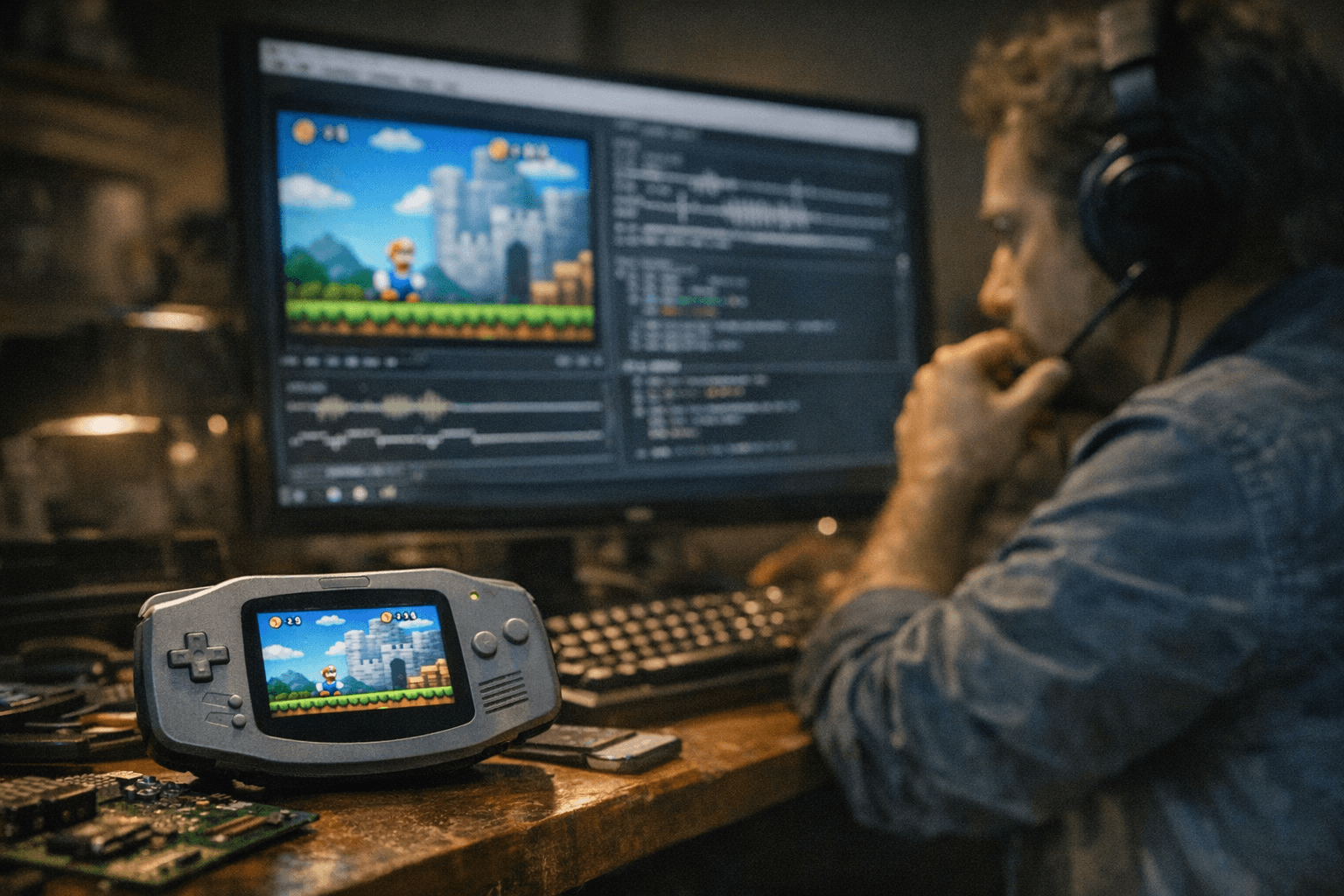
The Game Boy Advance updates its rotation and scaling reference points once per scanline in hardware, and getting that latch cycle exactly right is the kind of problem that sounds minor until scaled backgrounds start drifting. That is precisely what the March 27, 2026 Ares Git snapshot addressed, with a commit logged as "gba: improve affine parameter timings," and it represents something more consequential than a one-line changelog entry suggests.
Affine transformations are the GBA's hardware rotation and scaling engine, analogous to the Mode 7 effects on the Super Famicom. When an emulator reads the affine parameters even a cycle too early or too late relative to the scanline renderer, the result is a background that creeps, shears, or stutters against original hardware output. The discrepancy is often too subtle to notice on a casual playthrough, but it is measurable and reproducible. After the March 27 fix, Ares' output moves closer to what the actual GBA chip produces, which means frame-by-frame logs and output hashes generated under Ares carry stronger fidelity to physical hardware behavior.
That precision matters specifically because Ares occupies a different space than playability-first emulators. A descendent of higan and bsnes, both long associated with cycle-accurate philosophy, Ares has been in continuous development since October 14, 2004. Its scope now covers 27 hardware platforms, from the Famicom and Super Famicom through the Game Boy line, Mega Drive, PC Engine, Neo Geo Pocket, WonderSwan, and others, all under the same accuracy-first mandate.
The March 27 affine patch did not arrive in isolation. Six days earlier, on March 21, a separate GBA-focused commit landed under "gba: window accuracy improvements," targeting the window masking system that controls which screen regions display which layers. Together, the two commits represent a sustained push on GBA subsystem fidelity through the final weeks of March, each patch tightening a different part of the PPU pipeline.
For preservationists running cross-checks between Ares and a faster, less cycle-bound emulator, that tightening has a direct practical application. When both emulators agree on output, confidence in the result rises. When they diverge, the cycle-accurate emulator typically points toward true hardware behavior. A properly timed affine latch is one more case where Ares now agrees with the silicon, making it a sharper reference for archival comparison work, ROM dump validation, and reproducible documentation of software behavior. Small and disciplined, the March 27 commit is exactly what long-term preservation infrastructure looks like at the commit level.
This article was produced by Prism’s automated news system from verified source data, official records, and press releases, then run through automated quality and moderation checks before publishing. The system is built and supervised by the people who set the standards it runs under. Read our full AI policy.
Did this article answer your question?