Community Compiles Guide to ROM Management and Preservation Best Practices
A community-built guide gathers long-lived, practical steps for ROM management and preservation and pairs them with durable operational practices used in other public-facing maintenance programs.
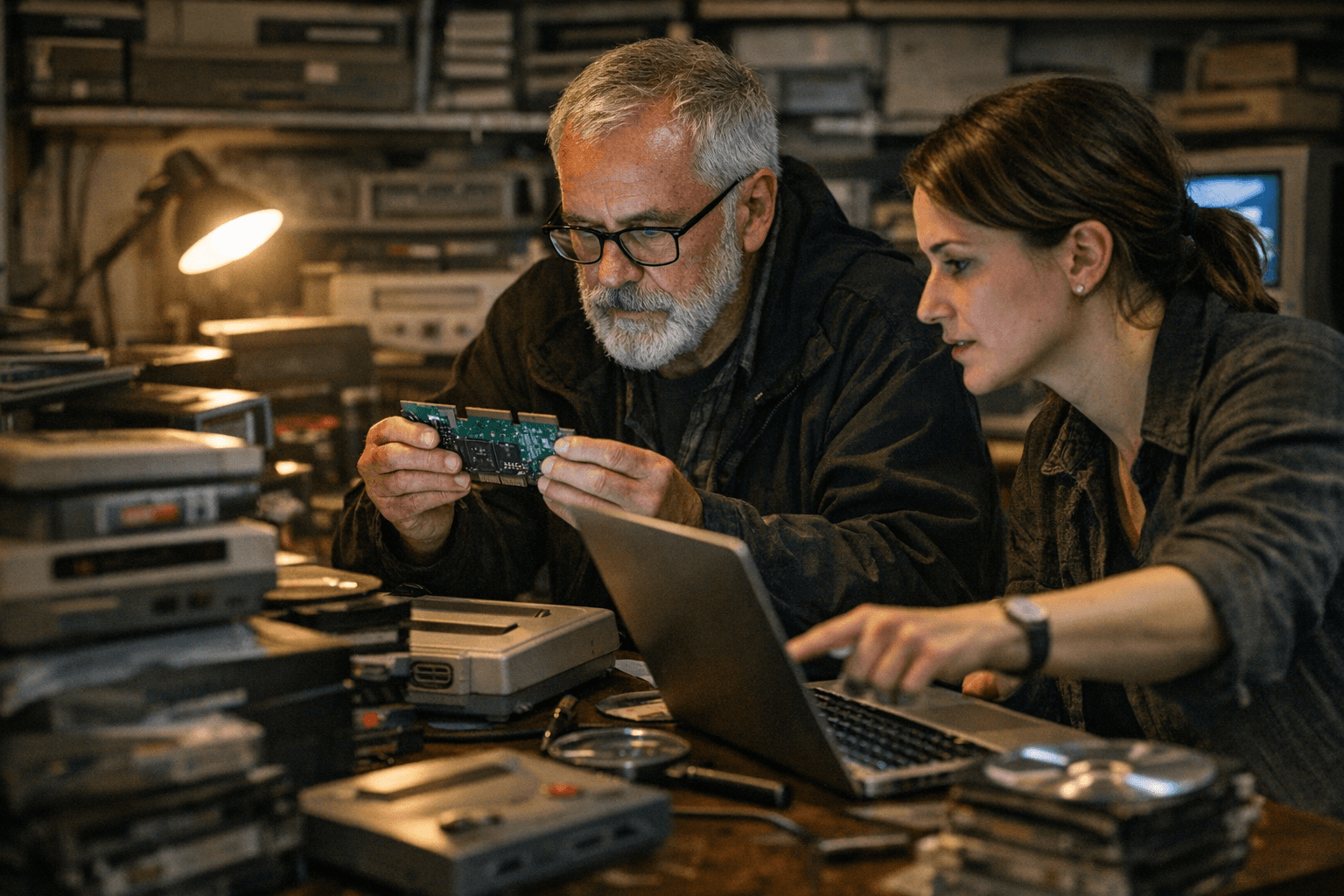
An excerpt describes a guide that compiles current community best practices for ROM management, preservation and emulator setup, practical advice that rarely changes in fundamentals and is useful for hobbyists and archival-minded users. The guide is described as intentionally without a single publication date, and the community approach is what drives its longevity and utility.
1. Define the guide’s purpose and lifespan
Treat the guide as a working reference: the supplied excerpt frames it as a tool that "compiles current community best practices for ROM management, preservation and emulator setup, practical advice that rarely changes in fundamentals and is useful for hobbyists and archival-minded users." The excerpt also notes the guide is intentionally produced without a single publication date; that approach makes it a living resource meant to be consulted across versions rather than frozen to one point in time. Keep that intent explicit in your documentation so contributors and users understand this is a reference that emphasizes stable fundamentals over transient specifics.
2. Identify appropriate methods and applications for control
Follow the exact operational directive from the other handbook: "Identify appropriate methods and application for control. For each maintenance activity, identify the appropriate control method." That prescription, drawn from a Minnesota roadside maintenance handbook, translates into a guiding principle for ROM programs: treat every maintenance activity (however you define those internally) as needing an identified method and scope. Make the method explicit for each task in your plan so decisions are repeatable and auditable.
3. Catalog a range of control-method approaches
The Minnesota excerpt lists a deliberately broad range of approaches you can use as templates: "This could include mechanical methods, such as mowing and aeration; biological or natural processes; cultural methods, such as appropriate seed selection, planting and mulching, or burning; chemical methods, such as the use of herbicides and pesticides; a hands-off approach; or preservation and conservation." Use that diversity as a model: build a taxonomy of approaches (active/manual, automated, policy-driven, conservative/leave-as-is, and preservation-focused) so you can match technique to risk and resource level. Naming a taxonomy prevents knee-jerk one-size-fits-all solutions and helps you justify chosen methods to collaborators and stakeholders.
4. Train everyone who implements the plan
Adopt the handbook’s clear training imperative: "Train. Train all staff responsible for implementing each element of the IRVM Plan regarding the plan components and their responsibilities. This is especially important for those staff members who will be completing the actual maintenance activities." Translate that language into your community structure by making sure contributors, maintainers, and volunteers know what the plan requires, and by documenting role-specific procedures. Emphasizing hands-on training for the people who perform tasks reduces errors, aids knowledge transfer, and preserves institutional memory.
5. Keep records
The source gives a concise operational command: "Keep records." Even though the supplied excerpt does not expand that line, treating recordkeeping as a core requirement is non-negotiable. Define what records you keep (activity logs, checksums or validation events if your group uses them, provenance notes, contributor attributions, and change logs), and adopt a consistent format so records can be parsed and preserved over time. The single-line directive from the handbook makes the point: documentation is part of maintenance, not an optional afterthought.
6. Use a BMP-style framework to organize practices
The Minnesota handbook "highlights seven best management practices (BMPs) identified through research," and lists the first six categories explicitly: 1) "Develop an integrated roadside vegetation management plan" 2) "Develop a public relations plan" 3) "Develop a mowing policy and improved procedures" 4) "Establish sustainable vegetation" 5) "Control noxious weeds" 6) "Manage living snow fences" (the seventh is truncated in the excerpt). Adopt the conceptual structure of BMPs for ROM stewardship: an integrated plan, engagement/PR, explicit maintenance policy, sustainability goals, approaches to harmful or corrupting elements, and special infrastructure or feature management. Even if the checklist items differ in technical content, the BMP framework provides a proven way to partition responsibilities and priorities.
7. Treat community communications as part of the program
One of the BMPs the handbook lists is "Develop a public relations plan." Apply that lesson directly: make your outreach and documentation work explicit. Describe why you preserve certain collections, what contributors can expect, and how the program handles requests and disputes. Clear communications reduce friction with newcomers, maintainers, and partners; the Minnesota handbook uses this same lever to maintain public support for roadside programs, and it’s equally relevant to community-managed ROM archives.
8. Acknowledge missing details and keep scope clear
The ROM guide excerpt is descriptive about its purpose but lacks author, publisher, and specific procedural content in the supplied text; likewise, the Minnesota excerpt truncates its seventh BMP and the "Keep records." expansion. Be explicit in your guide about what is included and what is intentionally left to local practice: document where your procedures stop and where contributors must make local technical choices. That transparency aligns with the handbook's stated aim of sharing "information obtained from the many years of experience of those working in the field, and by highlighting new technology that is improving operations."
9. Use the handbook model to justify operational choices
The Minnesota introduction shows why a durable management framework matters: "A healthy roadside environment reduces maintenance needs and costs, aids in preserving the roadside surface, provides safety for vehicles and travelers, limits liability for the governing agency, maintains good public relations, and improves the overall driving experience." Borrow that rationale when you defend the effort and budget for ROM stewardship: prevention and planning reduce future maintenance, protect the collection, reduce organizational risk, and support better user experience. Those are repeatable benefits you can point to when organizing volunteers, securing hosting, or negotiating access.
10. Maintain clear attributions and a "living" approach to updates
The ROM guide excerpt intentionally avoids a single publication date; pair that policy with disciplined attribution and changelogs so readers can trace decisions. Label contributions, date changes, and preserve older versions so you can revert when necessary, this keeps the guide useful over time without pretending every decision is permanently settled. The handbook’s approach to compiling long experience and highlighting new technology demonstrates a balance between durable fundamentals and iterative improvements.
Closing note You can treat this community guide as a hybrid: it gathers the ROM community’s durable know-how while borrowing the operational backbone of public-sector maintenance handbooks. Keep your plan integrated, name the methods you use, train the people who execute maintenance, and keep records so the work survives turnover. The Minnesota handbook language, explicit about planning, methods, training, records, and BMP organization, offers a tested template: apply its structure while filling in ROM-specific technical practices from subject experts and documented procedures.
This article was produced by Prism’s automated news system from verified source data, official records, and press releases, then run through automated quality and moderation checks before publishing. The system is built and supervised by the people who set the standards it runs under. Read our full AI policy.
Did this article answer your question?