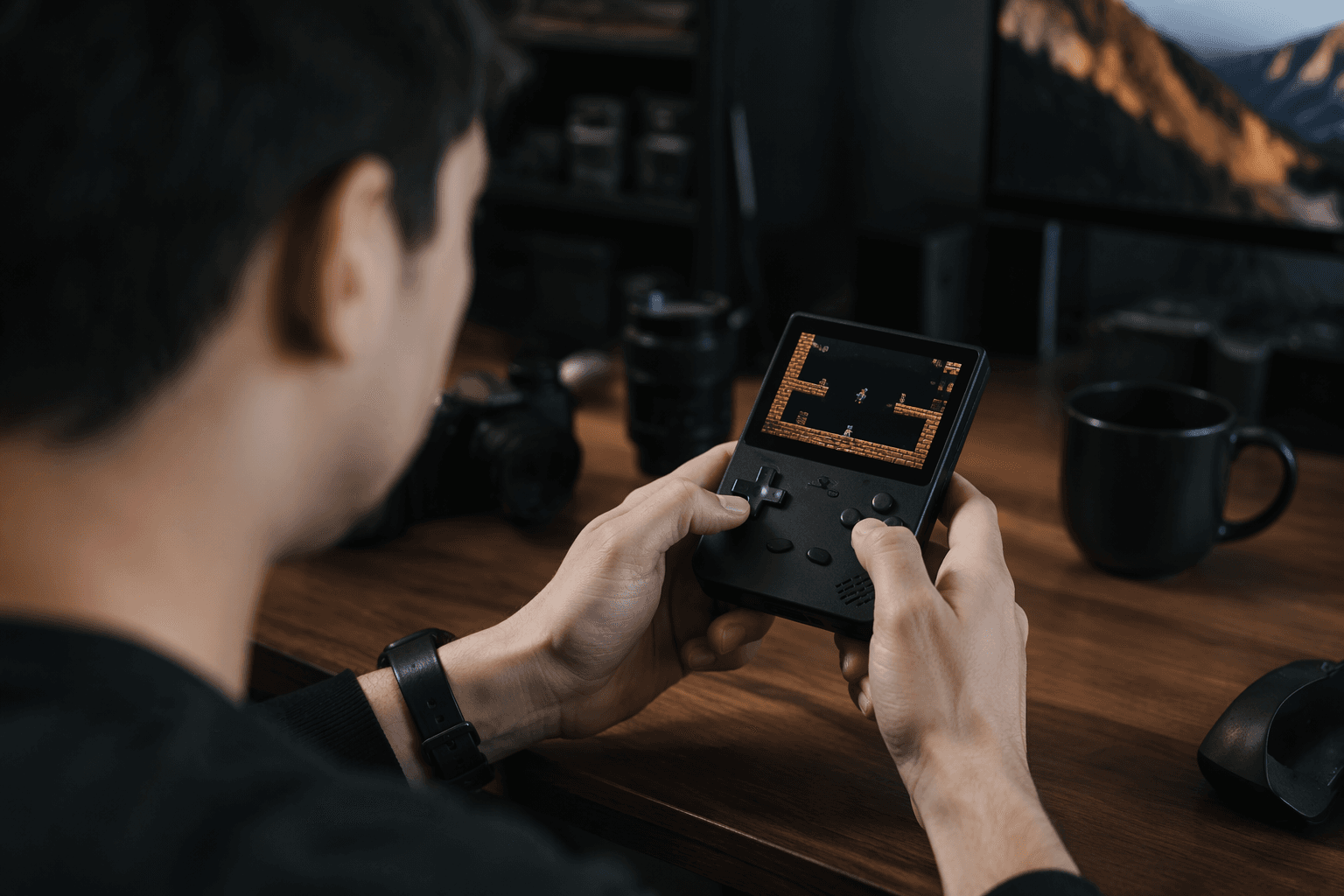
Community firmware makes Anbernic RG DS a better handheld
The RG DS finally feels finished once you replace the stock software, and GammaOS Next, ROCKNIX, and Anbernic’s own Linux build each make it a much better handheld.
The RG DS only starts to make sense once you stop treating Anbernic’s stock software as the final word. The hardware already has the right ingredients, dual screens, Android 14, and a precise touch pen, but the real upgrade is the firmware stack you put on top of it.
Why the stock setup is only the starting point
That matters because the RG DS did not land as an instant classic. It drew lukewarm reaction when it launched in December, and the first wave of fixes has been as much about making the machine pleasant to use as it has been about making it technically work. Anbernic’s own update page now reflects that shift: alongside the Android package, it also lists an official RGDS-LINUX build, which is a strong signal that the company knows the stock story is not the whole story.
The practical effect is simple. Once you move past the factory software, the RG DS stops feeling like a promising but rough novelty and starts feeling like a handheld you can actually live with. Interface lag drops, launcher behavior gets cleaner, and the whole dual-screen experience becomes easier to trust.
GammaOS Next is the best first stop if you want Android done right
For most people, GammaOS Next is the upgrade that makes the clearest difference fastest. GitHub describes it as a highly customized handheld firmware built on Android 14 and LineageOS 21 for supported devices, and the RG DS release notes get specific about the pain points it addresses. This build fixed the 40 Hz top-screen bug, reduced Drastic secondary-screen latency through DualStack, improved multitasking, and enabled Deep Sleep by default.
That combination changes day-to-day use in a very real way. The top screen behaves more predictably, dual-screen emulation feels less disconnected, and the system no longer acts like it is wasting your battery every time you walk away from it. GammaOS Next is currently at v1.2.2 for the RG DS, which is the version you want to look at if you are chasing the latest optimized build rather than the early preview era that was once limited to creators and reviewers.
If your plan is to lean on Android emulators, especially setups that benefit from the RG DS’s two-screen layout, GammaOS Next is the most direct route to a better experience.
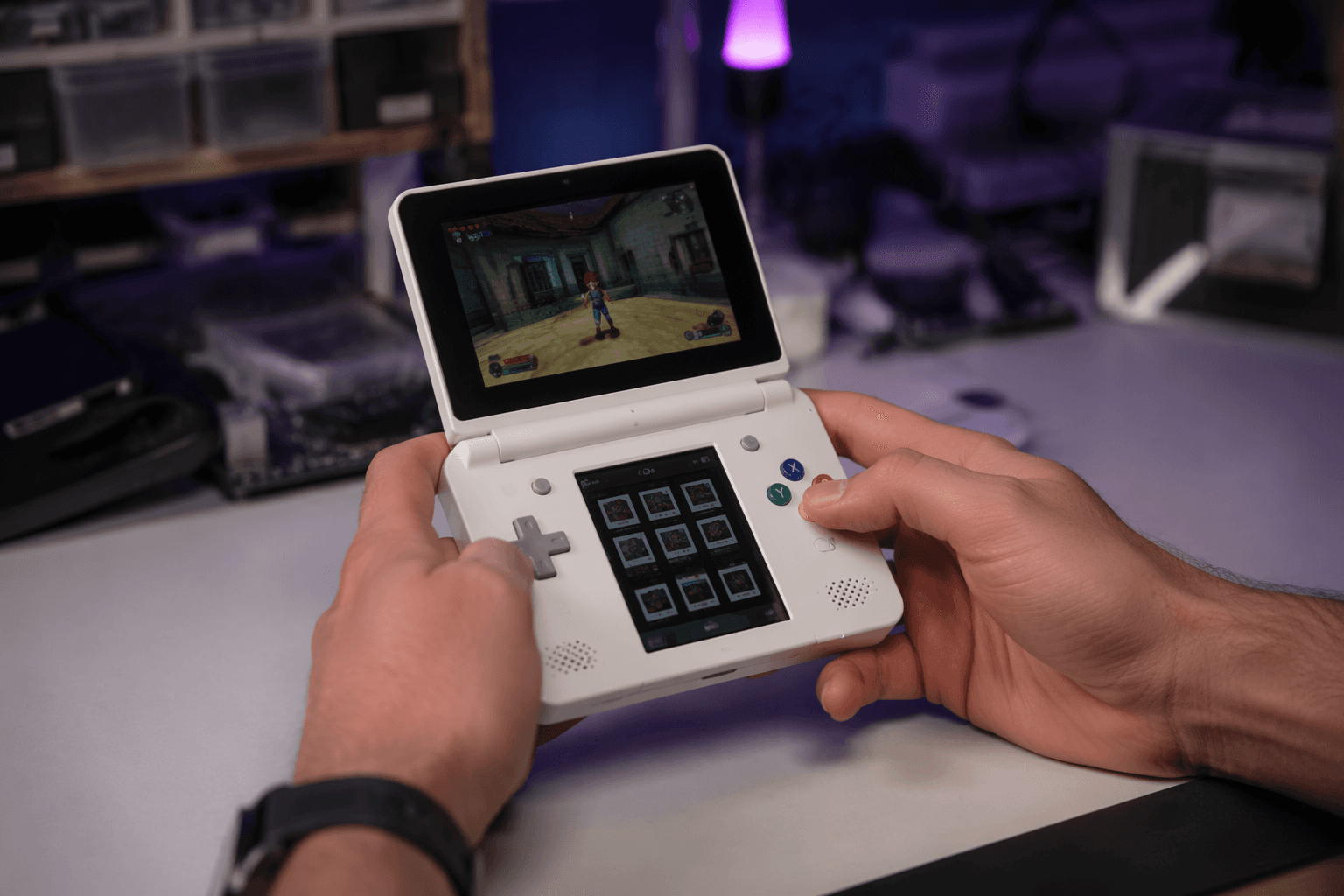
Anbernic’s official Linux option gives you another path
Anbernic’s surprise Linux build is worth paying attention to because it broadens the device’s personality. Instead of forcing every owner into one Android-first mindset, the company now offers a Linux route that can be installed to a microSD card. That gives you another way to get away from the stock software without waiting for community releases to cover every use case.
It also matters because the RG DS is the kind of hardware that can benefit from a cleaner, more appliance-like boot flow. If you want less fiddling and more straight into your library, the official Linux option is a meaningful addition, not just a checkbox.
ROCKNIX and KNULLI are the real Linux alternatives
ROCKNIX is the most feature-rich Linux option in the mix. It describes itself as an immutable Linux distribution for handheld gaming devices, and its headline features are the ones that matter on a dual-screen portable: touch support on supported devices, battery and performance controls, Bluetooth audio and controller support, HDMI audio and video out, and USB audio. That is the kind of feature set that makes a handheld feel less like a science project and more like a flexible device you can actually use.
KNULLI takes a different angle. It describes itself as a custom firmware project for retro consoles, and it is a fork of Batocera, which tells you exactly where it sits in the ecosystem. If you already know Batocera’s style and want a community-tuned spin on that approach, KNULLI is the one to keep in mind.
There is one catch: a recent RG DS ROCKNIX guide says ROCKNIX is not officially supported on the RG DS yet. Even so, that same guide says performance is better on ROCKNIX than on GammaOS Next, while GammaOS still does better when you care more about multitasking. That tradeoff is basically the whole decision in miniature. If you want the snappiest feel, ROCKNIX is tempting. If you use the RG DS like a dual-screen multitasking machine, GammaOS Next has the edge.
The install path is straightforward if you stay organized
The good news is that none of these setups ask you to do anything exotic. The core process is SD-card based, and the GammaOS Next route is especially practical if you follow it carefully.
1. Download the device-specific archive parts from GitHub.
2. Put all the parts in the same folder.
3. Extract them with 7-Zip.
4. Flash the resulting image to a microSD card with Rufus or another burner.
5. Boot the handheld with the prepared card inserted.
That is enough to get GammaOS Next moving, and the same general SD-card pattern applies to the Linux options as well. The difference is what comes after the flash. On the Linux side, you still need to copy the post-install contents into the correct ROM or apps folder, because that is what turns a bare installation into a usable library setup.
That final step is where the stock experience usually falls apart on handhelds like this. A good custom firmware does not just boot, it makes the library easier to organize, the launcher easier to live with, and the whole machine feel less like a collection of compromises.
The RG DS makes more sense after the firmware swap
Anbernic’s first official firmware update was already aimed at the right problems, including upper-screen frame-rate drops, backlight control, and NDS sync. But the bigger story is that the community has already filled in the rest of the map. Between GammaOS Next v1.2.2, the official Linux build, ROCKNIX, and KNULLI, the RG DS now has a real upgrade path instead of a single factory baseline.
That is the point worth remembering. The RG DS is not a handheld you should judge by its stock software alone, because the stock software is no longer the real finish line. Once you replace it, the dual screens stop feeling like a gimmick and start feeling like the whole reason to own the device.
Know something we missed? Have a correction or additional information?
Submit a Tip