Emulation Gains Favor Over Aging Hardware for Accessible Retro Gaming
A single Raspberry Pi can emulate nearly every major console from the 1970s to the early 2000s — for under $50 — while original hardware crumbles and cartridge prices soar.
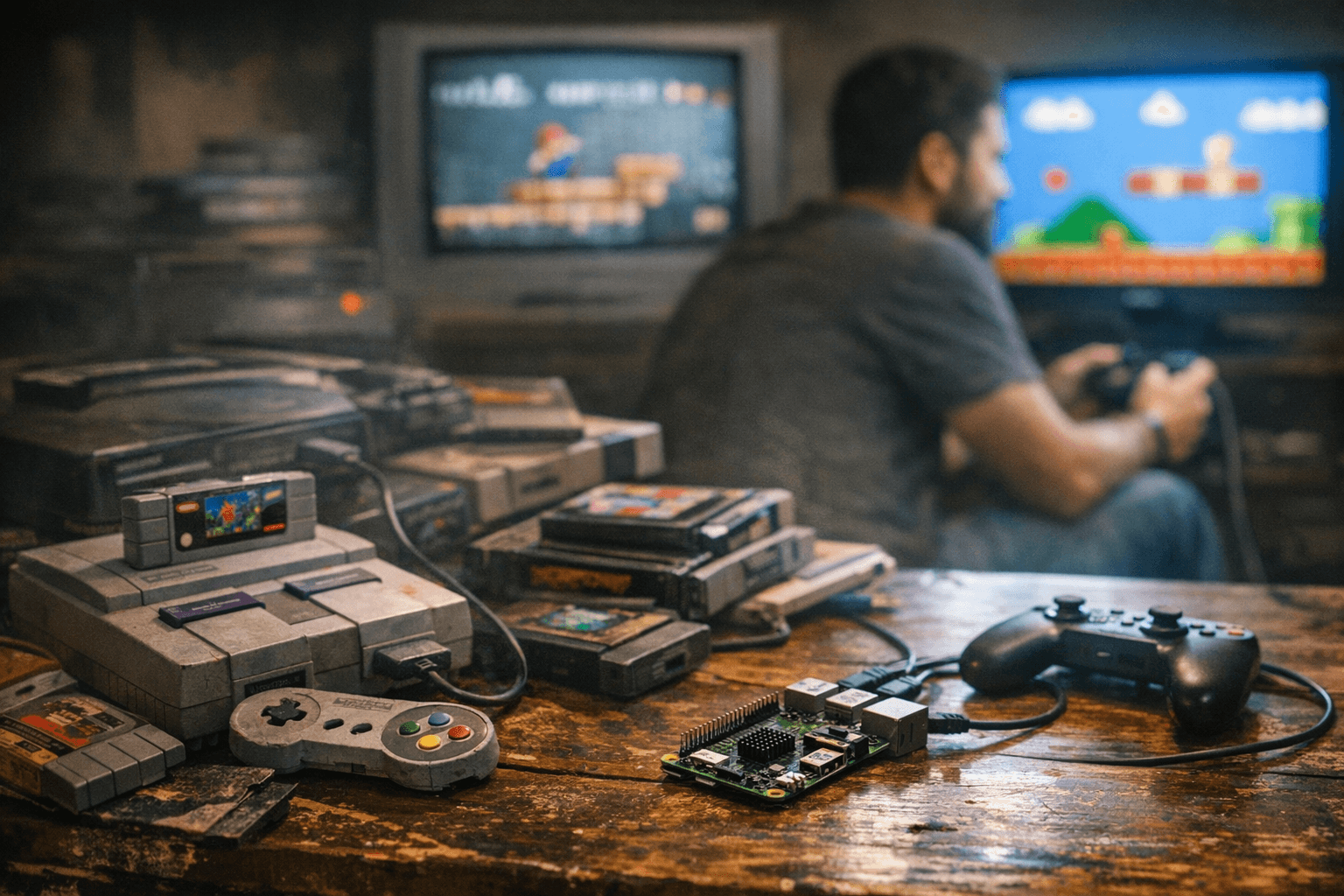
Retro gaming has always carried the weight of its own hardware. Capacitors fail, cartridge pins corrode, and CRT televisions grow scarcer every year. The question that keeps surfacing in community discussions is no longer whether emulation is good enough; it is whether aging physical hardware is still worth the trouble.
A single Raspberry Pi can emulate nearly every major console from the 1970s to the early 2000s, fits in the palm of your hand, costs less than $50, and sidesteps the expense and fragility of maintaining multiple aging consoles, each requiring specific cables, power supplies, and increasingly scarce physical media. That contrast drives much of the momentum behind emulation's growing appeal.
The display problem is where the hardware crowd runs into trouble first. Modern TVs introduce input lag, a delay between the time an image is received from a video signal and when it is displayed onscreen. Good emulators add very little latency on their own, but common large LCD TVs are particularly bad for retro gaming, often adding up to 100ms of latency by themselves. Running a SNES or Genesis on a flatscreen without a dedicated upscaler often means blurriness, scaling artifacts, and a feel that simply does not match the original experience. CRTs solve that problem natively, but sourcing a quality tube in 2026 is its own project, and they will only get rarer and more expensive.
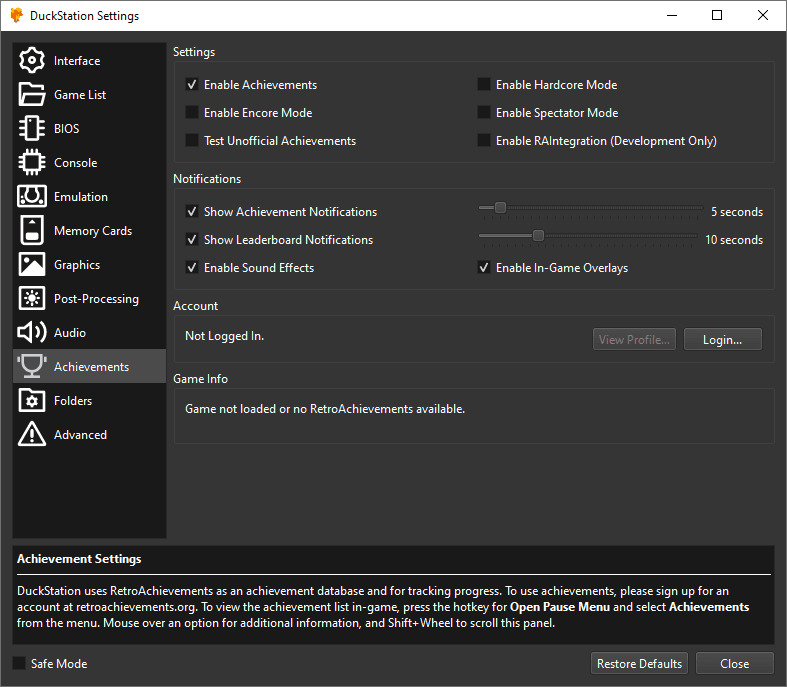
Emulation has found answers for both sides of that equation. The Libretro team developed a method to remove nearly all perceivable input lag in RetroArch, which means the latency argument that long favored original hardware has narrowed considerably. On the visual side, software like RetroArch, DuckStation, and Mesen allows users to run classic games with enhancements such as HD upscaling, save states, rewind functionality, and customizable controls. Accurate emulators and postprocessing shaders can reproduce scanlines, curvature, bloom, and NTSC artifacts to restore the intended look of CRT-era titles without requiring a tube television at all.
The preservation argument deserves equal weight. Hardware ages, storefronts vanish, DRM servers shut down, and great games get stranded; emulators keep legitimately owned libraries accessible, often with better visuals through upscaling, texture filtering, and shaders. Preservation groups dump ROM files before physical media degrades, saving games that might otherwise disappear forever.
Cost is the most immediate pressure point for newcomers. Mark, a 34-year-old graphic designer from Portland, bought a used NES for $60 hoping to relive childhood games with his son, but quickly ran into flickering screens, corroded cartridge slots, and missing controllers. That experience is increasingly common as retro hardware ages out of reliable use. Finding a working Game Boy Micro in 2025 is harder than locating a rare game; emulation bypasses scarcity entirely and removes the need to hunt eBay, risk counterfeit accessories, or solder in backlight kits.
None of this erases the case for original hardware. For speedrunning or competitive play, original hardware is still preferred. Purists point to tactile authenticity, collectible value, and timing accuracy that software cannot fully replicate. Modern IPS and VA monitors have brought input lag down considerably, but CRTs remain the gold standard; their inherent lack of digital processing and frame buffering offers a near-instantaneous experience that makes them ideal for competitive fighting games even in 2026.
But for everyone else, the calculus has shifted. One of the strongest advantages of emulation is convenience: with a single device, a PC, Raspberry Pi, or Android handheld, you can access thousands of games across multiple systems without maintaining aging hardware, replacing capacitors, or hunting down rare cartridges, and with features like rewind and custom shaders that original systems never offered. Preservation, access, and modern display compatibility have converged in software in a way that aging silicon simply cannot match.
This article was produced by Prism’s automated news system from verified source data, official records, and press releases, then run through automated quality and moderation checks before publishing. The system is built and supervised by the people who set the standards it runs under. Read our full AI policy.
Did this article answer your question?