Former Twisted Metal Developer Hails RPCS3 After PS3 Emulation Breakthrough
A former Twisted Metal developer who once said PS3 emulation would "never be" possible now calls RPCS3 "Amazing work" after a major breakthrough.
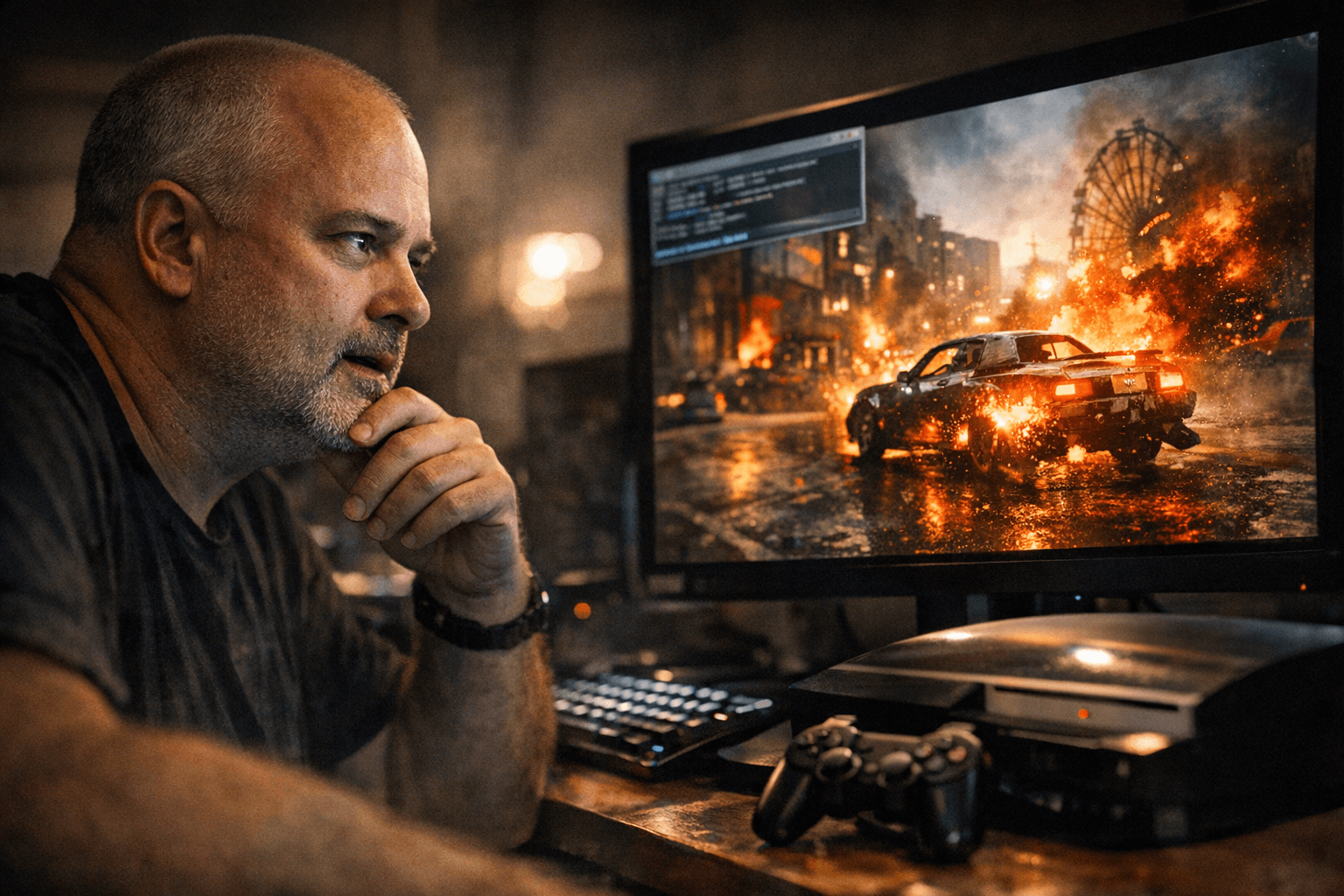
David Jaffe once treated PlayStation 3 emulation as a closed door. After RPCS3’s early-April Cell CPU/SPU breakthrough, the former Twisted Metal developer said the team had proven him wrong, first by acknowledging he had been convinced the PS3 would “never be” emulated and then by praising the project with a simple, emphatic “Amazing work.”
That reaction matters because RPCS3 is not a side project chasing a single trophy title. It is a multi-platform, open-source PlayStation 3 emulator and debugger written in C++ for Windows, Linux, macOS and FreeBSD, and its official compatibility database currently lists 3,562 games across 6,407 IDs. For a system built around Sony’s notoriously difficult Cell architecture, that kind of breadth marks a real shift from theory to practical preservation.
The Cell breakthrough gave Jaffe’s praise extra weight. RPCS3 said its new work on the CPU and SPU side could improve performance across the whole library, not just a few carefully chosen test cases. That is the kind of progress emulation communities notice immediately, because it changes what can be played, not just what can be demonstrated.
The clearest proof came from Twisted Metal (2012) itself. Time Extension reported that the game had already seen a 5 to 7 percent average FPS improvement from the breakthrough, a concrete gain that hobbyists can feel in moment-to-moment play. For users trying to revisit PS3-era exclusives on modern hardware, that means a better shot at smoother gameplay, fewer compromises, and a wider range of titles moving from “almost there” to genuinely usable.
RPCS3’s own description frames the project as the result of reverse engineering, and that is exactly why Jaffe’s reversal lands as more than nostalgia or industry small talk. A developer who once believed the PS3 would remain out of reach is now reacting to a preservation project that keeps pushing deeper into the machine’s hardest problems. For retro game emulation, that is the story: not just that the PS3 can be emulated, but that the barrier once seen as impossible is now giving way, game by game, frame by frame.
This article was produced by Prism’s automated news system from verified source data, official records, and press releases, then run through automated quality and moderation checks before publishing. The system is built and supervised by the people who set the standards it runs under. Read our full AI policy.
Did this article answer your question?