Lifehacker Explains How to Play Retro Games on Phones and TVs
Retro game prices are soaring, but you don't need a collection worth thousands to play the classics: emulation on phones, TVs, Raspberry Pi, and FPGA hardware puts nearly every console generation within reach.
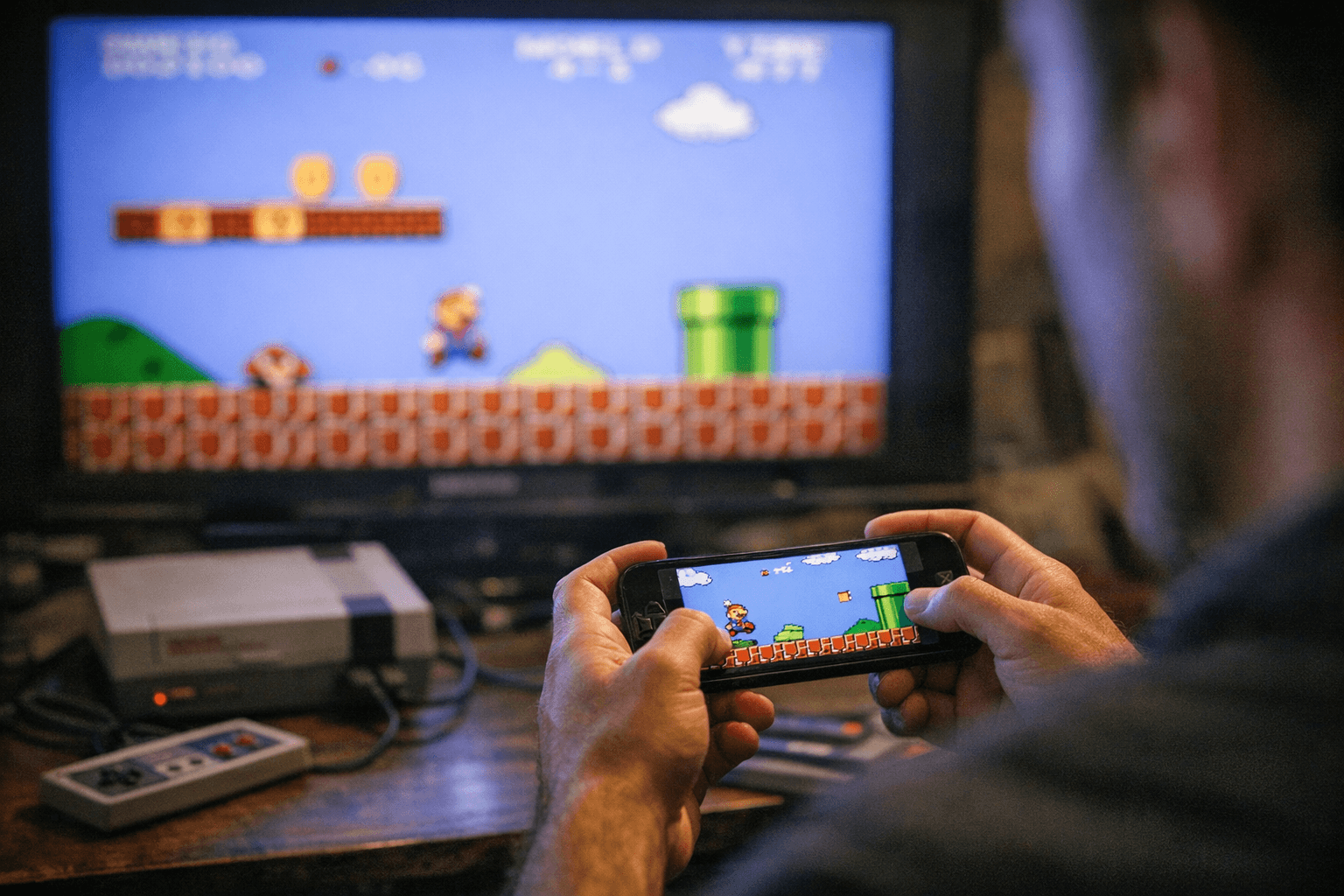
Collecting original retro hardware used to be a patient person's game, haunting garage sales and flea markets for a fair deal. That era is largely over. Prices for classic cartridges and consoles have soared amid what can only be described as a full-blown renaissance for old games, pricing out newcomers and straining the budgets of long-time collectors alike. Emulation has always been the answer for players who want to engage with gaming history without paying collector's-market premiums, and the options available today, spanning smartphones, televisions, single-board computers, and cutting-edge FPGA hardware, have never been better or more accessible.
As Lifehacker's coverage puts it, "Emulation has introduced players to retro games and hard-to-find titles for years, and is at the center of a vibrant and exciting community of retro gamers and preservationists alike." That community has spent decades building the infrastructure that makes this possible. Here is how to plug into it, whatever your starting point.
Start Small: Mini Consoles, Subscription Services, and ROM Hacks
The best first step into emulation is not buying a specialized device or configuring a Linux distribution. It is simply testing whether classic games hold your attention at all. The Lifehacker author who covers retro gaming is transparent about their own path: "I started out with one of Nintendo's mini consoles and have upgraded to serious original hardware over time, but that doesn't mean I don't still have fun playing emulated games on my phone."
That first-hand progression mirrors what most people experience. Their core advice is direct: "My biggest piece of advice is to start small: grab a used mini console, check out ROM hacks of your favorite games, sign up for one of Sony, Nintendo, or Microsoft's subscription service, and see if retro gaming is right for you." Nintendo Switch Online, for instance, includes over 150 classic titles across NES, SNES, and Game Boy, making it one of the easiest on-ramps available. ROM hacks, which are fan-made modifications of existing games, also offer a different way to engage with familiar titles before you commit to building out a full emulation setup.
Software Emulation: Your Phone and TV Are Already Capable
For most players, the hardware they already own is powerful enough to run software emulators covering nearly every console generation through the early 2000s. Android devices in particular are remarkably capable: the operating system appears on phones, tablets, handheld gaming devices, media streaming sticks, and smart TVs, giving emulators an enormous potential install base. Plug a Bluetooth controller into your phone, mirror to a television, and you have a capable retro gaming setup that fits in your pocket.
The advantages of software emulation are considerable:
- Powerful coverage spanning nearly every game and console ever released
- Highly customizable and extendable configurations
- A massive open-source community constantly updating and improving the software
- No additional hardware purchase required if you already own a capable phone or PC
The drawbacks are worth knowing upfront too. Legally acquiring ROM files is the most frequently cited hurdle, something covered in more detail below. At the high end of software emulation, features like raytracing for enhanced visuals require a powerful computer, which is not a concern for most classic-era emulation but matters if you are pushing into sixth-generation consoles and beyond.
Raspberry Pi: The DIY Living Room Console
For players who want a dedicated device connected to a television, a Raspberry Pi running RetroPie is one of the most popular solutions the community has settled on. RetroPie combines EmulationStation, RetroArch, and a collection of emulator cores into a single, approachable front-end that looks and feels like a real console menu. Load ROMs onto a microSD card, connect an HDMI cable and a controller, and the setup behaves like a purpose-built retro gaming machine.
The Raspberry Pi approach sits in the sweet spot between cost and capability. The hardware is inexpensive and widely available, the software is actively maintained by an open-source community, and the result is a device that can handle emulation from Atari-era hardware all the way through PlayStation and Nintendo 64, depending on which model you use. It requires some hands-on configuration, but the community documentation is thorough enough that most setups follow a repeatable process without requiring programming knowledge.
FPGA Hardware Emulation: The Most Accurate Approach
At the technical frontier of the retro gaming world sits FPGA hardware emulation, which works on a fundamentally different principle than any software emulator. "The hottest thing in retro gaming over the past few years has been FPGA hardware emulation," and the distinction from conventional emulation is significant.
FPGA stands for "field-programmable gate array," and gives developers access to a chip that can be programmed to mimic the architecture of old game consoles. Instead of emulating software, the way traditional emulators do, it emulates the hardware itself. "When done properly, the game can't tell the difference between the FPGA chip and original hardware. This results in the most accurate experience of playing old games on modern hardware possible, whether you're using ROMs or original cartridges."
That last detail matters: FPGA devices typically accept original cartridges, which means no ROM acquisition is required at all. Companies like Analogue have built a market around this technology, producing hardware that appeals to players who want authenticity without paying vintage-hardware prices or relying on the software approximations that emulators, however excellent, inherently involve. The tradeoff is cost. FPGA devices are substantially more expensive than a Raspberry Pi setup, and occupy a niche aimed at enthusiasts for whom cycle-accurate accuracy is the point.
The ROM Question: Legal Considerations and Cartridge Readers
Any honest guide to emulation has to address the ROM situation plainly. Legally acquiring ROM files is genuinely complicated. Downloading ROMs from the internet for games you do not own is broadly considered copyright infringement regardless of how you justify it, and even the legal status of ROMs for games you do own is not clearly settled in most jurisdictions. The community is not unaware of this; the preservation angle of emulation is one of its most earnest motivations, given how many games exist on media that is physically deteriorating.
One hardware solution that threads this needle is Save The Hero's Open Source Cartridge Reader, a device that lets you dump ROM files directly from your own cartridge collection. Creating a digital backup from a physical copy you own is a meaningfully different situation than downloading a ROM from a third-party site, and devices like this have become a popular option for collectors who want to build a library from games they already own while keeping their original hardware in a shelf-safe state.
The broader picture is that the emulation community spans a wide range of motivations: casual players discovering old games, dedicated preservationists working to keep titles alive that would otherwise be lost, and hardware enthusiasts chasing the most accurate reproduction of a specific console's behavior. The tools and entry points available in 2026 serve all of them, at every level of technical commitment. "Whether you dabble or dive into the deep end, there's never been a better time to get into old games, and it's only going to get better from here.
This article was produced by Prism’s automated news system from verified source data, official records, and press releases, then run through automated quality and moderation checks before publishing. The system is built and supervised by the people who set the standards it runs under. Read our full AI policy.
Did this article answer your question?