MiSTer Darius II core advances, Taito multi-screen arcade preservation grows
Darius II is edging toward a real three-screen MiSTer showcase, while AmigaVision ships a giant practical update with 2,955 manual links.
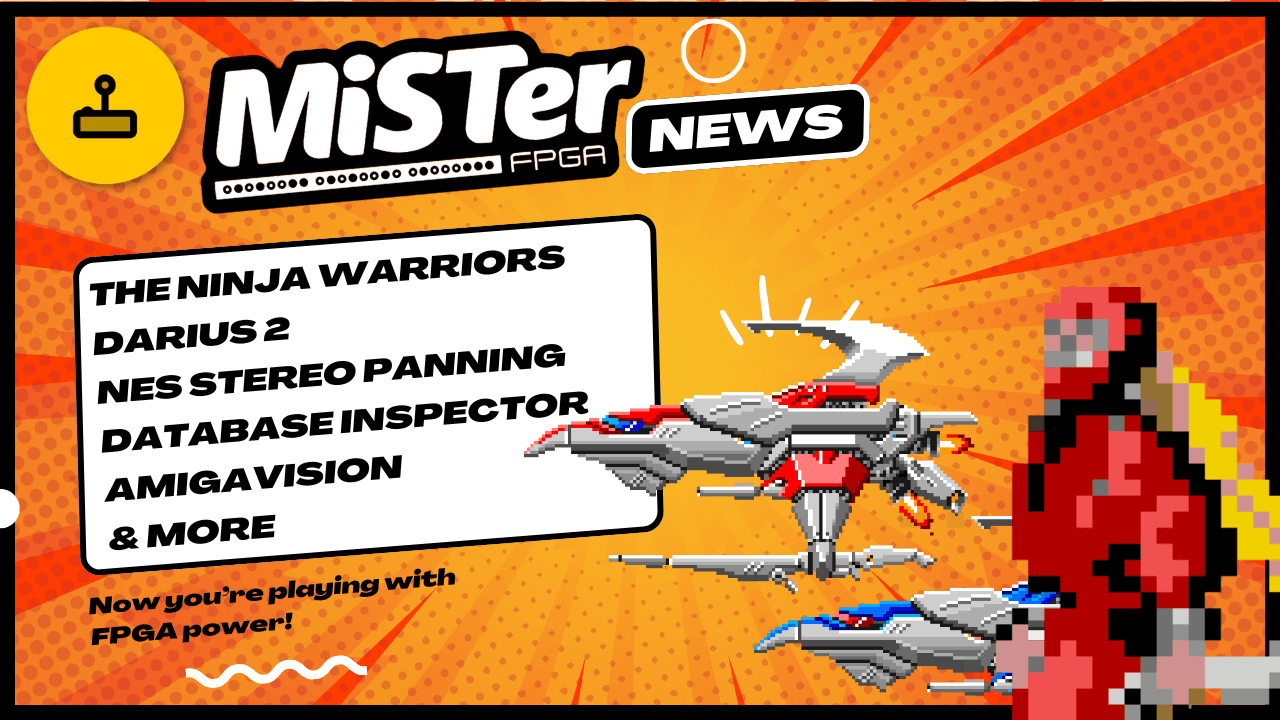
MiSTer is getting better in the way that matters most: it is becoming easier to play, easier to preserve, and easier to actually use. The strongest example is the new Darius II core progress, where Umberto Parisi is pushing Taito’s three-screen arcade hardware forward on MiSTer, while AmigaVision has landed a huge usability upgrade that reaches across hardware and operating systems. One story is still very much in motion; the other is ready to improve setups now.
Darius II shows why multi-screen arcade preservation still matters
The Darius II core is the kind of MiSTer project that rewards patience. In the April 19 milestone update, the background rendering bug, described as the “spurious pixels” issue, was fixed, and the three-screen core was shown drawing backgrounds cleanly. That is a real step beyond the sort of partial boot or empty attract mode that often marks the earliest FPGA work. The remaining gaps are still important, though: sprites are not fully visible yet, and YM2610 audio is still on the to-do list.
That matters because Darius II is not just any shooter. Taito released it in 1989, and the arcade original used three monitors aligned left-to-right, making it one of the most distinctive widescreen cabinets of its era. The project is being developed by Umberto Parisi, the same developer who created the original Darius core, which gives the update extra weight for anyone following MiSTer’s arcade side. When the hardware finally shows the right background layout on a true multi-screen build, that is preservation moving from theory to something that can eventually be played as intended.
The same preservation logic applies to The Ninja Warriors, Taito’s 1988 triple-wide arcade release. It is another reminder that MiSTer’s best work often comes from chasing awkward cabinet formats that modern flat panels never really replicate cleanly. These are not convenience ports. They are attempts to preserve the feel of boards that were designed to fill your peripheral vision, and MiSTer is one of the few practical ways to keep that presentation alive.
What is usable now, and what is still waiting
Right now, the Darius II core is more proof of momentum than something to build a weekend around. The useful takeaway is not “play it today,” but “the project has crossed the early dead-end stage and is now clearing recognizable technical hurdles.” Backgrounds rendering correctly means the core is starting to look like the target board instead of a placeholder, and that is often the point where progress becomes much more tangible.
- sprites are still unfinished
- YM2610 audio still needs integration
- the overall experience is not yet ready for full arcade-authentic play
What is still in progress is equally clear:
If your interest is preservation rather than immediate gameplay, this is the sort of update worth watching closely. It signals that multi-screen Taito work on MiSTer is still advancing in visible, testable steps.
AmigaVision is the update that pays off immediately
If Darius II is the future of MiSTer preservation, AmigaVision is the present. The April 16 release is being framed as the project’s biggest yet, and the practical value is hard to miss. It spans original Amiga hardware, MiSTer, Analogue systems, Raspberry Pi, and desktop emulator setups on Windows, macOS, Linux, iOS, and Android. That is a rare kind of cross-platform reach, and it makes the update useful whether you run a dedicated cabinet, a living room rig, or a phone-based launcher.
The headline feature is one that actually changes daily use: AmigaVision says it fixed long-standing NTSC scaling problems that had lingered in Amiga emulation for 30 years. It also added overscale support for 16:9, 16:10, and 21:9 displays without stretching, which is exactly the sort of fix that turns a setup from “technically working” into “pleasant to use.” On top of that, the release added 2,955 QR-code links to game manuals, a huge quality-of-life jump for anyone who wants quick reference material without digging through folders or web searches.
The scale is striking too. AmigaVision says the release covers roughly 5,000 game and demo configurations, which makes this much more than a cosmetic refresh. It is a broad usability pass that helps both new users and long-time Amiga players who want a cleaner path into their library. A fast-follow update was planned for April 26 because testers found obscure issues quickly after launch, and that update fixed Raspberry Pi PAL/NTSC switching while also improving MiSTer audio and packaging. That is the kind of maintenance cycle that keeps a project genuinely usable instead of merely impressive.

MiSTer Companion is getting easier to live with
MiSTer Companion is another piece of the ecosystem that is quietly getting more practical. MiSTer Companion Mobile has arrived as an Android version of the utility and is in early access, with an expected price of €2.99. The desktop app remains free and open source, so the mobile version looks like a paid convenience layer rather than a replacement for the existing tool.
The latest MiSTer Companion release, v3.5.0, adds official RetroAccount support in the Update All configurator and MiSTer Pico-8 install support. That sounds small until you remember how much time MiSTer users spend managing cores, updates, and add-ons. Anything that makes update_all smoother, more predictable, or more account-aware is immediately useful, especially for users who keep multiple setups in sync.
RetroAchievements keeps spreading across cores
RetroAchievements is also becoming a bigger part of the MiSTer conversation. The service says it has been adding achievements to retro games since 2012, and support is now being integrated into many MiSTer cores, including NES, SNES, N64, and Neo Geo. For players who like a bit of structure without leaving retro hardware behind, that is a meaningful way to refresh old libraries.
There is still one major boundary: current MiSTer support is described as softcore-only, with hardcore verification still being pursued. That means the achievement layer is useful now, but the stricter, more authentic verification path is not fully in place yet. Even so, the direction is clear, and it gives long-term users another reason to keep an eye on core updates beyond simple compatibility checks.
A separate unofficial NES build also adds per-channel stereo panning and support for extra sound channels such as VRC6, which some Japanese cartridges used. That is the kind of enhancement that matters most to players who care about audio detail, cart-specific behavior, and the small differences that make a known game feel right again.
DB Inspector makes the ecosystem less mysterious
One of the most underrated additions in the roundup is DB Inspector from theypsilon. It is a static React app that can inspect local .json and .json.zip files, load remote databases, render file and archive trees, and resolve tags through tag_dictionary. In plain terms, it helps users inspect MiSTer downloader databases, test filters, and debug update behavior without running the updater blind.
That is exactly the kind of tool an active scene needs once its infrastructure gets big enough to feel opaque. As MiSTer’s downloader side grows more complex, a way to see what is happening before you apply an update saves time and avoids confusion. It does not grab headlines the way a new arcade core does, but it is the sort of utility that keeps the whole ecosystem easier to trust.
Taken together, these updates point in the same direction: MiSTer is becoming more valuable through steady, playable gains rather than splashy one-off announcements. Darius II is inching toward authentic three-screen preservation, AmigaVision is fixing real display and library pain points, and the surrounding tools are making the whole setup easier to manage. That is how a hobby platform becomes a long-term one.
This article was produced by Prism’s automated news system from verified source data, official records, and press releases, then run through automated quality and moderation checks before publishing. The system is built and supervised by the people who set the standards it runs under. Read our full AI policy.
Did this article answer your question?