ROCKNIX adds official Steam support, turning Android handhelds into mini Steam Decks
ROCKNIX’s new Steam support let Snapdragon handhelds run retro emulators, Linux games and Proton titles from one menu. For some owners, that turned a spare Android device into a pocket PC.
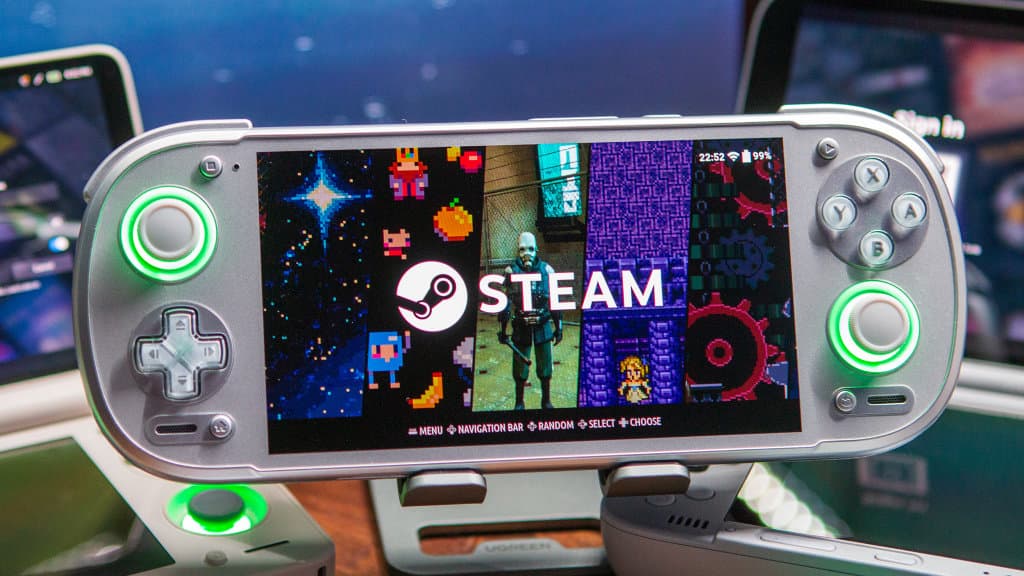
ROCKNIX took a sharp step beyond pure emulation when it added official Steam support, giving compatible handhelds a way to launch native Linux games and Windows games through Proton from the same firmware that already handles retro libraries. For owners of Snapdragon-based devices, that suddenly made a familiar Android handheld feel much closer to a tiny Steam Deck.
The change was not a proof-of-concept or a community workaround. ROCKNIX’s Steam feature was built into the system itself, with Steam installed from the Tools menu by choosing Start Steam. On first install, the firmware downloaded the FEX Arch rootfs along with the Steam runtime and its dependencies, then placed Steam inside the main EmulationStation interface. After login, ROCKNIX also created a second Steam storage location under /roms/steam, which makes the setup feel integrated rather than bolted on.
That integration matters most on the hardware ROCKNIX already supports. The current Steam feature was limited to nightly builds and Qualcomm-based handhelds, including the AYANEO Pocket ACE, Pocket DMG, Pocket EVO and Pocket S2, along with the Ayn Odin 2, Odin 2 Mini and Odin 2 Portal, plus Retroid’s Pocket 5, Pocket 6, Pocket Mini and Pocket Flip2. In practical terms, that means a growing slice of the Snapdragon handheld market can now boot into an emulation-first Linux environment and still reach a modern PC game launcher without changing devices.
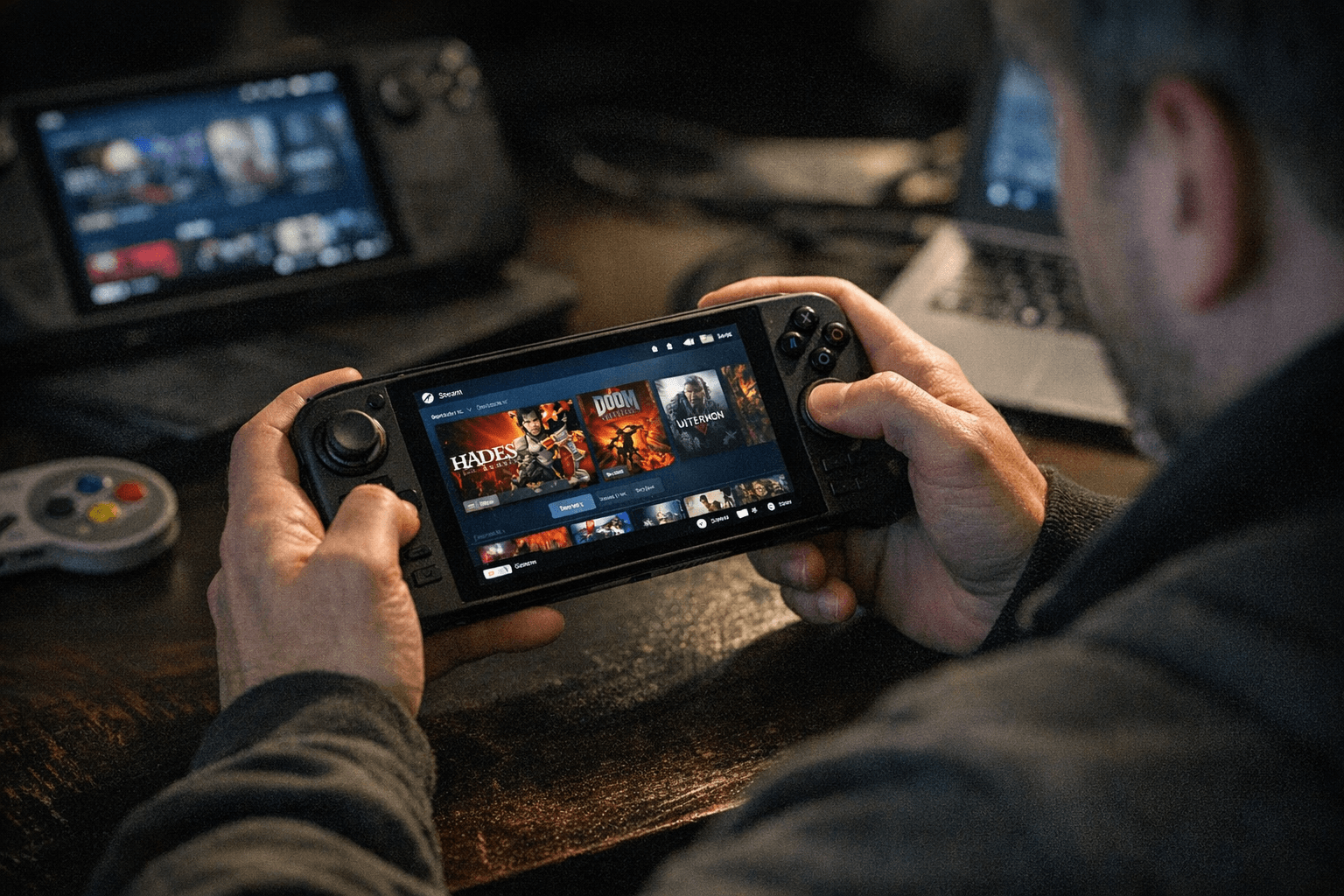
There were still clear tradeoffs. ROCKNIX said the Steam menu could not be opened from inside a game, so users had to exit the game and Steam entirely before relaunching. The project also said installing to internal memory significantly reduced Steam startup time as well as game install and launch times, a detail that could sway buyers deciding between eMMC, internal flash and slower SD-card setups.
The broader appeal is easy to see. ROCKNIX described itself as an immutable Linux distribution for handheld gaming devices focused on retro emulation, and its feature set already included local and remote multiplayer, Bluetooth audio and controller support, HDMI and USB output, cloud and LAN sync through Syncthing and rclone, and built-in VPN support. Steam support pushed that package into a more ambitious lane: one handheld for retro consoles, Linux-native games and Windows titles through Proton. Even with the project’s no-formal-support, tinkerer’s-distribution warning, the value proposition for existing hardware just got a lot more interesting.
This article was produced by Prism’s automated news system from verified source data, official records, and press releases, then run through automated quality and moderation checks before publishing. The system is built and supervised by the people who set the standards it runs under. Read our full AI policy.
Did this article answer your question?