Wind Waker decompilation accelerates as Zelda preservation momentum builds
Wind Waker’s decompilation has reached 63.20% with 45.23% fully linked, a real milestone for mods, ports, and preservation. That progress is fueling fresh Zelda scene attention.
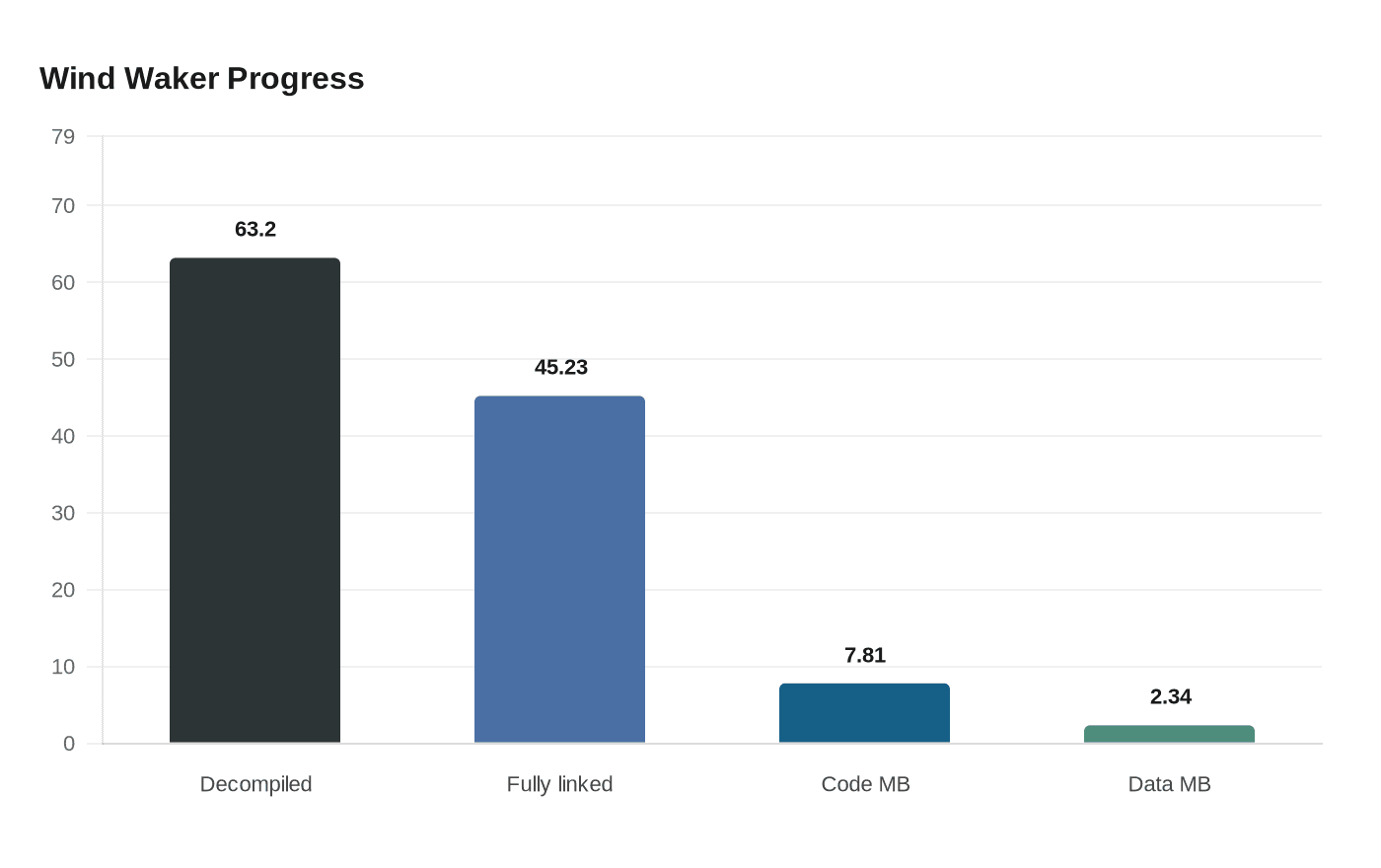
Wind Waker’s decompilation has pushed past the midpoint in a way that actually matters to players, modders, and preservationists: the project is now listed at 63.20% decompiled and 45.23% fully linked, with 7.81 MB of code and 2.34 MB of data tracked in the current progress report. That is not the same thing as having a finished PC version, but it is far beyond a curiosity. It means more of the GameCube game has been translated into readable, rebuildable source, which is the groundwork needed for deeper bug fixes, cleaner modding, and long-term maintenance when original hardware and aging binaries become harder to rely on.
The project, hosted by zeldaret, supports every major GameCube release of The Wind Waker, including the USA build GZLE01, the PAL build GZLP01, the Japanese release GZLJ01, and the Japanese kiosk demo D44J01. The repository shows 2,571 commits and a commit from only hours ago, a sign that this is not a frozen archive but an active reverse-engineering effort still chewing through the game’s codebase.
That progress is drawing extra attention because Zelda decompilation has become part of a larger preservation conversation. The related Twilight Princess repository now says the GameCube releases are completely matching, although not every translation unit has been linked yet. It also makes a hard distinction that matters in this scene: the project itself does not and will not produce a PC port. That line between decompilation and a playable native release is exactly where a lot of the current excitement, and confusion, lives.
Emulation already lets people play Wind Waker today on PC and other hardware through mature GameCube emulators, but emulation and decompilation solve different problems. Emulation reproduces the original machine behavior. Decompilation creates human-readable code that can be studied, rebuilt, and adapted. That is why the same momentum that has surrounded Twilight Princess fan port work, including Courage Reborn, is spilling into Wind Waker discussions. A separate static recompilation project for Wind Waker says it converts the game’s PowerPC machine code into native x86-64 C code for Windows 11, which is the kind of language that immediately gets the port crowd talking.
For preservation, the payoff is broader than any single fan build. Wind Waker launched in Japan on December 13, 2002, then in North America on March 23, 2003, and in Europe on May 2, 2003. As it moves toward its 24th anniversary in Japan, the work around it is doing what the best reverse-engineering projects do: making a classic easier to study, easier to maintain, and less likely to be stranded when the original binaries finally stop being the whole story.
This article was produced by Prism’s automated news system from verified source data, official records, and press releases, then run through automated quality and moderation checks before publishing. The system is built and supervised by the people who set the standards it runs under. Read our full AI policy.
Did this article answer your question?