hotpath-rs 0.18 adds async profiling for contention and backpressure
hotpath-rs 0.18 pushed profiling past CPU time, exposing channel backpressure, lock contention, and async stalls that ordinary flamegraphs often miss.
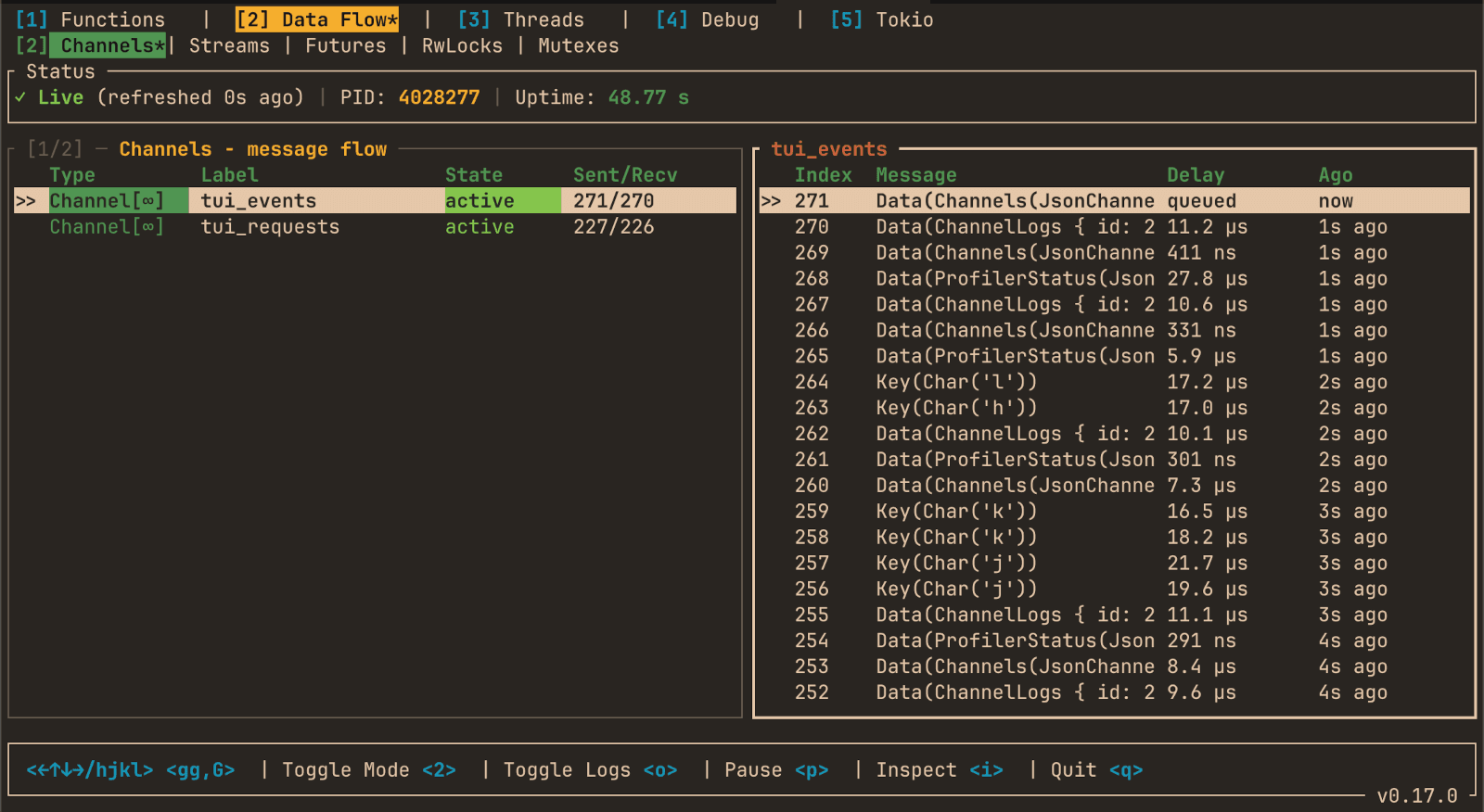
hotpath-rs 0.18 landed with a sharper answer to a familiar Rust problem: async code can look fine in benchmarks and still fall apart once queues back up, locks start fighting, and the scheduler spends more time waiting than working. The new release widened its instrumentation surface across channels, futures, streams, and lock-heavy paths, giving Rust teams a clearer view of where latency disappears when the hot path is really a waiting room.
That shift matters because traditional profilers are strongest at showing CPU burn, not coordination overhead. In a Tokio-heavy service, a task can sit behind a full channel, a contended mutex, or a stalled stream pipeline without any single function standing out as expensive. hotpath’s 0.18.0 release added a wrap-channel pattern aimed at exactly that blind spot, making contention and message-flow problems easier to spot than with sampling tools that only catch the work, not the backlog. For background workers and services whose latency comes from synchronization rather than computation, that is the difference between a guess and a fix.

hotpath-rs now describes itself as a profiler for CPU, memory, async execution, lock contention, channels, streams, and runtime behavior, and the project’s README says it combines a low-overhead profiler with a live TUI dashboard, static reports, memory allocation tracking, channel and stream monitoring, and futures instrumentation. Paweł Urbanek, the maintainer, said he spent more than six months building it and that the project has passed 100,000 downloads on crates.io. He also said hotpath can be started with just two macros, hotpath::main and hotpath::measure, and that he presented the project at Rustikon in a talk that included a live demo using a Zed editor fork.
The 0.18 release also fit into a fast-moving line of changes rather than arriving in isolation. hotpath-rs 0.14.0, released on 2026-03-08, added future-poll duration instrumentation and async-channel support. Version 0.15.0, on 2026-04-09, brought configurable macro limits, float percentiles, and per-report environment limits, while 0.15.1, on 2026-04-27, added function labels and batching-related performance changes. By the time This Week in Rust 657 highlighted hotpath-rs 0.18 on 2026-06-25, the project had become one of the Rust ecosystem’s more specialized answers to the problem of code that looks fast until the waiting starts.
This article was produced by Prism’s automated news system from verified source data, official records, and press releases, then run through automated quality and moderation checks before publishing. The system is built and supervised by the people who set the standards it runs under. Read our full AI policy.
Know something we missed? Have a correction or additional information?
Submit a Tip