Rust Becomes the Go-To Language for PostgreSQL Extensions and Tooling
Rust is rapidly claiming ground in the PostgreSQL ecosystem, with projects like pgrx making it easier than ever to write high-performance extensions in safe, modern code.
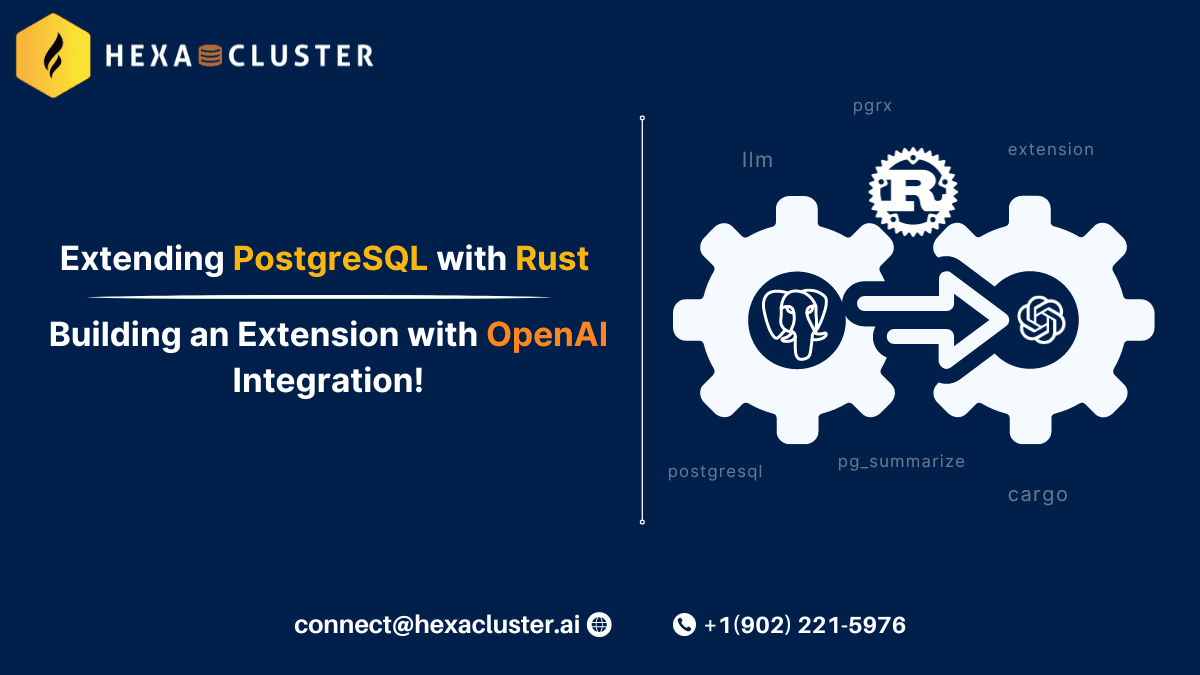
The PostgreSQL ecosystem has always attracted developers who care deeply about reliability and performance, so it makes a certain kind of sense that Rust, a language built around those same principles, is becoming the default choice for anyone building extensions, sidecars, and tooling around Postgres. A technical deep-dive published on March 10, 2026 surveyed the current landscape of Rust-powered PostgreSQL projects and found a community that has moved well past the experimental phase into genuinely production-ready infrastructure.
Why Rust and PostgreSQL are a natural fit
PostgreSQL extensions have traditionally been written in C, which gives authors direct access to internal Postgres APIs but comes with all the memory-safety risks and cognitive overhead that C development entails. Rust offers a compelling alternative: the same low-level control and performance profile, but with a type system and ownership model that eliminate entire categories of bugs before they ever reach a production database. For extension authors who want to ship reliable code without spending half their time chasing segfaults, the trade is obvious.
The safety guarantees matter even more in the context of a database process. An extension runs inside the Postgres backend itself, which means a memory corruption bug does not just crash your application, it crashes the database server. Rust's compile-time checks provide a meaningful layer of protection that C simply cannot offer by default, and that protection is especially valuable when the failure domain is this consequential.
pgrx: the project that changed the conversation
The most significant piece of infrastructure enabling this shift is pgrx, a framework that lets developers write Postgres extensions entirely in Rust while still hooking into the full range of Postgres internals. Rather than requiring extension authors to manually write C bindings or wrestle with the Postgres build system, pgrx abstracts away the boilerplate and exposes a clean Rust API. Developers can define SQL-callable functions, custom types, operators, and index access methods using idiomatic Rust code, and pgrx handles the translation layer.
The project has matured considerably, and its existence has effectively lowered the barrier to entry for the entire category. Before pgrx, writing a non-trivial Postgres extension required deep familiarity with Postgres internals and comfort working in C. With pgrx, a developer who knows Rust well can become a productive extension author in a fraction of the time. That accessibility shift is compounding: more authors means more extensions, which means more of the ecosystem gravitates toward Rust as the lingua franca for Postgres customization.
Extensions, sidecars, and the broader tooling picture
The March 10 deep-dive made clear that the Rust-in-PostgreSQL story is not limited to in-process extensions. A growing collection of sidecars and external tooling projects have also adopted Rust as their implementation language, drawn by its strong async story, excellent performance characteristics, and the reliability guarantees that matter when you are building something that sits in the critical path of database operations.
Sidecar processes, which run alongside Postgres to handle tasks like connection pooling, logical replication management, or observability, benefit particularly from Rust's threading model and low-overhead async runtime support. When a sidecar needs to handle thousands of concurrent connections or process a high-throughput replication stream without adding meaningful latency, Rust's performance profile becomes a concrete engineering advantage rather than an abstract preference.

The tooling layer, covering everything from schema migration utilities to query analyzers and backup systems, has seen similar adoption. Developers building these tools want the binary distribution story that Rust enables, the ability to ship a single statically-linked executable with no runtime dependencies, alongside the confidence that comes from Rust's type system when handling complex SQL parsing or binary protocol work.
What this means for extension developers today
If you are building a new Postgres extension in 2026, the default starting point has shifted. The community infrastructure, documentation, and prior art now exist in sufficient quantity that choosing Rust is not a pioneering decision; it is a well-supported path with active maintainers, Stack Overflow answers, and real-world production deployments to learn from.
A few practical realities worth understanding as you get started:
- pgrx handles a substantial amount of the Postgres internal API surface, but extensions that need to reach into less-common internals may still require some familiarity with how Postgres structures its memory contexts and executor state.
- The compile-time overhead of Rust is real, and extension development involves incremental builds that touch generated C bindings, so build times can be longer than pure Rust projects. Investing in a development setup with caching in place pays off quickly.
- Testing Postgres extensions requires running an actual Postgres instance, and pgrx provides test framework integration that handles this automatically, making it far easier to write unit and integration tests than the traditional C extension development workflow ever was.
- The async ecosystem in Rust, particularly tokio, is what most sidecar and tooling projects are built on, so familiarity with async Rust is increasingly relevant even if your extension itself is synchronous.
The community trajectory
What the March 10 survey captured most clearly is the sense of momentum. Rust has not merely found a foothold in the PostgreSQL ecosystem; it has established the kind of critical mass where new projects default to Rust rather than evaluating it as one option among several. The projects that exist today are building the library infrastructure, the conventions, and the shared knowledge that will make the next generation of PostgreSQL tooling even more capable.
PostgreSQL itself continues to evolve, with each major release expanding the extension API surface and making it possible to do more from outside the core codebase. Rust is positioned to take full advantage of those expansions. As Postgres grows more extensible and Rust grows more mature, the gap between what you can build in C and what you can build in Rust continues to close, while the gap in developer experience, safety, and maintainability continues to widen in Rust's favor.
For developers already working in the Rust ecosystem, the PostgreSQL extension space represents one of the more rewarding places to apply those skills, combining systems programming depth with genuine practical impact on one of the world's most widely deployed databases.
This article was produced by Prism’s automated news system from verified source data, official records, and press releases, then run through automated quality and moderation checks before publishing. The system is built and supervised by the people who set the standards it runs under. Read our full AI policy.
Did this article answer your question?