Rust Clone VMM Forges Cheap VM Copies for Shell Hosting
Clone treats VMs like forkable Unix processes, booting one KVM template and cloning it with copy-on-write so dense shell hosting gets far cheaper.
A fork for virtual machines
Clone is the kind of systems project that makes an old operating-system trick feel newly useful again. Instead of booting every guest from scratch, it boots one KVM-backed template VM and then forks isolated copies from it, using Shadow Clone page mapping and copy-on-write sharing to keep the expensive parts from repeating.

That matters because virtual machines usually pay twice: once in startup time, and again in duplicated memory. Clone is aimed at multi-tenant shell hosting and high-density VM workloads, so the promise is simple and very Rust-friendly in spirit: make strong isolation feel closer to `fork()` than to a full cold boot.
How the template-VM model changes the math
The core workflow is built around a single base machine. Clone loads and populates that template once, then spins up additional guests by inheriting the template state instead of rebuilding it for each user or test job. The project description says this can make a host running 100 shells use memory as if it were running about 10, which is the kind of density jump that gets attention in homelabs and small production clusters alike.
Clone is described as about 25K lines of Rust, packaged as a single binary, and it reclaims idle VMs automatically. That combination is practical in a way hobbyist operators will appreciate: one binary to deploy, hardware-backed isolation through KVM, and less wasted RAM sitting around in guests that are not actively doing work.
Why shell hosting is the perfect stress test
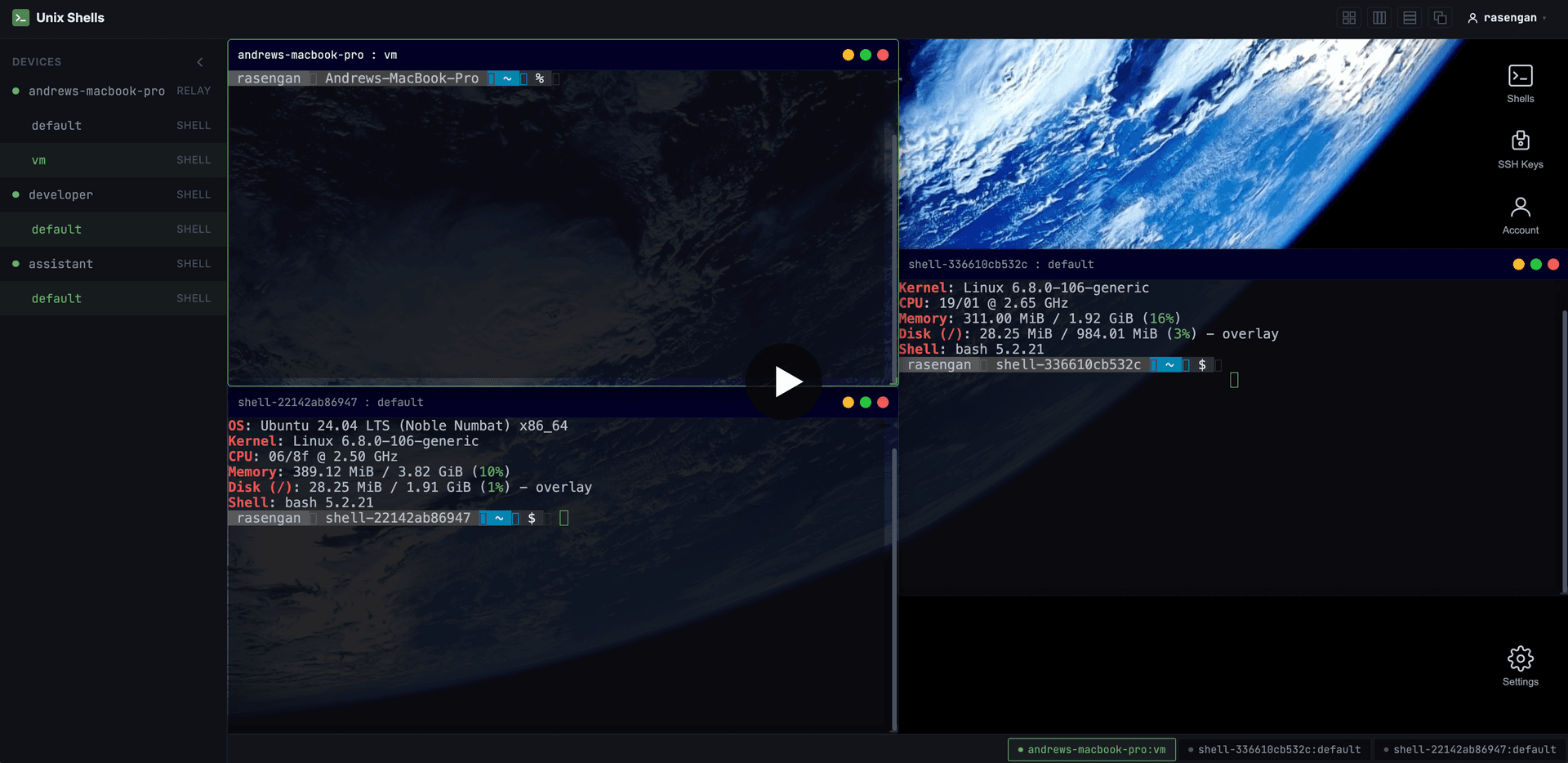
The clearest real-world fit is shell hosting, because shell sessions are exactly where users want isolation without waiting around for a heavyweight boot. unixshells.com already uses Clone as its VMM, and Unix Shells says each shell is a real KVM virtual machine with its own kernel, not a shared-kernel container with a different coat of paint.
Its public shell service adds more clues about the target audience. The platform advertises Ubuntu 24.04, more than 200 preinstalled tools, public IPv6, dev preview URLs, and access from terminal, browser, or phone. Unix Shells also says everything is loaded into a memory snapshot so nothing counts against disk quota, the VM boots in seconds, and sessions can survive disconnects and reboots, which is exactly the sort of persistence that makes a browser tab or a phone session feel like a real workspace instead of a toy demo.
Where Clone fits in the lightweight-VM landscape
Clone is not the first project to chase speed and density in virtualization, but it is pushing on a different part of the problem. Firecracker, built at AWS for services like Lambda and Fargate, is the most recognizable benchmark in this space. Amazon says it has been used in Lambda since 2018 and now supports millions of workloads and trillions of requests per month, which shows how far minimalist virtualization can go once it reaches real production scale.
Firecracker’s public spec also puts hard numbers on its lean design, with VMM-thread memory overhead of 5 MiB or less for a 1-vCPU, 128 MiB microVM under the tuned configuration. Clone’s angle is different: it is trying to reduce the guest-side cost of isolation itself by sharing template state across forked VMs. In practice, that makes Clone feel less like a microVM reimplementation and more like a new cloning model for high-density shells.
This is not a brand-new cloning idea, but it is a new kind of implementation
Template-based VM creation has been around for years. Proxmox VE documents linked clones and template deployment as a long-standing way to create KVM VMs quickly while saving storage, and Oracle’s KVM guidance warns that the source VM needs to be prepared carefully so unique parameters do not break the clone.
Clone takes that familiar pattern and pushes it into a more aggressive, fork-like model with Rust, Shadow Clone page mapping, and copy-on-write sharing at the memory level. That is what makes it interesting to Rust infrastructure readers: the project is not just cloning disks faster, it is trying to make whole VMs behave more like process children, where the base state is shared until someone actually writes to it.
Why the Rust angle matters
Rust is a natural fit for something like Clone because the project lives at the intersection of memory management, virtualization, and operational safety. A single-binary VMM with hardware-backed isolation is exactly the kind of low-level system where the language’s emphasis on correctness and control can pay off, especially when the end goal is production shell hosting rather than a demo.
The broader takeaway is bigger than one crate or one shell platform. If Clone keeps maturing, it could become a useful reference point for how Rust reshapes high-density virtualization: faster onboarding for ephemeral environments, lower memory pressure for sandboxed workloads, and a cleaner path to running lots of isolated shells without turning every guest into a full financial decision.
For Rust operators running homelabs, test clusters, or disposable dev environments, that is the real appeal. Clone points toward a world where a VM does not have to feel heavy just because it is isolated, and where cheap copies can be spun up with the same confidence and speed that Unix programmers have expected from processes for decades.
Know something we missed? Have a correction or additional information?
Submit a Tip