Rust Experts Spar Over C Knowledge, and Rust’s Steep Learning Curve
A thread between @valigo and @olson_dan reopened Rust’s oldest argument: whether elite skill comes from C instincts, or from Rust itself.
Rust’s toughest argument right now is not about syntax or macros, but about status. In a thread that put @valigo and @olson_dan at the center of the conversation, the question was whether the best Rust programmers need deep C and low-level C++ instincts to notice the hardware details Rust exposes, or whether that is gatekeeping disguised as wisdom earned the hard way.
The dispute lands because Rust no longer lives on the fringe. Rust 1.0 shipped on May 15, 2015, after the project had been framed around safe systems programming and concurrency, and the language is now widely positioned as a way to build “reliable and efficient software.” That ambition sits inside a broader push toward memory-safe programming. In February 2024, the White House Office of the National Cyber Director said the highest-leverage way to reduce memory-safety vulnerabilities was to secure the programming language itself, and CISA and the NSA later published guidance on memory-safe languages and memory-safe roadmaps in 2025.
That makes the C-versus-Rust debate more than a culture-war sidebar. The Rust Foundation’s interoperability problem statement, released on November 12, 2024, explicitly noted that for organizations with millions of lines of C++ in flagship products, a rewrite may not be practical. In other words, a lot of teams arrive in Rust with C++ baggage, and many will keep carrying it. That is why the argument around @valigo and @olson_dan matters: it reflects the real adoption path for companies and hobbyists alike.
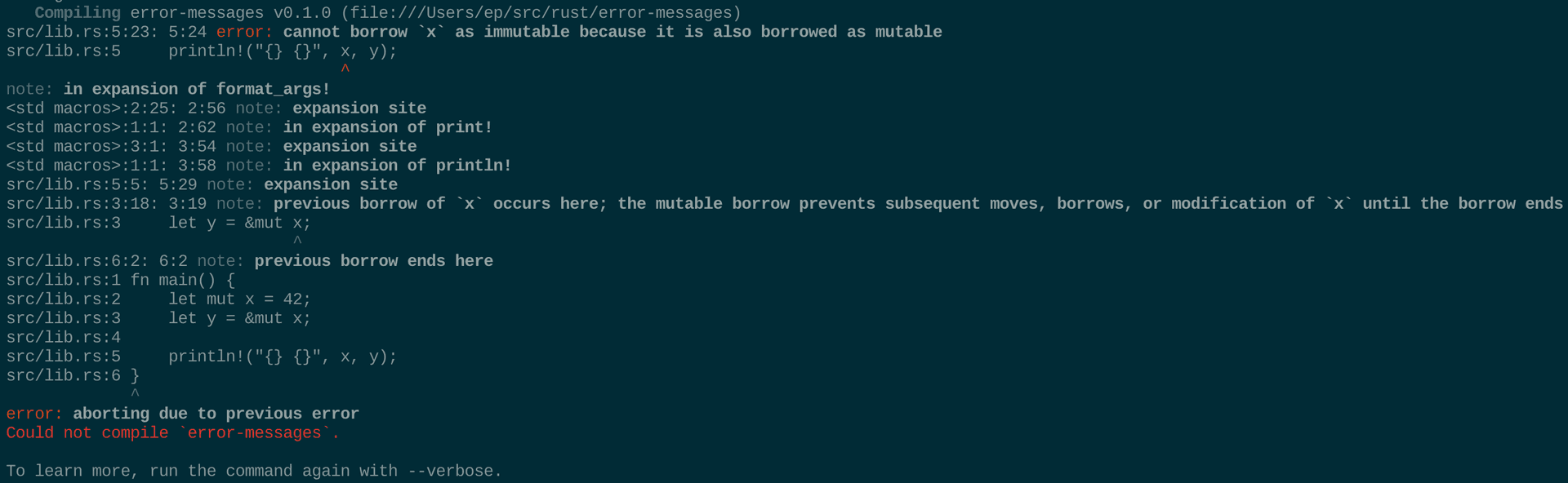
The practical answer is narrower than the rhetoric. Low-level knowledge helps most when you are working close to the metal, especially in unsafe code, async runtimes, and performance-sensitive systems where aliasing, memory layout, cache behavior, and scheduling details can make or break a design. But a large share of Rust can be learned entirely within Rust, including ownership, borrowing, lifetimes, traits, error handling, and idiomatic API design. You do not need to think like a C programmer to write good application code, and the language’s own roadmap has explicitly called for flattening Rust’s learning curve.

The community’s numbers show how central that tension has become. Stack Overflow’s 2024 Developer Survey said Rust remained among the most admired technologies, and Stack Overflow’s coverage noted that Rust had topped its “most loved” language category since 2016. The 2025 State of Rust Survey collected 7,156 responses over 30 days, from November 17 to December 17, 2025, giving the project a recurring feedback loop on learning and tooling pain points. Rust 1.85.0, which stabilized the 2024 edition on February 20, 2025, was another sign that the language has matured far beyond its early reputation.
That is the real split behind the thread. Rust is both a new safety-first ecosystem and a practical upgrade path for people coming from C and C++. Elite Rust work still rewards systems thinking, but the language has also grown into its own discipline, and the fastest way to deepen it is not to cosplay as a C veteran, but to know exactly when C instincts help and when Rust’s own model does the job better.
This article was produced by Prism’s automated news system from verified source data, official records, and press releases, then run through automated quality and moderation checks before publishing. The system is built and supervised by the people who set the standards it runs under. Read our full AI policy.
Did this article answer your question?