Rust's Ownership Model Makes Safe Concurrent Programming Practical and Reliable
Rust's borrow checker turns concurrency from a source of dread into a compile-time guarantee, preventing entire classes of race conditions before your code ever runs.
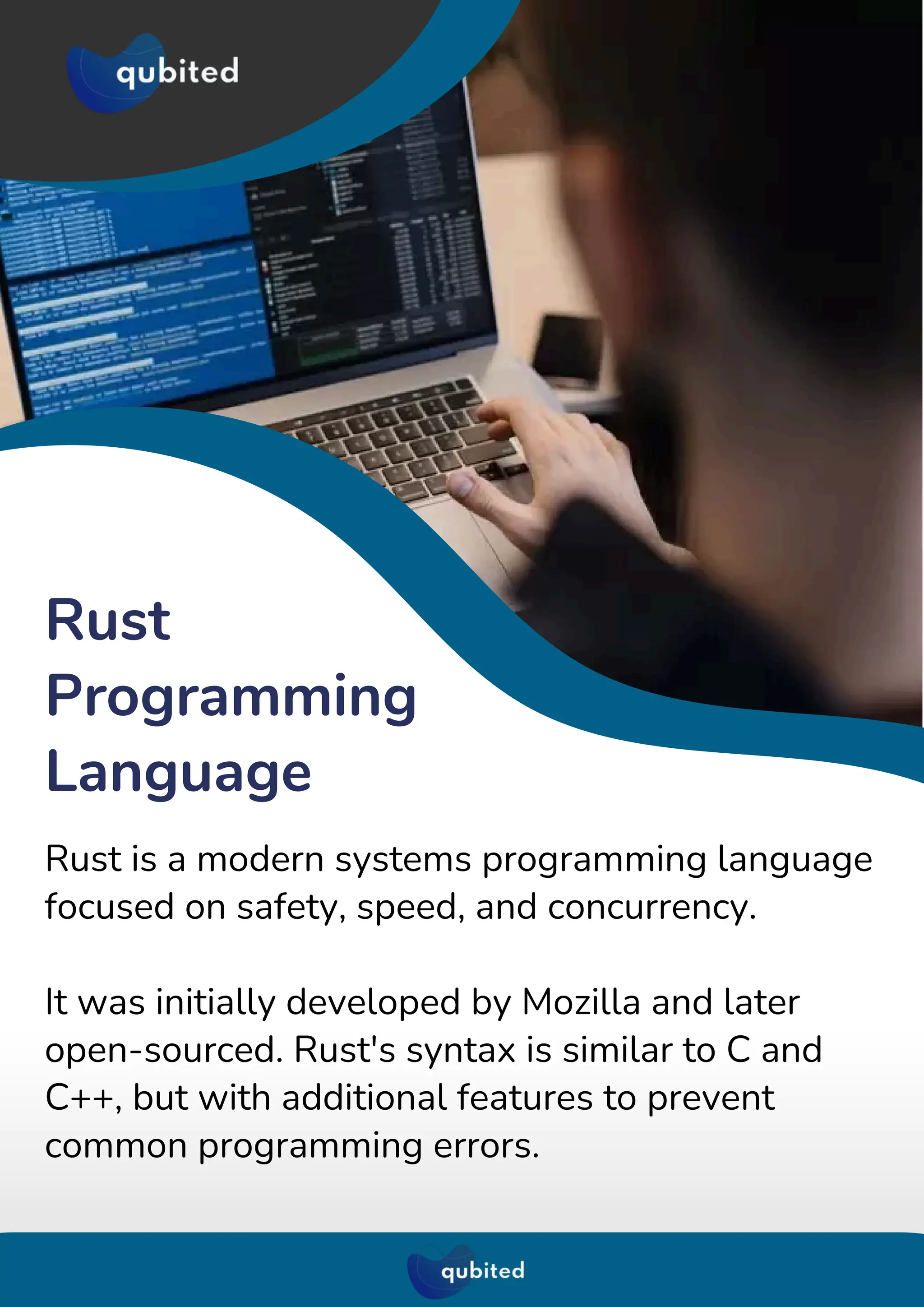
Concurrent programming has a reputation problem. Race conditions, deadlocks, garbled output from unsynchronized threads — these are the bugs that slip past code review, survive testing, and surface in production at the worst possible moment. The Rust Programming Language's official "Fearless Concurrency" chapter opens with a frank acknowledgment: "Historically, programming in these contexts has been difficult and error prone. Rust hopes to change that." What makes that hope credible is that Rust doesn't rely on developer discipline to deliver on it. The compiler enforces the rules.
Why concurrency is so hard to get right
The core problem with concurrent programming isn't that developers don't know the rules. It's that the rules are easy to violate invisibly. An Ardan Labs exploration of Rust's concurrency model, presented by Herbert, walks through common pitfalls using examples from C++ and Go: race conditions, garbled output from threads writing to shared data simultaneously, and the general unpredictability that emerges when multiple threads access the same memory without coordinated access. These aren't obscure edge cases. They're the everyday reality of multithreaded code in languages that leave thread safety as a runtime concern.
The Rust Book draws a useful distinction before diving into solutions: concurrent programming, where different parts of a program execute independently, is not the same as parallel programming, where different parts execute at the same time. Both patterns are becoming increasingly important as multi-core processors become the norm, and both demand careful coordination of shared resources.
The ownership model as a concurrency primitive
Rust's answer to concurrency bugs isn't a runtime sanitizer or a set of style guidelines. It's the ownership and borrowing system, enforced at compile time, applied directly to thread safety. As the Medium guide "Enter Rust" puts it: "Rust's compiler, through its unique ownership and borrowing system, helps you write concurrent code that is provably safe at compile time." The strong version of this claim — "if your concurrent Rust code compiles, you can trust it's free from a whole class of tricky bugs that plague other languages" — is the position the Rust community has come to call Fearless Concurrency.
The Rust Book defines the concept precisely: "Fearless concurrency allows you to write code that is free of subtle bugs and is easy to refactor without introducing new bugs." The emphasis on refactoring matters. It's one thing to write safe concurrent code from scratch with maximum care; it's another to modify it six months later without reintroducing the bugs you originally avoided. Ownership makes both possible.
When the original "Fearless concurrency with Rust" post appeared on Hacker News on April 10, 2015, posted by steveklabnik, it drew 542 points and 179 comments. The community reaction crystallized what developers who'd struggled with concurrent code in other languages immediately recognized. Commenter Animats called Rust's ownership model and borrow checker "a major breakthrough in language design," adding: "It's so simple, yet it solves so many problems."
Threads and message-passing: ownership transfer as a safety guarantee
The Rust Book outlines three major concurrency patterns the language addresses: creating threads to run multiple pieces of code simultaneously, message-passing concurrency where channels send messages between threads, and shared-state concurrency where multiple threads access the same data.
Threads are the foundation, and Rust's ownership rules shape how you use them from the start. Herbert's Ardan Labs discussion notes that Rust's ownership and borrowing rules "naturally prevent many of these issues by ensuring that no two threads can mutate shared data at the same time without explicit synchronization."
The channel-based message-passing model is where the ownership story becomes particularly elegant, and where Rust most clearly distinguishes itself from Go. Animats made the comparison directly in that 2015 Hacker News thread: "Go's 'share by communicating, not by sharing' would be real, not PR. Go code often passes references over channels, which results in shared memory between two threads with no locking. In Rust, when you do that, you pass ownership of the referenced object. The sender can no longer access it, and there's no possibility of a race condition."
This is the key mechanical difference. Sending a value over a Rust channel isn't copying a pointer that both sides can now touch; it's transferring ownership. The compiler enforces that the sending side loses access at the moment of transmission. The "Enter Rust" guide captures the result concisely: "The compiler immediately catches this, preventing the data race. This strict enforcement at compile time is what makes Rust's concurrency 'fearless.'"
Shared-state concurrency: Mutex, RwLock, and explicit synchronization
Message-passing doesn't cover every case. Sometimes multiple threads genuinely need access to the same data, and that's where Rust's shared-state concurrency primitives come in. The primary tools are `Mutex` and `RwLock`, and both require explicit, visible synchronization — there's no path to shared mutable state that bypasses the type system.
Herbert's Ardan Labs discussion introduces these concepts directly: "mutexes and locks help developers manage data access between threads," and "Rust's memory safety guarantees, enforced at compile time, make it nearly impossible to create data races within a program." The word "nearly" is doing real work in that sentence. The compile-time guarantees are strong, but the design of your locking strategy — the granularity of locks, the order in which you acquire them, how long you hold them — remains a domain where careful thinking is irreplaceable.
The "Enter Rust" guide names `Mutex`, `RwLock`, and channels as the explicit concurrency primitives that augment ownership to "truly enable Fearless Concurrency." `RwLock` is particularly useful when reads vastly outnumber writes: multiple threads can hold read locks simultaneously, while a write lock requires exclusive access. Choosing between `Mutex` and `RwLock` is a design decision that affects both correctness and performance, and understanding the tradeoffs is part of writing idiomatic concurrent Rust.
Ardan Labs puts the remaining challenge plainly: "the complexity of managing multiple threads, especially when they access shared data, remains a significant challenge that can lead to unpredictable results if not properly synchronized." Compile-time guarantees eliminate a large category of bugs; they don't eliminate the need to think carefully about concurrency design.
Send and Sync: thread safety in the type system
Rust's concurrency guarantees extend beyond the primitives themselves through two marker traits: `Send` and `Sync`. The "Enter Rust" guide defines them precisely: "`Send` and `Sync`, to denote whether types can be safely transferred between threads or shared across threads, respectively." The Rust Book frames their broader role: "The `Sync` and `Send` traits extend Rust's concurrency guarantees to user-defined types as well as types provided by the standard library."
For most everyday types, you don't have to think about this. `i32`, `String`, and `Vec` automatically implement both traits because their contents are safe to share and transfer. When you define a custom type that wraps something with interior mutability or raw pointers, the compiler will not automatically grant `Send` or `Sync` — you have to reason about thread safety explicitly, or compose your type from types that already provide those guarantees.
This design means thread-safety properties are encoded in the type signature of your data, not in documentation that developers might not read. If a type isn't `Send`, the compiler will refuse to let you move it across a thread boundary. That error appears at compile time, not in a production incident report at 2 a.m.
Practical guidance: designing concurrent Rust programs
The accumulated guidance from these sources points toward a consistent set of principles:
- Prefer message-passing and ownership transfer over shared mutable state when the design permits it. The compiler's enforcement is strongest here, and the mental model is cleanest.
- When shared state is necessary, reach for `Mutex` or `RwLock` and be explicit about lock scope. Keep critical sections short and avoid holding locks longer than needed.
- Understand which of your types implement `Send` and `Sync` and why. For custom types, reason carefully before implementing these traits manually.
- Don't mistake "it compiles" for "the design is correct." The "Enter Rust" guide's closing advice is direct: "Always strive for simplicity and clarity in your concurrent designs." Proper design and testing remain essential even when the compiler eliminates an entire class of bugs.
The Hacker News thread from April 2015 also surfaced a community discussion about future directions. Commenter cwzwarich noted: "We may end up adding linear types, not just affine, to Rust as well" — a reference to even stricter ownership semantics that would further tighten the guarantees around resource lifetimes. Animats, writing from the perspective of work on the Servo browser engine, described early tooling experiments aimed at tracking protected types and emulating linear types in Rust.
That conversation reflected something true about where Rust's concurrency model sits: it's not a finished product frozen in 2015, but a living design that continues to evolve. The foundation — ownership, borrowing, `Send`, `Sync`, explicit primitives — is stable and powerful. The community continues to push on what compile-time guarantees can cover. For anyone writing concurrent systems today, that foundation is already doing most of the heavy lifting.
This article was produced by Prism’s automated news system from verified source data, official records, and press releases, then run through automated quality and moderation checks before publishing. The system is built and supervised by the people who set the standards it runs under. Read our full AI policy.
Did this article answer your question?