Rust's Precise Compiler Errors Make It Ideal for AI Code Generation
Rust's structured compiler errors give AI models a self-correction loop that C++ can't match; Microsoft Research confirmed 93% fix accuracy using GPT-4 on Rust compilation errors.
The Feedback Loop That Changes Everything
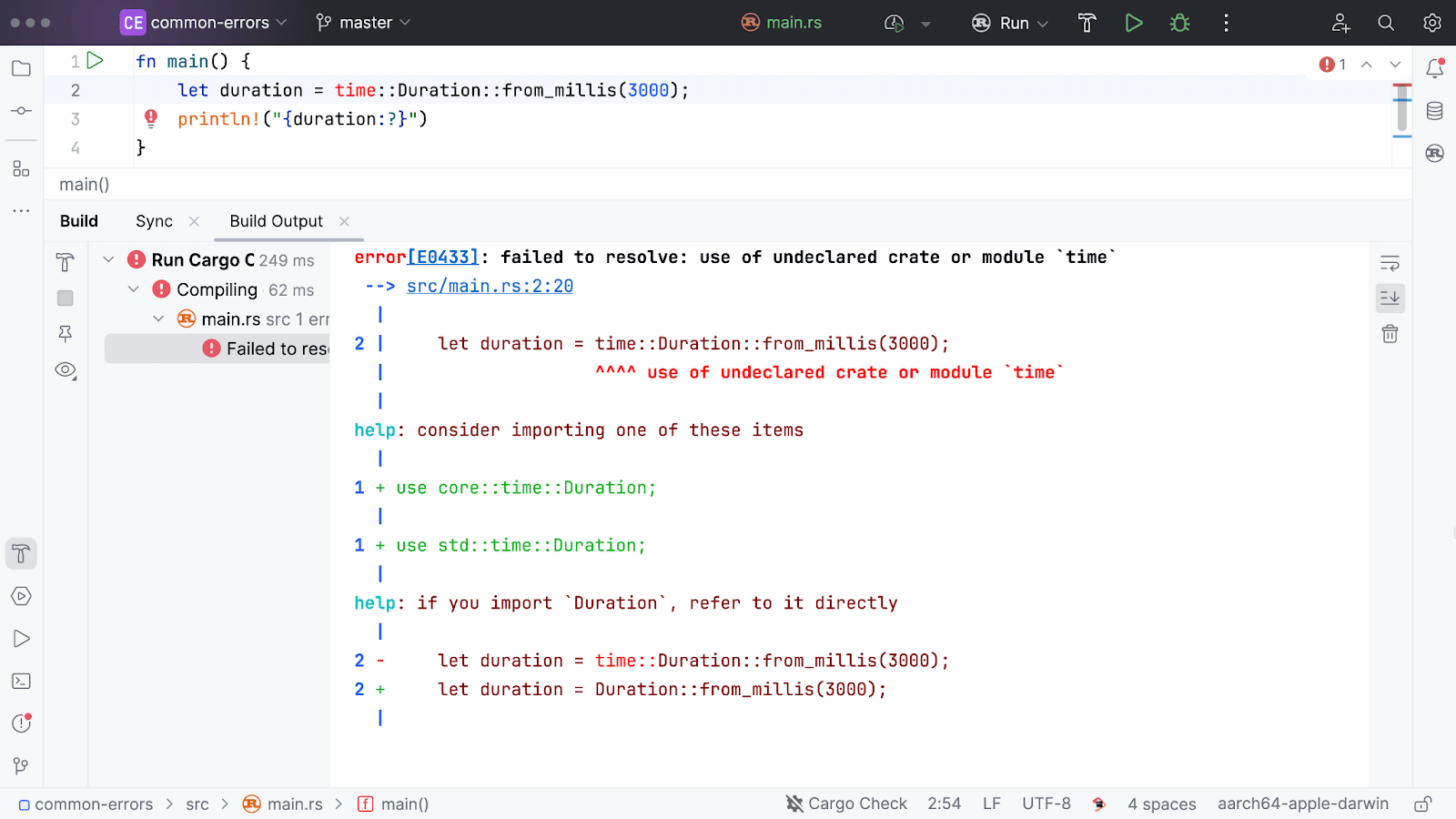
Most programming languages treat compilation errors as endpoints. Rust treats them as conversations. When the compiler rejects code, it doesn't just say something went wrong; it names the exact rule violated, points to the offending line, suggests a fix, and explains why the underlying memory model demands it. That specificity isn't just useful for human developers learning the language. For large language models tasked with generating Rust code, it creates something genuinely new: a closed feedback loop where the compiler itself acts as a real-time training signal.
This is the insight driving growing developer consensus heading into 2026: Rust's compiler makes it the most productive language for AI-assisted development, enabling models to self-correct via precise error messages in ways that shift the calculus away from C++.
Why Compiler Precision Beats Vague Error Messages
C++ errors have always been notoriously opaque. Template instantiation failures can produce hundreds of lines of cascading noise with no clear entry point for a model to act on. Rust takes the opposite philosophy. Each error carries a specific error code (like E0502 for borrow conflicts), a plain-language explanation, and a pinpointed source location. The compiler's strong typing and borrow checker produce detailed, structured errors at compile time, catching problems before code ever runs. The compiler can also emit diagnostics in structured JSON, meaning a tool or model can parse the error programmatically rather than treating it as raw text.
That structural clarity is precisely what Microsoft Research exploited when building RustAssistant, a tool that leverages the emergent capabilities of LLMs to automatically suggest fixes for Rust compilation errors, using a careful combination of prompting techniques and iteration between an LLM and the Rust compiler. Developed by a team including Principal Researcher Aseem Rastogi, RustAssistant achieves an impressive peak accuracy of roughly 74% on real-world compilation errors in popular open-source Rust repositories. On controlled micro-benchmarks, the tool achieves a peak accuracy of 93%, compared to `cargo fix`, which resolves fewer than 10% of errors automatically. GPT-4 significantly outperformed GPT-3.5 throughout testing, confirming that model quality scales meaningfully inside this loop.
The Repeatable Workflow: Prompt, Compile, Diagnose, Iterate
The core pattern is straightforward enough to adopt immediately:
1. Generate: Prompt an LLM with a task description and any relevant type signatures or trait constraints your codebase enforces.
2. Compile: Run `cargo check` or `cargo build`. If it succeeds, proceed. If not, capture the full error output, including error codes and the compiler's own suggested remediation.
3. Re-prompt: Feed the compiler error back to the model with explicit framing, asking it to fix only the flagged issue without altering unrelated logic elsewhere.
4. Repeat: Continue until the project builds cleanly, then run your test suite to confirm behavioral correctness, not just compiler happiness.
This loop works because Rust's opinionated nature creates "a shared contract between you, the LLM, and the compiler." Everyone plays by the same strict rules, which means when an agent suggests a change, you evaluate it against an objective standard rather than relying purely on your own mental model of what's correct.
Three Error-to-Prompt Transforms
The practical skill in this workflow is packaging a compiler error into a productive prompt. Three patterns that consistently move the loop forward:
- Borrow conflict (E0502): The compiler reports a mutable borrow occurring while an immutable borrow is already live. Productive prompt: *"The compiler reports E0502 at line [X]: [paste full error]. Refactor only this function to resolve the borrow conflict. Do not introduce `clone()` unless no alternative avoids the heap allocation."* Pinning to one function prevents the model from propagating changes outward.

- Lifetime annotation mismatch: The compiler cannot infer that a returned reference lives long enough. Productive prompt: *"The compiler cannot reconcile the lifetimes of [input A] and [output B] at [location]. Add the minimum lifetime annotations necessary to satisfy the borrow checker, and explain each annotation you add."* Requiring an explanation forces the model to reason through the change rather than pattern-match to a fix.
- Trait bound not satisfied: A generic function receives a type that doesn't implement the required trait. Productive prompt: *"The compiler reports that type [T] does not implement [Trait] at [location]. Either add the missing `impl` block if it belongs in this crate, or constrain the generic parameter. Show both options and explain the tradeoff."* Offering two paths prevents the model from defaulting to the bluntest solution.
In each case, the prompt preserves the compiler's exact language, pins the fix to a specific location, and sets a constraint to prevent overcorrection.
The Skeptic's Section: Where This Loop Breaks Down
The compile-correct-iterate cycle is powerful, but it has three well-documented failure modes worth taking seriously before you commit to it as a primary workflow.
Unsafe blocks. AI models trained on vast corpora of public Rust code cannot reason about lifetimes, trait object coherence, or drop order, and they lack awareness of your crate's specific `#![forbid(unsafe_code)]` directives. When a model reaches a borrow checker impasse it can't resolve cleanly, it sometimes retreats into an `unsafe` block. That satisfies the compiler by stepping outside its guarantees entirely. If your project enforces `#![forbid(unsafe_code)]`, make that explicit in every prompt from the start.
Lifetime complexity. Lifetimes are the domain where LLM performance degrades most visibly. An AI may suggest code that compiles syntactically yet violates Drop semantics or introduces silent data races via `UnsafeCell`. The compiler can diagnose that a lifetime constraint is violated, but it can't explain the architectural intent behind a particular data flow. Models often fix lifetime errors by restructuring ownership in ways that technically compile but break the intended design. Lifetime changes deserve manual review; the loop alone is not sufficient here.
Overfitting to compiler satisfaction. The most subtle failure mode is a program that compiles cleanly and passes basic tests but remains logically wrong. The compiler verifies memory safety and type correctness, not business logic or algorithmic intent. A model optimizing for a green `cargo build` output can produce code that satisfies every diagnostic while computing the wrong result. Compiler happiness is a floor, not a ceiling; the test suite remains the highest authority.
Why This Shifts the Rust vs. C++ Calculus
Rust can feel particularly challenging at first; its borrow checker, ownership model, and lifetimes introduce concepts that force the compiler to seem strict, but that strictness prevents many categories of bugs before code ever runs. The traditional argument against Rust for AI-generated code used that same strictness as a liability: a model that can't reliably satisfy the ownership system produces more errors, more iteration, more latency. That argument is now inverted. Higher-quality training data, stronger compiler checks, and immediate linting feedback together make Rust uniquely well-suited for pushing LLMs in serious projects. C++ may accept more generated code on the first pass, but it provides far less signal when something goes wrong, and what goes wrong often does so silently at runtime.
The borrow checker was always Rust's most demanding teacher. It turns out it's also an exceptionally good one for machines.
This article was produced by Prism’s automated news system from verified source data, official records, and press releases, then run through automated quality and moderation checks before publishing. The system is built and supervised by the people who set the standards it runs under. Read our full AI policy.
Did this article answer your question?