RustSec Advisory Flags High-Severity Flaw in lz4_flex Compression Crate
RustSec's RUSTSEC-2026-0041 flags a high-severity flaw in lz4_flex tied to the crate's block API, assigned CVE-2026-32829.

Four days after RustSec published advisory RUSTSEC-2026-0041, the Rust security community is still digesting what it means for projects relying on lz4_flex, one of the ecosystem's most widely used pure-Rust compression crates.
The advisory, timestamped March 17, 2026, carries a high-severity rating and has been assigned both CVE-2026-32829 and the GitHub Security Advisory identifier GHSA-vvp9-7p8x-rfvv. The vulnerability is rooted in the crate's block API, the lower-level interface that gives callers direct control over LZ4 block-format compression and decompression outside of the safer framed format.
lz4_flex bills itself as a pure-Rust implementation of the LZ4 algorithm, a compression scheme prized for its speed rather than its compression ratio. It's a common dependency in projects that need fast in-memory or on-disk compression without reaching for FFI bindings to the original C library. That positioning is precisely what makes this advisory consequential: part of lz4_flex's appeal is the implied safety of staying within the Rust ecosystem, and a high-severity flag against its block API cuts directly against that assumption.
The block API in LZ4-family libraries has historically been the sharper edge of the interface. Unlike the frame format, which embeds content size and checksum metadata, raw block compression hands responsibility for buffer sizing and length accounting to the caller. When those contracts are violated, the consequences can range from panics to memory corruption, depending on how much the implementation trusts caller-provided values.
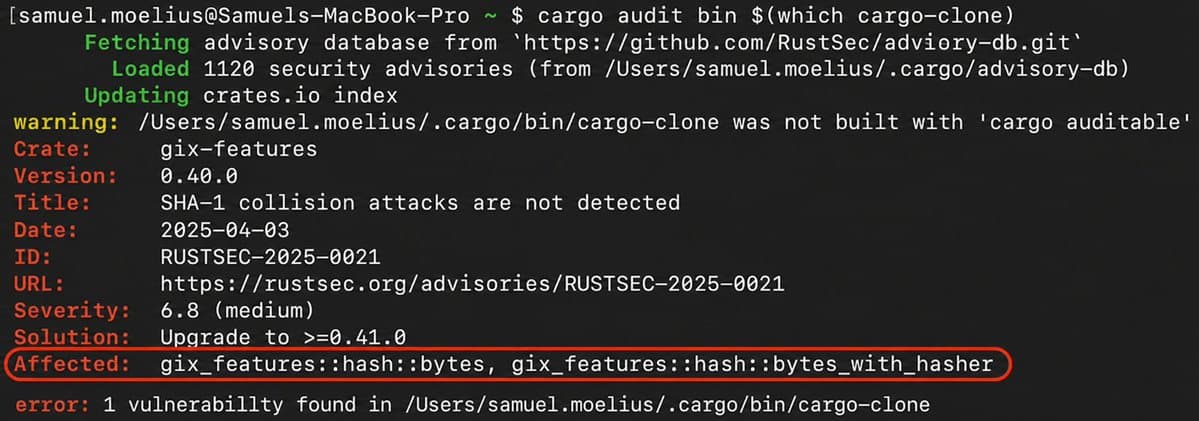
RustSec serves as the community's canonical registry for crate-level security advisories, and the RUSTSEC-2026-0041 identifier places this vulnerability in the public record where tools like cargo-audit and cargo-deny can surface it automatically during builds. Any project running those tools against a lockfile that includes an affected version of lz4_flex will now see the advisory fire.
The practical next step for maintainers is to check which version of lz4_flex their dependency tree pulls in and watch the crate's repository for a patched release. Projects that interact only with the frame-format API may have a narrower exposure surface, but the safest posture is to treat the advisory as affecting any direct or transitive use of the crate until a fixed version is confirmed.
This article was produced by Prism’s automated news system from verified source data, official records, and press releases, then run through automated quality and moderation checks before publishing. The system is built and supervised by the people who set the standards it runs under. Read our full AI policy.
Did this article answer your question?