RustSec flags bare-metal crate as deprecated, points users to critical-section
RustSec’s unmaintained-package notice for bare-metal pushes embedded Rust projects toward critical-section, a migration that can reach boards, HALs and firmware test code.
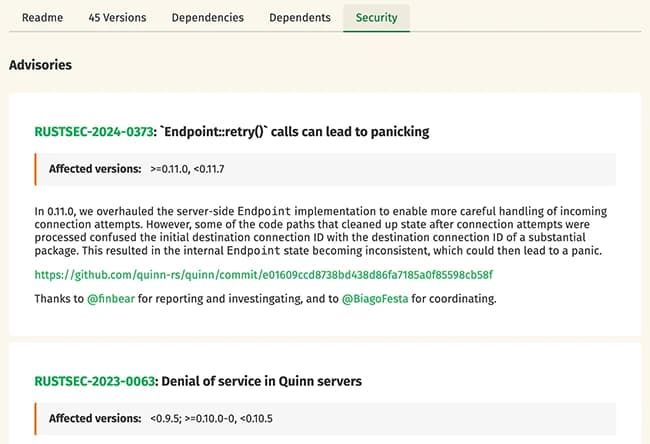
An unmaintained helper crate at the bottom of many embedded Rust stacks has been formally retired, and the practical impact is bigger than the word deprecated suggests. RustSec issued RUSTSEC-2026-0110 on April 24, 2026 as an INFO advisory for bare-metal, noting that there are no patched versions and that the crate is no longer maintained. The bare-metal repository itself now says the project has been deprecated and archived and is not recommended for new projects.
That matters because bare-metal sat close to the boundary between hardware and safe abstractions. In firmware, a crate like this can ripple through board support packages, HALs, RTOS integration layers and even test harnesses that depend on low-level synchronization helpers. The immediate concern is not a memory-safety exploit. It is the maintenance cliff that follows when a core dependency stops moving: toolchains change, edge cases stay unfixed and code diverges from the rest of the ecosystem. For projects that use Mutex or CriticalSection, RustSec points to critical-section as the replacement target.

critical-section is not just a like-for-like swap. Its documentation frames the problem as a portable critical-section API that libraries need because core does not provide a universal one. Its implementations can vary by environment: disabling interrupts on single-core bare metal, using a hardware spinlock on multicore systems, taking a scheduler or kernel lock under an RTOS, or making a system call in non-privileged mode. The crate describes itself as a cross-platform primitive for embedded systems and std targets, which makes it a more general fit for the mixed environments embedded Rust now has to serve.
The retirement of bare-metal also closes a long-running design discussion rather than triggering a surprise break. In a 2021 issue, maintainers discussed deprecating or removing APIs tied to CriticalSection and flagged mutex soundness on multicore systems as a blocker. Another 1.0-planning issue listed replacing CriticalSection<'cs> and resolving multicore Mutex soundness among the open problems. In other words, the ecosystem had already been converging on a different model for years.
The repository’s own history explains why the notice carries so much weight. bare-metal was developed and maintained by the Cortex-A, Cortex-M, Cortex-R, MSP430 and RISC-V teams, so its retirement signals a broader shift in embedded Rust toward shared building blocks with clearer portability boundaries. For anyone shipping firmware or maintaining a platform layer, the next step is straightforward: trace whether bare-metal is direct or transitive, confirm how locking and interrupt-sensitive code behaves after migration, and add tests before the old helper becomes a hidden liability.
Know something we missed? Have a correction or additional information?
Submit a Tip