RustSec flags Wasmtime WASI flaw that bypasses file permissions
A read-only WASI file could be rewritten after being hard-linked or renamed into a writable preopen. RustSec rated the Wasmtime bug medium severity, CVSS 6.5.
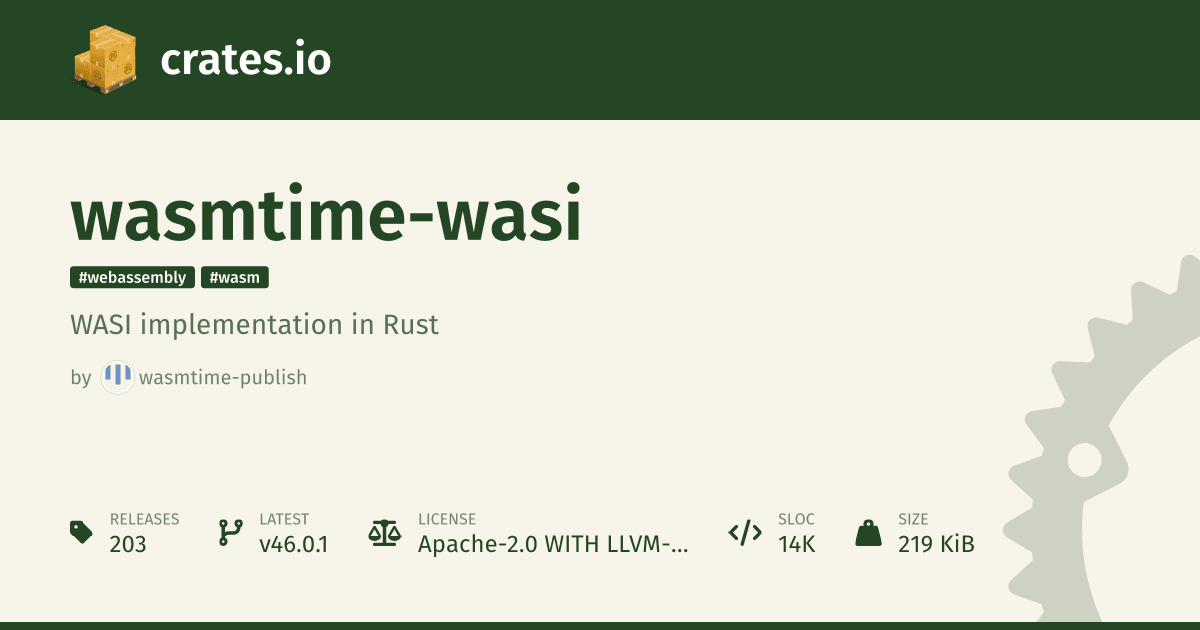
RustSec on June 29 issued RUSTSEC-2026-0188 for Wasmtime's WASI filesystem, a medium-severity flaw with a CVSS score of 6.5 that was reported on June 24. A WASI guest could take a file exposed as read-only through one preopen, hard-link it into another preopen that allowed writes, and then overwrite the host file; renaming a hard link into a writable preopen could trigger the same bypass. The issue reached through the wasip1, wasip2, and wasip3 interfaces.
That cuts into the trust model Rust developers often attach to WasiCtxBuilder's preopened_dir and its file_perms setting. Wasmtime documents file_perms as the maximum permissions usable for files in a preopen, and says those filesystem permissions are enforced before the underlying operating system gets involved. The assumption many sandbox authors made was simple: if a file entered a WASI guest as read-only, FilePerms would hold that line. This advisory shows that hard-link and rename behavior could move the same host object into a different permission context and defeat the destination-path check.

The affected wasmtime-wasi ranges are below 24.0.11, 36.0.12, 45.0.3, and 46.0.1, with fixes landing in 24.0.11, 36.0.12, 45.0.3, and 46.0.1. The GitHub Security Advisory, GHSA-4ch3-9j33-3pmj, describes the failure as a guest with read-only source-file capability still being able to modify that file if it could reach the same object through a writable preopen. In other words, the bug was not a broad failure of WASI isolation, but a very specific collapse of the permission boundary around filesystem identity.
For operators using Wasmtime as an app sandbox, plugin host, or serverless runtime, the immediate move is to upgrade to a patched release and then audit every preopened directory pairing. Any setup that exposes the same underlying host file through both read-only and writable preopens deserves a fresh review, because the advisory shows that a path label is not the same thing as an inode boundary. Hard links and renames were enough to punch through the mental model; patched versions close that gap, but only if the deployment stops assuming FilePerms alone can police every filesystem transition.
This article was produced by Prism’s automated news system from verified source data, official records, and press releases, then run through automated quality and moderation checks before publishing. The system is built and supervised by the people who set the standards it runs under. Read our full AI policy.
Did this article answer your question?