SpacetimeDB Lets Developers Run Rust Application Logic Inside the Database
SpacetimeDB, backed by Andreessen Horowitz, lets Rust developers collapse an entire backend into the database itself, eliminating the separate server layer entirely.
SpacetimeDB bills itself as a general-purpose relational database with ACID guarantees that takes stored procedures to the next level, promising 100x to 1000x better performance by deploying server logic directly into the database. Clockwork Labs founder Tyler Cloutier discussed the project in a video interview published March 23, 2026, shining a fresh spotlight on an architecture that inverts how most Rust developers think about backend systems.
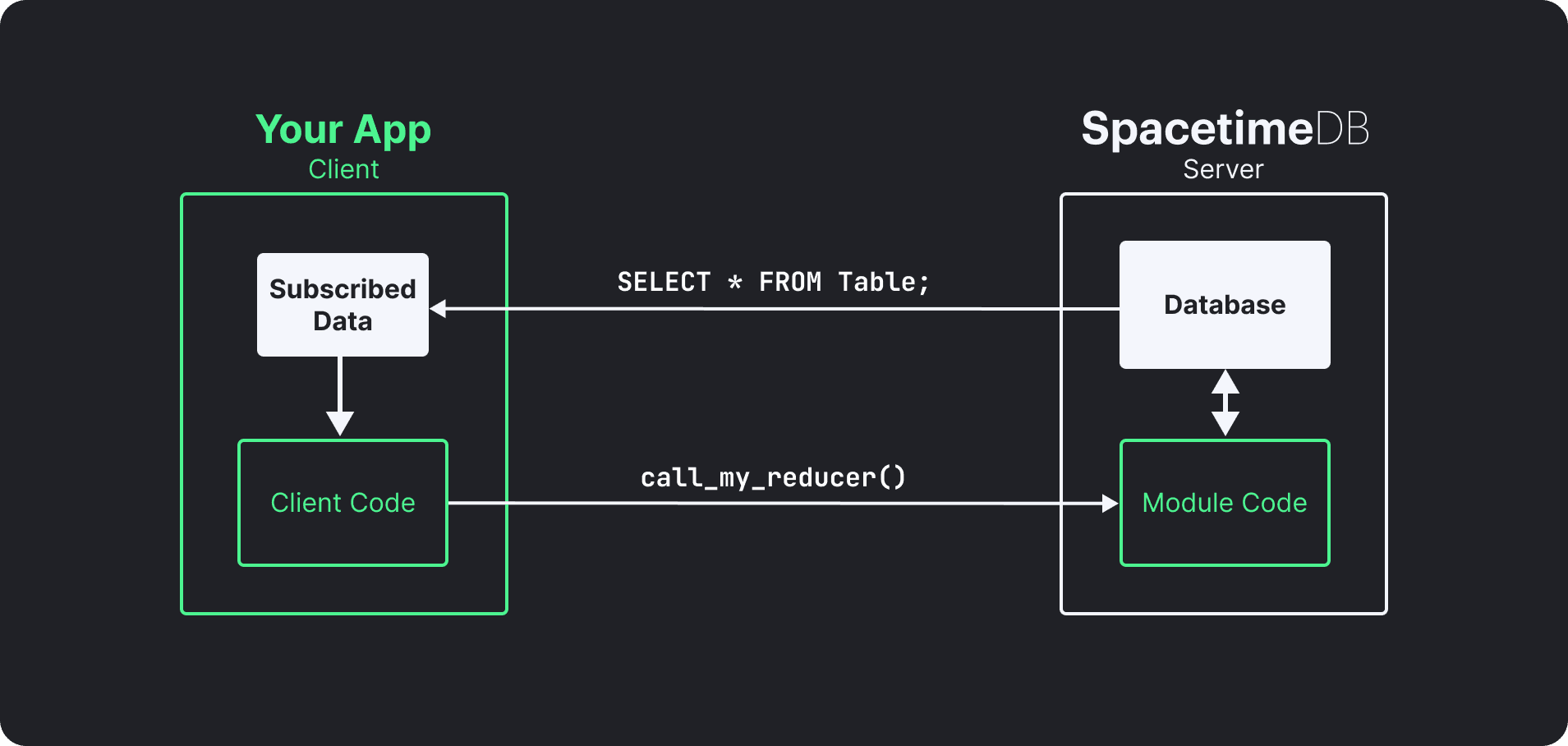
SpacetimeDB allows using the Rust language to write server-side applications called modules. Those modules, which run inside a relational database, have direct access to database tables and expose public functions called reducers that can be invoked over the network. Clients then connect directly to the database to read data.
The practical implication is a significant reduction in infrastructure complexity. Instead of deploying a web or game server that sits in between clients and a database, clients connect directly to the database and execute application logic in the module. This means the entire application can be written in a single language and deployed as a single binary, eliminating the separate webserver, containers, Kubernetes, VMs, and DevOps overhead that typically accompany production deployments.
Under the hood, SpacetimeDB modules are WebAssembly modules that import a specific WebAssembly ABI and export a small number of special functions. SpacetimeDB requires a WebAssembly-compatible Rust toolchain; if the spacetime CLI finds a compatible version of rustup, it will automatically install the `wasm32-unknown-unknown` target and use it to build the application.
The module model organizes backend code into two core primitives. SpacetimeDB modules interact with the outside world through tables and reducers: tables store data and optionally make it readable by clients, while reducers are functions that modify data and can be invoked by clients over the network, with the ability to read and write table data and write to a private debug log. Reducers run inside a database transaction, meaning either all changes commit or none do; clients call them through auto-generated, type-safe bindings, making them effectively transactional RPC endpoints.

SpacetimeDB provides all the ACID guarantees of a traditional RDBMS, with all the speed of an optimized web server; all application state is held in memory for fast access, while a commit log on disk provides durability and crash recovery. The real-world stress test for this architecture is substantial: the entire backend of the MMORPG BitCraft Online runs as a single SpacetimeDB module, covering chat, items, terrain, and player positions, all synchronized to thousands of players in real-time.
Clockwork Labs is backed by Andreessen Horowitz and others including Hilmar Petursson, CEO of CCP Games, David Baszucki, founder of Roblox, and David Helgason, founder of Unity. After five years of internal development, Cloutier's pitch was that SpacetimeDB allowed the studio to build its MMORPG without spinning up a cloud-server-farm-microservice infrastructure or absorbing the costs that typically come with it.
The Rust client SDK can now also compile and run in the browser, thanks to resolved WebAssembly compilation issues, widening the surface area for Rust developers who want to build browser-based applications on the same stack powering BitCraft's production servers.
This article was produced by Prism’s automated news system from verified source data, official records, and press releases, then run through automated quality and moderation checks before publishing. The system is built and supervised by the people who set the standards it runs under. Read our full AI policy.
Did this article answer your question?