Wasmtime 43.0.0 Arrives With WASIp3 Support and Expanded Debugging Tools
WASIp3 snapshot 0.3.0-rc-2026-03-15 lands in the Bytecode Alliance's Rust-powered runtime, alongside configurable backtrace frame limits and fine-grained fuel cost tuning.
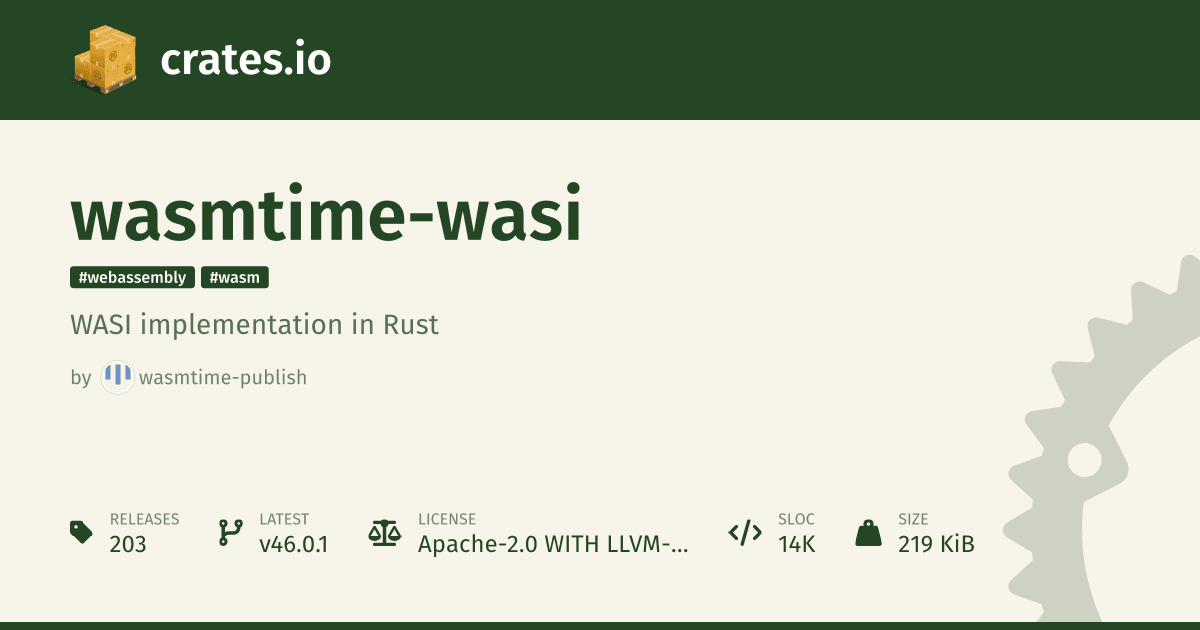
With over 20 million all-time downloads on crates.io, the Bytecode Alliance's Rust-based WebAssembly runtime carries real weight in the Wasm ecosystem — and version 43.0.0, dropped on March 20, brings a headliner that async-heavy component developers have been watching closely.
Wasmtime now supports the WASIp3 snapshot 0.3.0-rc-2026-03-15. That release candidate represents the most current checkpoint of the third WASI generation, a set of interfaces covering traditional OS features like file I/O, clocks, and networking, as well as cloud services such as HTTP, database access, messaging, and abstractions for embedded systems and cryptography. Implicit binds are now allowed for WASIp3 sockets, and Wasmtime's implementation of component-model-async now correctly checks for whether tasks are allowed to block in all guest-to-guest situations.
The WASIp3 pieces are still marked experimental, so the module carries no semver stability guarantees for now. WASIp3 implementations also now limit returned memory by default for randomness and HTTP headers.
On the debugging and configuration side, 43.0.0 delivers two additions that are immediately practical. The number of frames captured in backtrace collection can now be configured. That matters in deeply nested component graphs where unbounded backtrace capture can balloon overhead. Alongside it, Wasmtime now supports fine-grained operator cost configuration for when fuel is enabled, giving embedders precise control over how execution budgets are charged per operator rather than treating all instructions as equal-cost.

The release also extends the TLS story: the wasmtime-wasi-tls crate now has an OpenSSL backend. Error introspection got sharper as well. Wasmtime's OutOfMemory error now keeps track of the attempted allocation size that failed, which should make diagnosing memory ceiling issues significantly less opaque. There is also a compile-time requirement change to note: Wasmtime now requires Rust 1.91.0 to compile.
On the Cranelift side, Cranelift now supports more VRegs, which means effectively that larger functions will be compilable by default rather than returning a "function too large" error.
Wasmtime issues a new major version once a month with a semver-major bump, so 43.0.0 follows the project's standard cadence. Every 12th release is designated an LTS and receives security fixes for 24 months; version 43 is a standard release and carries the usual two-month support window. The growing WASIp3 surface in each monthly drop suggests the interface is closing in on a stable footing, even if it is not quite there yet.
This article was produced by Prism’s automated news system from verified source data, official records, and press releases, then run through automated quality and moderation checks before publishing. The system is built and supervised by the people who set the standards it runs under. Read our full AI policy.
Did this article answer your question?