Sugar Geek Show updates sourdough sandwich bread for weeknight use
Sugar Geek Show's updated sandwich loaf trades artisan drama for a soft, sliceable pan bread built for lunches, toast and weeknight grilling.
Sugar Geek Show has taken sourdough out of the artisan spotlight and put it where more home bakers can actually use it, in a soft sandwich loaf that fits school lunches, grilled cheese and daily toast. The updated recipe is built for convenience without giving up the sourdough character that makes starter worth keeping alive.
A loaf meant to disappear into the week
Updated on June 3, 2026 by Liz Marek, the recipe is framed as a practical bread rather than a showpiece. It is soft, sliceable and not overly tangy, which makes it far easier to slot into everyday meals than a crusty boule that asks for a little ceremony every time you cut into it. Sugar Geek Show makes the use case plain: this is the bread for sandwiches, toast and the kind of lunch-box slices that need to hold together.
That everyday angle is the whole point. Marek says she bakes it regularly for school lunches and weekend grilled cheese, and the recipe leans into that routine with a touch of avocado oil and honey to keep the crumb tender. Instead of asking you to solve shaping, scoring and Dutch oven logistics, it keeps the process focused on a standard loaf pan and a formula that stays approachable from start to finish.
What makes the update appealing
The recipe’s appeal starts with what it leaves out. There is no Dutch oven, no round boule shaping and no need to treat the loaf like a special project. Sugar Geek Show says the formula uses six ingredients, which keeps the ingredient list as manageable as the method itself. That simplicity matters because it lowers the barrier between having starter in the fridge and turning it into something you can slice before school or after work.
The loaf is also positioned as a next step after Sugar Geek Show’s easy sourdough focaccia. That framing is smart for home bakers who already know how to handle a gentler dough but want something even more useful on the table. It makes the recipe feel like a natural progression, not a test of perfection.
The texture goals are equally clear. The loaf is meant to be soft and sliceable, with enough sourdough flavor to feel familiar but not so much tang that it dominates a sandwich. That balance is what makes sandwich bread such a strong format for sourdough in the first place: it gives you the fermentation benefits and a more versatile crumb in one loaf.
Why sandwich bread keeps pulling people back to sourdough
King Arthur Baking has been making the same case from another angle. Its sourdough sandwich bread recipe describes the style as a richly flavored, soft-textured loaf that is better suited to fillings than to rustic bread baskets. King Arthur also notes that sourdough does not have to be shaped into a boule at all, since it can be mixed, scooped into a bread pan and baked as a soft loaf with far less production fuss.
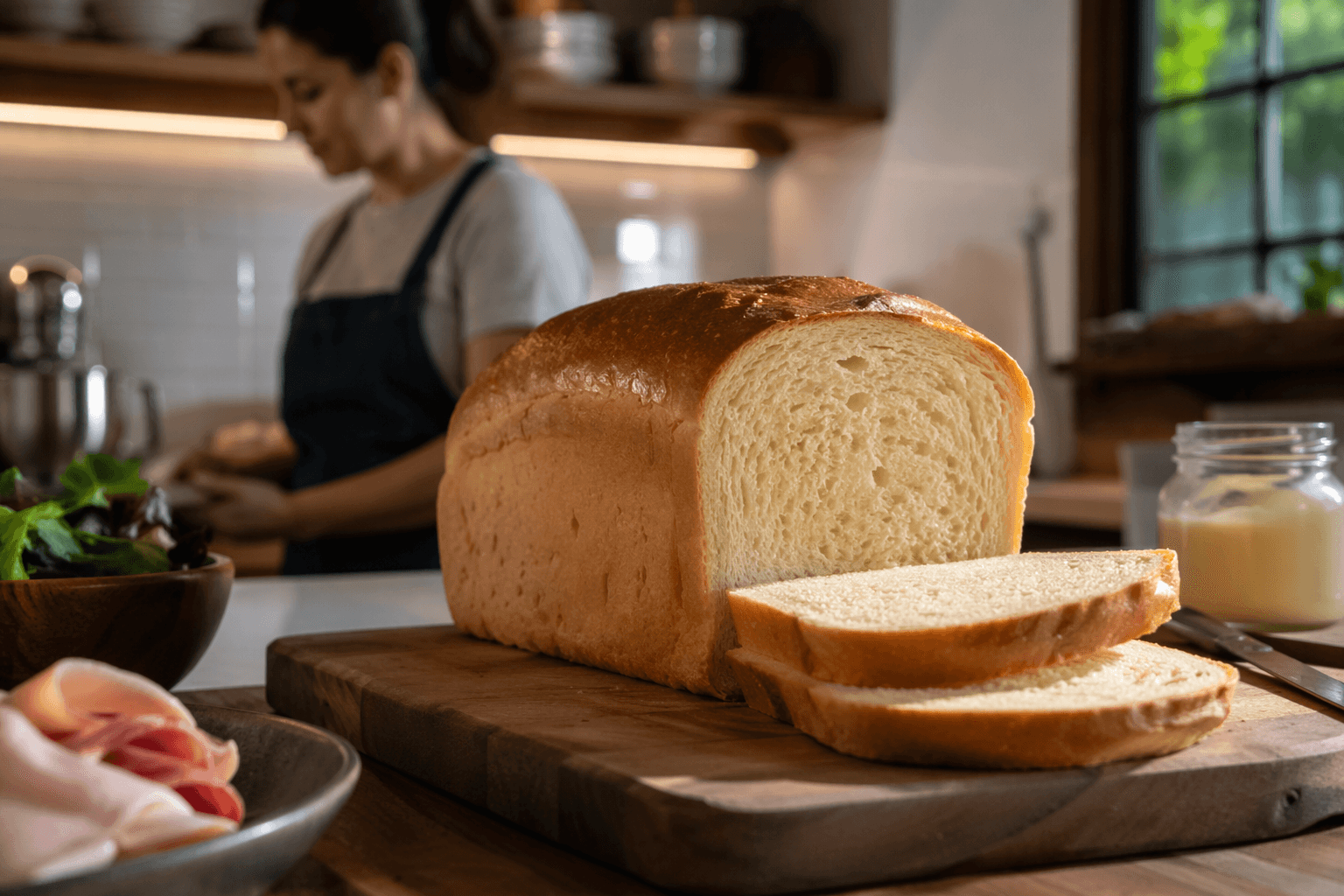
That matters for consistency. A soft sandwich loaf is easier to repeat during a busy week than a loaf that depends on dramatic shaping or a particular oven setup. When the bread pan does most of the work, the recipe becomes more about reliable rhythm than technique theater. For a lot of home bakers, that is the difference between baking sourdough occasionally and keeping it in regular rotation.
A 2026 King Arthur Baking roundup pushes this idea even further by highlighting sourdough starter in soft breads, milk bread, naan, doughnuts and other unexpected formats. In other words, the category has already moved well beyond crusty boules. Sugar Geek Show’s sandwich loaf fits neatly into that shift, giving starter a job that feels practical instead of aspirational.
The timing is built for real life
The recipe summary gives a useful picture of the schedule: about 1 hour 30 minutes of hands-on time, about 10 hours of rise time and roughly 45 minutes of baking. That is a long timeline on paper, but it is exactly the kind of spread-out process that makes sourdough work for weeknight baking. The bread asks for attention in stages, not constant labor.
That structure is part of why sourdough can fit into a household routine. The actual tasks are manageable, and the dough does the rest of the work while you get on with everything else. For bakers who already have starter going, the recipe shows how to turn fermentation into a loaf that pays off in slices instead of leaving you with another rustic bread to admire on the counter.
The fermentation itself is the familiar sourdough engine: wild yeast and lactic acid bacteria work together to raise the dough and create the flavor people recognize as sourdough. The tang comes from acids produced during fermentation, and the sandwich loaf format shows how ingredient choices and a milder profile can steer that flavor toward something softer and more family-friendly.
A more usable kind of sourdough
Sugar Geek Show’s update lands because it respects what home bakers actually need from sourdough. It is not trying to turn a Tuesday into a bakery test. It is trying to make starter useful in the ordinary moments that decide whether a recipe stays in rotation, and that is why a soft sandwich loaf is such a strong on-ramp.
The real appeal is simple: this is sourdough that behaves like a weekday habit, not a destination project. For bakers who want a starter to earn its keep, that is the kind of loaf that keeps showing up in the bread box.
This article was produced by Prism’s automated news system from verified source data, official records, and press releases, then run through automated quality and moderation checks before publishing. The system is built and supervised by the people who set the standards it runs under. Read our full AI policy.
Know something we missed? Have a correction or additional information?
Submit a Tip