Adventure travel in 2026 turns toward meaning, local experiences
Adventure travel is shifting from box-checking to locally rooted trips, and the Southwest already has the permits, guides, and dark skies to make it real.

The strongest adventure trips now feel less like a checklist and more like a local story. That shift is reshaping how people book hiking, cycling, wildlife watching, birding, photography, wellness, and food-focused travel, and it gives the Southwest a clear advantage because the region already trades on place, access, and interpretation. Heather Kelly of the Adventure Travel Trade Association says travelers are increasingly prioritizing meaning over checklists, which is why “off the beaten path” has moved from niche language to a central selling point.
Meaning is replacing the checklist
The change is not a one-year fashion. The Adventure Travel Trade Association says it has been producing annual Adventure Travel Trends & Insights research for more than 19 years, and its North America market sizing puts the outbound adventure market in the United States and Canada at $188 billion. ATTA also uses the phrase “Open to Adventure” for travelers who are willing to add active, cultural, or nature-based experiences to a bigger trip, and that is the clearest signal of where the market is going.
For Southwest travel, that matters because the region is already built around layered experiences. A single itinerary can combine a slot-canyon hike, a scenic drive, a road-bike segment, a wildlife stop, and a meal or market that connects the traveler to local culture. The trend is not about chasing a new category of vacation so much as redesigning the trip so the landscape, the guide, and the community become part of the experience.
The money is following local operators
The economics behind this shift are just as important as the branding. ATTA data cited in the TravelPulse feature says about 75% of adventure-travel revenue stays in the local economy, and adventure travelers spend an average of $263 on handicrafts or souvenirs. That makes local guiding, artisan markets, and community-based experiences more than feel-good add-ons. They are now part of the value proposition that operators and destinations can use to win the booking.
ATTA’s recent snapshots show that pattern has stayed consistent. In 2025, respondents’ most popular itinerary was priced at $3,000 for eight nights, with 76% of that spend going to local suppliers. In 2024, the most popular itinerary averaged $2,813 for eight nights, with 75% spent with local suppliers. Taken together, those numbers show a steady preference for trips that keep spending close to the ground, not just in hotels and transport, but in the communities travelers move through.
That is the part of the 2026 story that is more than buzz. “Meaningful,” in practice, often means booked with a guide, tied to a place, and structured so money stays where the trip happens. If a trip promises immersion but never leaves the resort loop, it is missing the point of the trend.
Where the Southwest already fits
The region’s best-fit products already line up with this market. Zion National Park’s Virgin River Narrows can be done as a single-day through-hike or as a two-day overnight backpacking trip, and both require a Wilderness Permit from the National Park Service. That is exactly the kind of planning detail that turns a generic hiking stop into a more deliberate adventure, because access, timing, and low-impact travel all matter from the start.
Dark-sky travel is another Southwest strength that is far from a marketing gimmick. Visit Utah says the state has the highest concentration of International Dark-Sky Association-certified areas in the world, and Bryce Canyon National Park is highlighted as Utah’s fourth national park and the 13th certified location overall. That gives night-sky viewing real substance, especially for travelers looking for guided dark-sky trips, astrophotography stops, or a quieter overnight itinerary built around the desert after sunset.
Indigenous-led experiences are not a side note
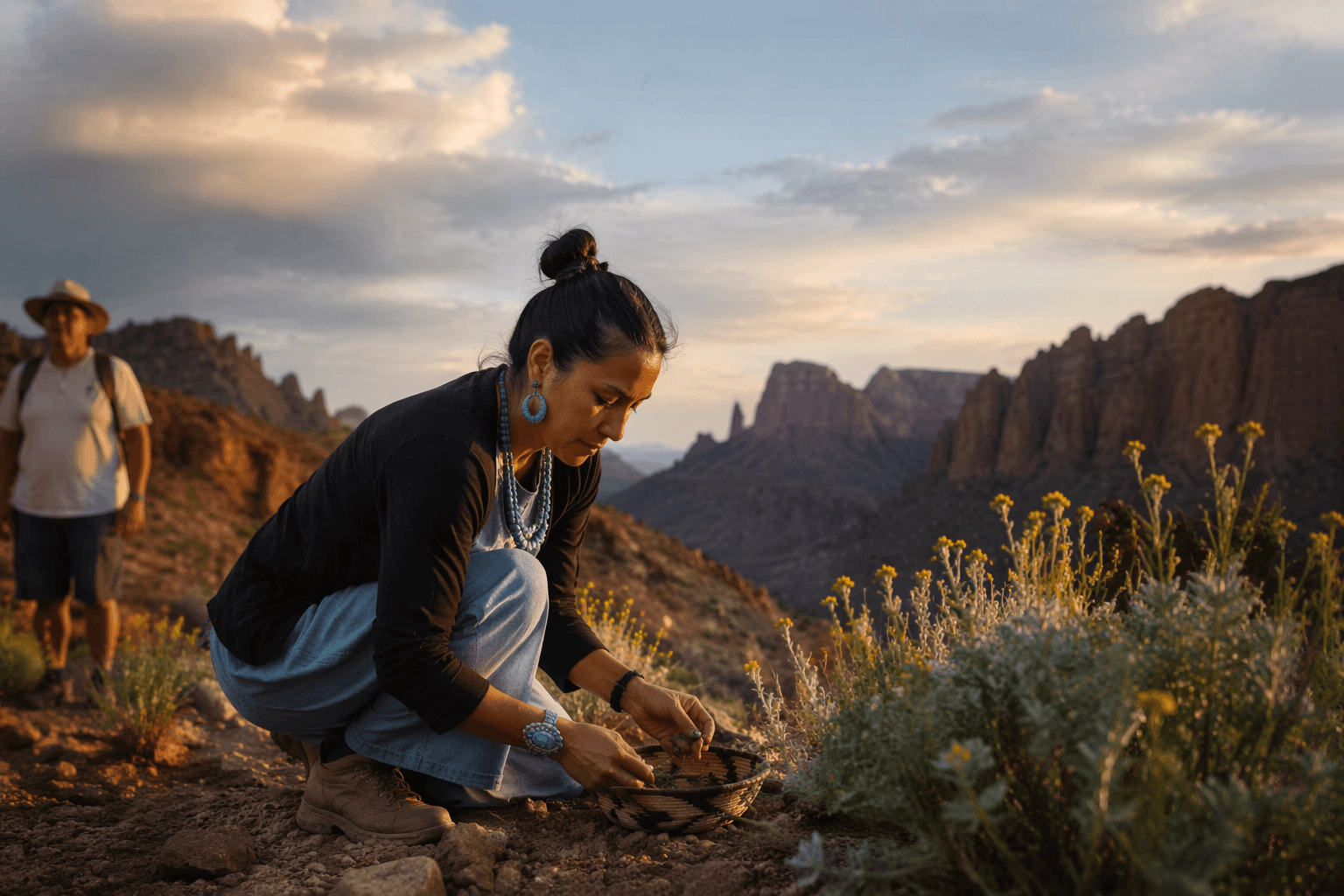
Cultural travel in the Southwest is strongest when it is specific and community-led. Visit Arizona says Antelope Canyon can only be visited with a Navajo guide, which makes the guide part of the experience rather than an optional extra. New Mexico’s tourism office says the state is home to 23 Indian tribes, including nineteen Pueblos, three Apache tribes, and the Navajo Nation, a reminder that Indigenous tourism is a major part of the region’s identity, not a niche detour.
Those facts matter because they change how travelers should book. If the trip is framed around meaning and local connection, then the guide, the tribe, and the place name all belong in the itinerary from the beginning. That is especially true in the Southwest, where cultural interpretation can be as central to the trip as the trail itself.
River days and smaller road adventures still count
The adventure market is also making room for smaller-scale trips that feel active without demanding a full expedition. Visit Arizona says Hualapai River Runners offers one- and two-day rafting excursions that include hiking, wildlife viewing, and a helicopter ride to Grand Canyon West. That is a useful model for travelers who want a compact, high-impact itinerary that still touches multiple layers of the landscape.
Road-based travel fits the same pattern. Scenic byways and road-bike routes are not flashy buzzwords, but in the Southwest they do real planning work because they connect dispersed places without forcing travelers into one big-ticket anchor experience. Add wildlife viewing, birding, photography, and locally guided stops, and the road itself becomes part of the adventure rather than just the transfer between attractions.
What is trend and what is noise
The easiest way to separate the real shift from the sales language is to ask whether the trip changes how you plan. If it requires a permit, a local guide, a different season, or a more intentional route, it is probably part of the 2026 movement toward meaning. If it only changes the brochure copy, it is probably buzz.
That is why the Southwest remains such a strong fit for the current adventure market. The region already offers the ingredients travelers are asking for, from Wilderness Permits in Zion to Navajo-guided access at Antelope Canyon, from certified dark skies in Utah to river trips that bundle hiking and wildlife viewing into one day. The story of adventure travel in 2026 is not just that people want more out of their trips, but that the most memorable ones in this region already know how to deliver it.
This article was produced by Prism’s automated news system from verified source data, official records, and press releases, then run through automated quality and moderation checks before publishing. The system is built and supervised by the people who set the standards it runs under. Read our full AI policy.
Did this article answer your question?