AllTrails warns Coyote Gulch is a rugged, remote overnight hike
Coyote Gulch is a stunning but demanding overnight, with 17.3 miles, 2,775 feet of gain, permit rules, and rough road access that reward real preparation.
Coyote Gulch is the kind of Southwest trip that looks almost too beautiful to be difficult, which is exactly why the warnings matter. AllTrails frames it as a 17.3-mile point-to-point hike with 2,775 feet of elevation gain, a hard rating, and a clear message that this is best suited to an overnight with climbing experience. The canyon is famous for its scenery, but the real decision is simpler: do you have the route-finding, gear, and judgment to handle a remote backcountry commitment?
Why Coyote Gulch draws such a crowd
The National Park Service calls Coyote Gulch the most popular backpacking destination of all the canyons of the Escalante, and it is easy to see why once you picture the place. The canyon holds two arches, a natural bridge, and several waterfalls, a concentration of features that makes the route feel like a greatest-hits reel of Southern Utah geology. It also has dependable water, which is part of the reason it pulls so much use in spring and fall.
That popularity comes with a tradeoff. The park service says to expect other hikers, and if solitude is the goal, look elsewhere. In a landscape this big, that is a useful warning, because Glen Canyon National Recreation Area spans more than 1.25 million acres and Grand Staircase-Escalante National Monument covers nearly 1.9 million acres, so the canyon is both deeply remote and still one of the area’s signature names.
What the route demands
Coyote Gulch is not just long, it is a real backcountry approach and exit through a highly remote stretch of Grand Staircase-Escalante country. AllTrails notes that the trail drops into and climbs out of the gulch, which means the terrain is doing more than offering pretty views. The route calls for the right footwear, the right pace, and the right kind of confidence on rough ground and climbing sections.

The practical consequence is that casual day-tripping is a bad fit here. AllTrails explicitly recommends treating it as an overnight venture and says the route requires climbing experience. It also warns that most surrounding monument trails are not maintained or well signed, and help may be hours away, so route-finding is not a side note. It is one of the main skills that decides whether the trip feels adventurous or overwhelming.
Getting to the trailhead is part of the test
The access road is its own filter. Coyote Gulch sits along Hole-in-the-Rock Road, a rough, washboarded dirt road whose condition can change day to day with weather, maintenance, and traffic. AllTrails says most of the time a two-wheel-drive vehicle can reach the trailhead, but four-wheel drive is recommended, especially if the road is wet or muddy.
The National Park Service is even more blunt about the road’s character. Hole-in-the-Rock Road is a 62-mile one-way route from Escalante to the western edge of Lake Powell, and it is rough, impassable in inclement weather, and 4WD-only for the last 7 miles. The park also advises against taking unpaved roads if rain or snow is falling or forecast, which turns the drive into a real go-no-go decision before you ever lace up.
Permits, registers, and group size rules
Overnight camping in the Escalante District of Glen Canyon National Recreation Area requires a backcountry permit, and Coyote Gulch is no exception. Permits must be obtained in person at the Escalante Interagency Visitor Center or at entry trailheads, while day-use visitors do not need a backcountry permit but are asked to sign the trail register. That distinction matters because the canyon functions differently for a day hiker than for someone planning to sleep down there.
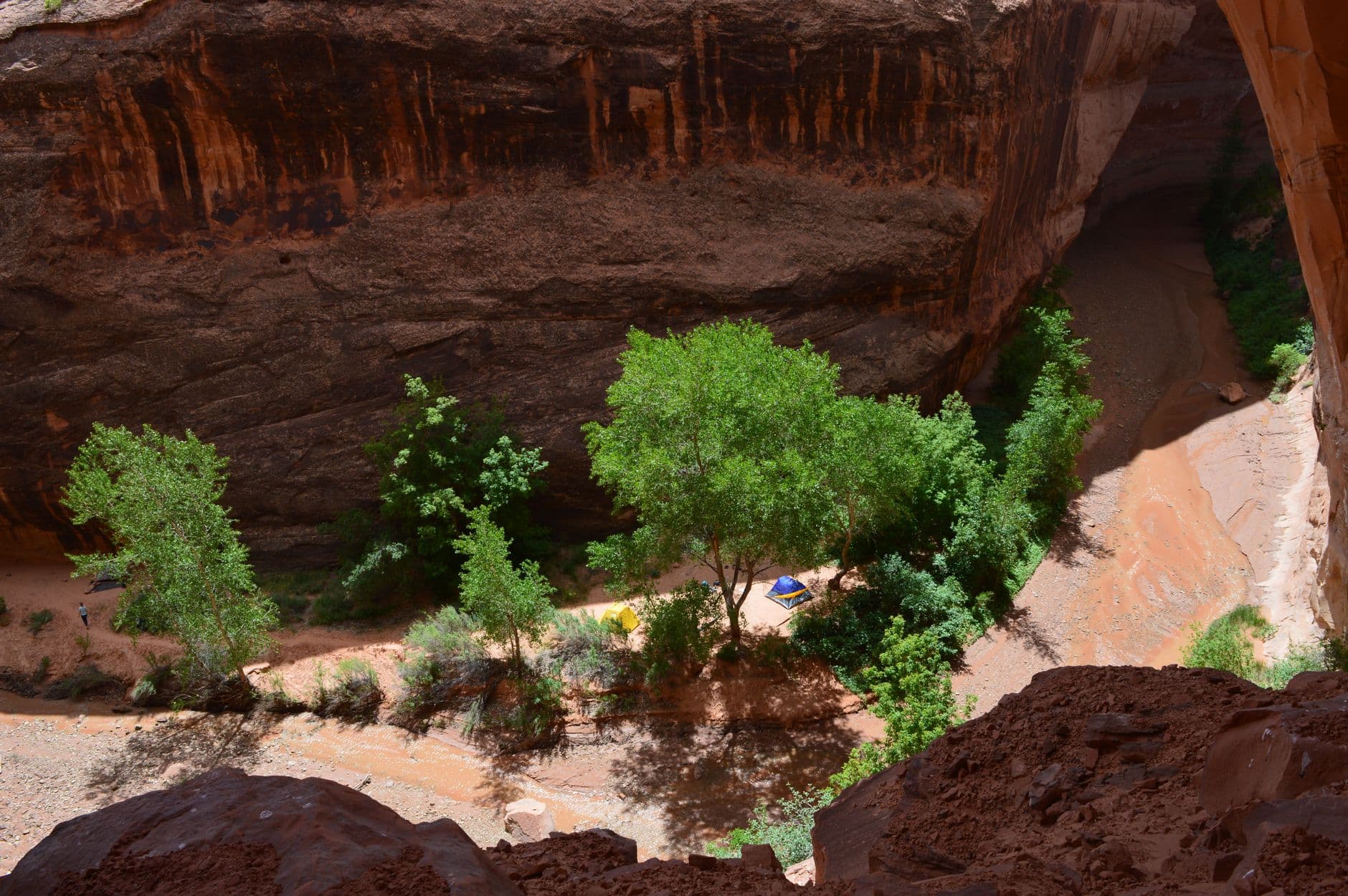
The other rule that shapes the experience is group size. The park sets a limit of 12 people for Coyote Gulch, and larger groups must split up and keep at least half a mile between parties while hiking and camping. That is a useful reminder that this is managed backcountry, not an open-ended social corridor, and it is one more reason to plan logistics before you roll out of Escalante.
Why the road has such a legendary reputation
Hole-in-the-Rock Road is not just a rough approach road, it is a historic pioneer route turned path to adventure. The original 1879 Hole-in-the-Rock expedition included 250 men, women, and children, 83 wagons, and more than 1,000 head of livestock, a scale that explains why this landscape still carries a sense of risk and stubbornness in its bones. The route is as much part of the experience as the canyon itself.
That history fits the modern reality of Southern Utah, where distance and weather still rule the day. The Escalante Interagency Visitor Center, jointly run by Glen Canyon National Recreation Area, Grand Staircase-Escalante National Monument, and Dixie National Forest, is the key in-person stop for permit pickup and trip planning. In a place this vast, the extra errand is worth it if it keeps a canyon trip from turning into a roadside problem.
Coyote Gulch rewards the hikers who treat it like a serious overnight from the first mile on Hole-in-the-Rock Road to the last climb back out. The scenery is as good as the reputation says, but the route only feels generous once the planning is done, the permit is in hand, and the vehicle, water, and skills are all up to the job.
This article was produced by Prism’s automated news system from verified source data, official records, and press releases, then run through automated quality and moderation checks before publishing. The system is built and supervised by the people who set the standards it runs under. Read our full AI policy.
Did this article answer your question?