Arizona parks warn hikers, campers as monsoon season begins
A blue-sky morning can turn into a trap in Arizona’s canyons. State parks warned that monsoon season starts June 15 and can bring flash floods, lightning, dust storms and road washouts.
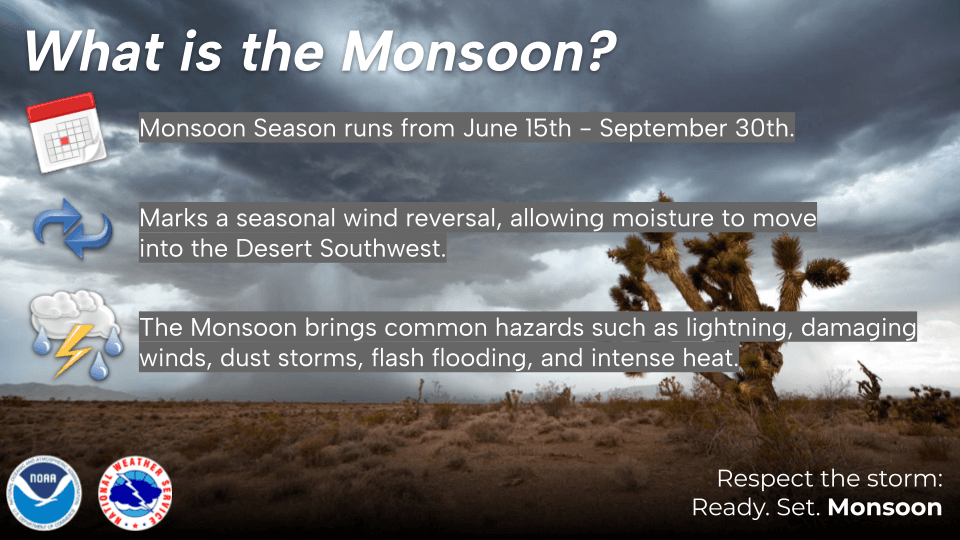
A clear morning in Arizona can still end with hikers stranded in a wash or campers racing to secure tents before a wall of wind and rain hits. Arizona State Parks and Trails used the opening of Monsoon Awareness Week on June 7 to warn that the state’s official monsoon season, which runs from June 15 through September 30, can flip desert trips from routine to dangerous in a matter of hours.
The agency’s advisory was aimed squarely at visitors heading into canyons, river corridors and trail systems across the state. Its message was blunt: stay out of canyons and washes when rain is forecast, never try to cross rushing water, move indoors when thunder starts, secure tents and pop-ups before storms arrive, and pull over if a dust storm cuts visibility. The hazards it listed included severe thunderstorms, lightning, heavy rain, flash flooding, strong downburst winds, dust storms and extreme heat.
Arizona State Parks and Trails said it was supporting Monsoon Awareness Week, June 7-13, with the National Weather Service, the Arizona Department of Emergency and Military Affairs, the Arizona Department of Environmental Quality, the National Park Service and other state and local agencies. The broader public-safety push also steered travelers to the Arizona Emergency Information Network for emergency updates and to hourly air-quality forecasts from the Department of Environmental Quality, reminders that summer trip planning in Arizona now has to account for weather, smoke, dust and flood risk at the same time.
The National Weather Service’s Monsoon Awareness Week campaign also put a spotlight on the kinds of mistakes visitors make when they trust the morning forecast too much. Its daily themes ranged from extreme heat to flash flooding and debris flows, lightning, downburst winds, dust storms and recreation safety. In northern Arizona, the weather service said monsoonal moisture typically does not reach the region until the first week of July, which helps explain why the first half of June can feel deceptively calm even as the hazard window has already opened.

The stakes are not abstract. The National Weather Service says Arizona averages about four flooding fatalities a year, and its historical storm records say the remains of Tropical Storm Norma became the deadliest storm in state history, killing 23 people in central Arizona, including 14 in flash flooding on Tonto Creek near Kohl’s Ranch. Dust storms can also arrive suddenly, with visibility dropping to a quarter-mile or less.
Recent conditions show why the warning keeps coming back each summer. The National Weather Service’s 2025 monsoon review said Arizona saw the third fewest total lightning strikes since 1990, with just over 200,000 strikes, but the season still produced flash flooding, severe storms and dust events. For anyone with a slot canyon hike, river trip or backcountry drive on the calendar, the lesson is the same: in Arizona, a sunny start is not a safety guarantee, and the itinerary has to bend around the storm pattern before the clouds build.
This article was produced by Prism’s automated news system from verified source data, official records, and press releases, then run through automated quality and moderation checks before publishing. The system is built and supervised by the people who set the standards it runs under. Read our full AI policy.
Did this article answer your question?