Arizona’s Highline Trail emerges as a premier bikepacking route
Arizona’s Highline Trail is no casual day ride: the 63-mile point-to-point singletrack now reads like a true Southwest bikepacking epic, with history and logistics to match.
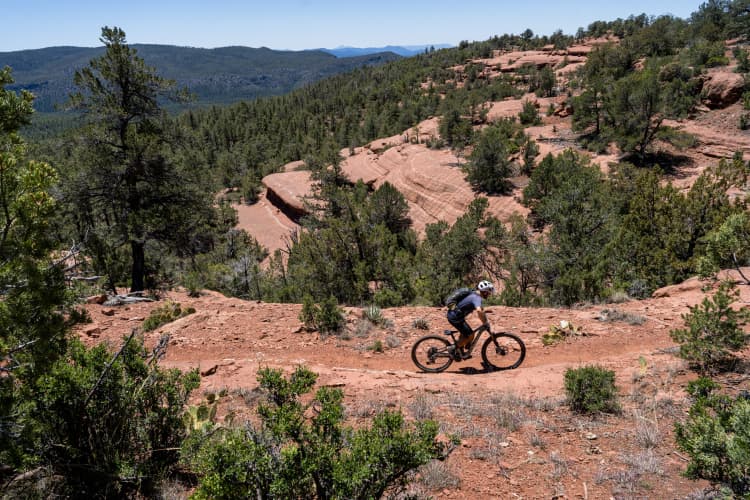
If you have been looking for a ride that feels bigger than a standard loop, the Highline Trail in Payson delivers that shift the moment you start planning it. This is 63 miles of point-to-point singletrack through rugged country below the Mogollon Rim, where springs, streams, forested ridges and rock outcroppings replace the baked-desert stereotype many riders bring to Arizona. The result is a route that asks for shuttle planning, fitness and a bikepacking mindset from the start.
Why the Highline feels like a real epic
What makes the Highline stand out is not just mileage, but format. So many famous Southwest routes mix dirt roads, jeep tracks and short trail sections; the Highline is being talked about as true uninterrupted singletrack, which is exactly why it lands differently for serious riders. That point-to-point shape makes it feel less like a big day out and more like a backcountry crossing, the kind of ride that rewards patience and punishes improvisation.
The scenery helps explain the buzz. Instead of a one-note desert traverse, you move through a landscape that feels unexpectedly lush for Arizona, with constant changes in texture and elevation. One minute you are threading forested ridges and catching views from below the rim, the next you are past stone towers and rock outcroppings that make the trail feel carved rather than simply routed.
That mix of remoteness and variety is why the Highline keeps getting grouped with longer-name routes like Kokopelli and White Rim. It also helps broaden the map for Southwest riders who want more than national park pavement or a quick weekend spin. If you are after a long-form public-lands adventure in central Arizona, this is the kind of trail that can anchor the trip.
A trail with a long history and a newer identity
The Highline’s recent bikepacking fame rests on a trail with deep roots. The U.S. Forest Service says it was established in 1870 and originally used to travel between homesteads and to attend school in Pine. That history matters, because it reminds you this is not a route invented for modern adventure marketing, but one that has carried local movement for well over a century.
The Forest Service also designated the Highline a National Recreation Trail in 1978, and the section between Washington Park Trailhead and Pine Trailhead is part of the Arizona National Scenic Trail. That larger connection gives the route extra weight for endurance riders, especially if you already know the Arizona Trail as an 800-mile non-motorized line from Mexico to Utah. The Highline fits into that longer system while still standing on its own as a destination.
Just as important, the trail has been through a serious restoration effort. The Forest Service says substantial rerouting and rebuilding happened in 2022 to improve sustainability and user experience, which helps explain why the route now feels like more than a local curiosity. Hermosa Tours says the Highline Trail Restoration Initiative began in 2020 with the National Forest Foundation, Tonto National Forest and community partners, and that about $1 million was raised to complete extensive reroutes, including work supported by the Rim Country Mountain Biking Association.
What the mileage means when you actually ride it
The newest attention matters because it changes how people think about the ride. A recent Singletracks feature describes the Highline as a 63-mile point-to-point singletrack route, and earlier reporting in 2024 had already pegged it as a rebuilt roughly 60-mile trail with the potential to turn Payson into a bikepacking destination. That progression tells you the trail is moving from local lore into the national conversation one serious ride at a time.
For your own planning, the key fact is that this is not a casual out-and-back. Hermosa Tours says its Highline Trail mountain bike tour covers 83 miles total, including logistics, and the writer of the recent feature rode it over three days with the company. That is the clearest signal yet about how the route wants to be ridden: not rushed, not improvised, and not treated like a normal day loop.
A few decisions separate a great Highline trip from a miserable one:
- Treat it as a multi-day bikepacking route, not a fitness lap.
- Build your plan around a shuttle or other point-to-point logistics.
- Expect remote trail travel, which means your gear choices matter as much as your legs.
- Leave enough room in your schedule to ride at a steady pace instead of chasing a finish line.
The route’s backcountry character is part of the appeal, but it also means you should be realistic about who it suits. You want to be comfortable with long singletrack days, self-supported travel and the physical strain that comes with a remote ride. If your idea of mountain biking is a quick spin from town, the Highline will feel like a lot. If you want a true expedition, it finally has the trail shape to match the ambition.
Who should put it on the calendar
The Highline belongs on the list of riders who already understand that a point-to-point trail changes the entire tone of a trip. You need enough fitness to enjoy the scenery instead of merely surviving it, and enough planning discipline to treat shuttle, gear and pacing as part of the ride. That is what makes the route different from a standard day ride: the logistics are not incidental, they are part of the adventure.
It also helps to think of the Highline as a route for riders who like their big days with some history attached. Between the 1870 origin story, the old homestead and school access, the cattle-drive heritage noted by Hermosa Tours and the recent restoration work, the trail carries a sense of continuity that many newer bikepacking lines do not. You are not just riding a long path through Payson, you are tracing a corridor that has been reworked, reused and reimagined for generations.
That is why the Highline is emerging as more than another long trail on the map. Once you understand its 63-mile point-to-point shape, the three-day rhythm it naturally invites and the logistics it demands, the ride stops looking like a casual outing and starts looking like the kind of Southwest epic people plan around.
This article was produced by Prism’s automated news system from verified source data, official records, and press releases, then run through automated quality and moderation checks before publishing. The system is built and supervised by the people who set the standards it runs under. Read our full AI policy.
Did this article answer your question?