Colorado rafting season adapts to lower runoff with narrower rafts
Lower runoff is reshaping Colorado rafting: Clear Creek has already shifted to beginner trips, and outfitters are moving to narrower boats for a thinner water year.

Clear Creek Rafting Company had already started beginner trips by May 12, and it was not waiting around for a bigger runoff that may not come. The company also bought narrower rafts, saying they were designed to float in low water levels, a clear sign that Colorado outfitters are building for 2026 as it is, not as they hoped it would be.
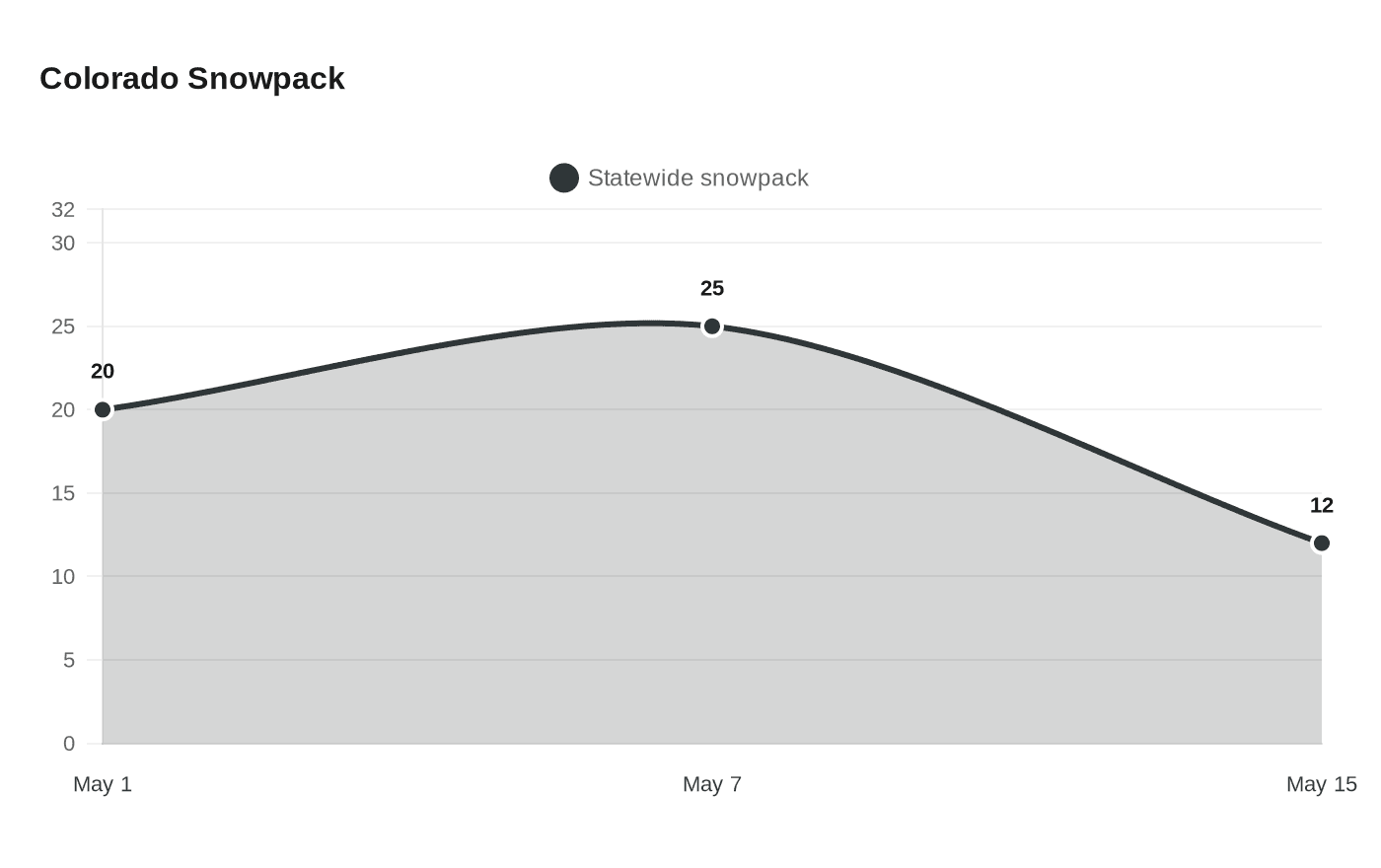
The numbers explain why. The Natural Resources Conservation Service said Colorado’s May-July runoff forecast was just 24 percent of median statewide, with western slope runoff running at 22 to 24 percent of median. The South Platte basin was forecast at 37 percent of median and the Arkansas at 33 percent. By May 15, statewide snowpack had fallen to 12 percent of median, after NRCS reported 20 percent on May 1 and 25 percent on May 7. The agency said Colorado’s water year was shaped by an anomalously early snowpack peak and a rapid melt driven by record March temperatures.
For rafters, that does not mean the season is off. It means the trip choice matters more. The Colorado River Outfitters Association, which represents about 45 licensed professional river rafting outfitters, said Western Slope rivers had earlier peak flows and should stay favorable through late May, June and July before tapering into mid-summer. Clear Creek was expected to offer consistent conditions through June and to hold steady early to mid-summer. The association also pointed to the Colorado River, helped by reservoir releases, and the Cache la Poudre River as places where rafting could still deliver quality trips despite the lean water year.
That shift cuts both ways. Low water can make family rafting more accessible because high water often delays those trips, but the same conditions can leave adrenaline seekers wanting more push and splash than a high-snowpack season would deliver. AVA Rafting’s Duke Bradford said the Idaho Springs stretch of Clear Creek runs predominantly on rain later in the season, which makes it less vulnerable to drought than snowpack-driven rivers elsewhere in Colorado. That matters for anyone deciding between a mellow first trip, a mid-summer family float, or a harder-running section that may feel softer than usual.
Denver7 reported that CROA expects about 500,000 people to ride the rapids this season, and that demand will land differently depending on where and when travelers book. In a year like this, the smartest move is to match the river to the water, not the other way around, because Colorado rafting is still open for business even if the flow pattern has changed the ride.
This article was produced by Prism’s automated news system from verified source data, official records, and press releases, then run through automated quality and moderation checks before publishing. The system is built and supervised by the people who set the standards it runs under. Read our full AI policy.
Did this article answer your question?