Goblin Valley search and rescues surge as unprepared hikers risk flash floods
Goblin Valley rangers were called out almost every day as flash floods, heat and technical rescues stacked up in crowded slot canyons.
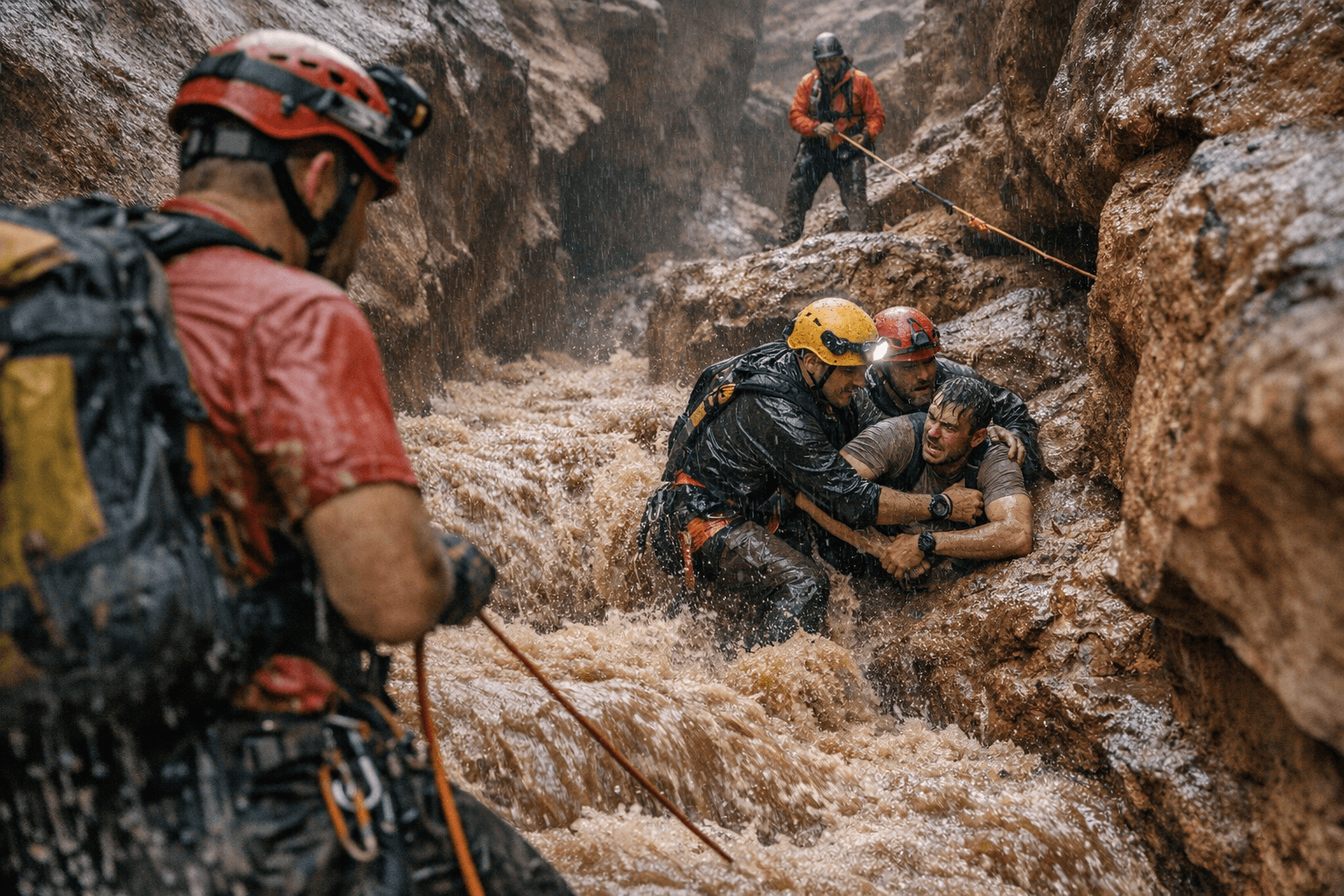
Almost every day during the week of April 11, Goblin Valley State Park rangers were pulled into search-and-rescue incidents, a pace that could start slowing help when another slot-canyon emergency hits. The run of calls included a flash-flood rescue in Little Wildhorse Canyon, a separate rescue at Little Wildhorse, and a technical rescue in Goblin’s Lair, a pattern that shows how quickly casual visits can turn into long, complicated operations.
The most sobering case came on April 1, when a group of hikers was rescued after being caught in flash flooding in Little Wildhorse Canyon just outside the park boundary. Officials said several people were washed down the canyon and called it a “terrifying ordeal.” The hikers later hiked out to the trailhead and were treated for minor injuries. Goblin Valley officials said there had been an 80% chance of rain and heavy clouds that day, a reminder that the danger in a slot canyon can arrive from storms far upstream, even when the sky overhead looks calm.
That canyon is part of the problem and part of the appeal. Little Wildhorse Canyon is rated family-friendly and pretty easy, officials said, yet it is also the source of many rescues every year. The Bureau of Land Management says Little Wild Horse and Bell Canyons are among the most popular slot canyons in Utah, and the full loop runs about eight miles and usually takes close to four hours. The route is family-friendly, but it still includes scrambling, route-finding and exposure that can overwhelm visitors who arrive without a plan.
The practical mistakes are clear. People are heading into slot canyons when rain is possible. They are underestimating how fast a storm can turn dry rock into a flood channel. They are starting the Little Wild Horse and Bell Canyon loop without understanding the route, and they are showing up without enough water, maps, extra clothes or a first-aid kit. Utah State Parks warned on April 12 that heat exhaustion and heat stroke were daily risks at Goblin Valley, and it urged visitors to hike early and carry at least 32 ounces of water per person per hour.
Goblin Valley’s draw is still enormous. The Valley of Goblins spans nearly three square miles and the park offers six miles of hiking trails, all inside a landscape first protected as a state reserve in 1954 and made a state park on August 24, 1964. But with repeated rescues in Little Wildhorse and elsewhere, the message from the field is blunt: in the San Rafael area, a good plan is now part of the trail.
This article was produced by Prism’s automated news system from verified source data, official records, and press releases, then run through automated quality and moderation checks before publishing. The system is built and supervised by the people who set the standards it runs under. Read our full AI policy.
Did this article answer your question?