New Mexico itinerary blends Route 66, pueblos and scenic drives
When the headline parks are off the table, New Mexico turns the detour itself into the destination, with Sandia Pueblo, Route 66, and the Turquoise Trail stitched into one flexible road trip.
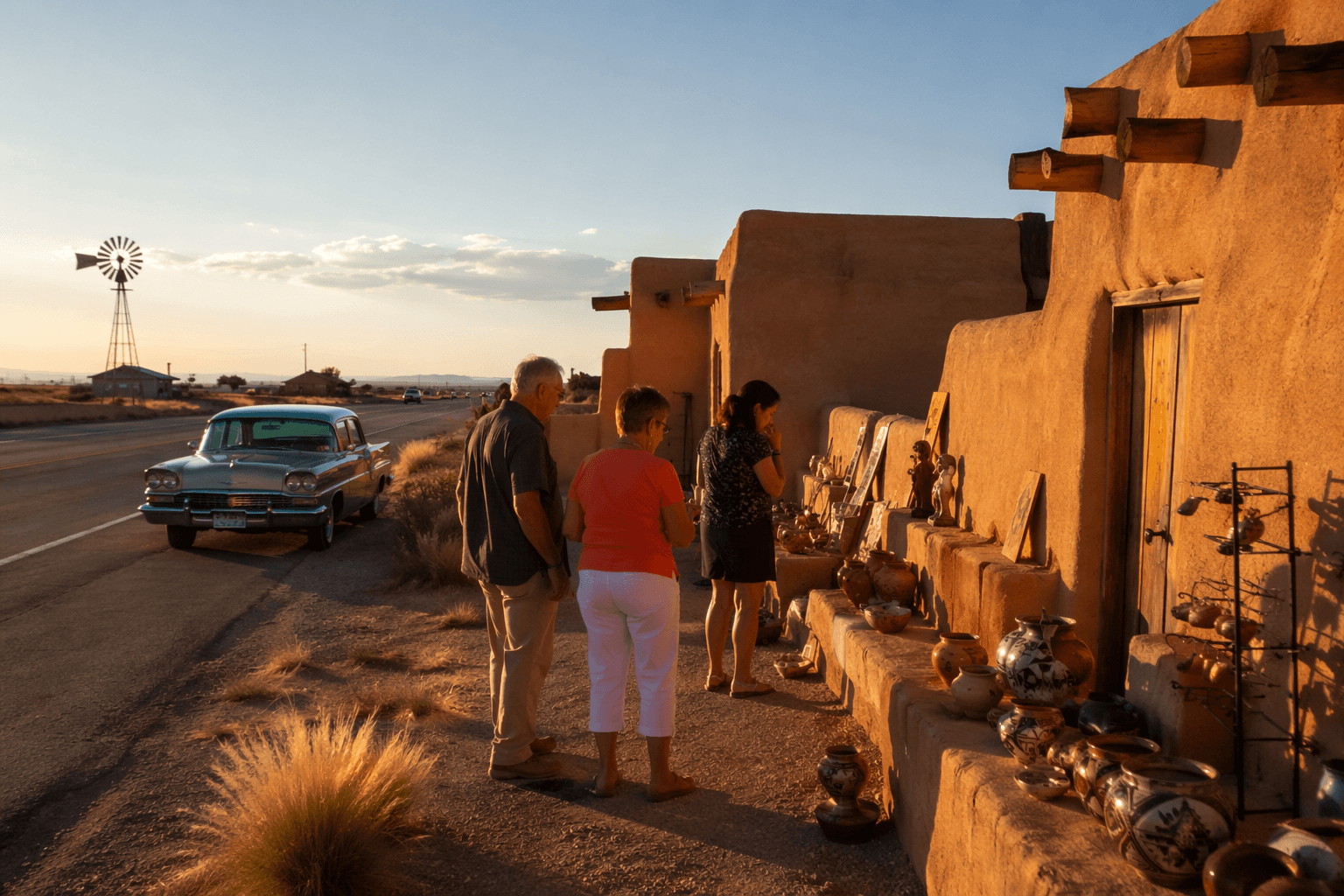
The route begins with the bison herd behind Bien Mur Indian Market on Sandia Pueblo, then circles Sandia Peak over three days with food stops, cultural stops, and stretch breaks folded in. When the headline parks are off the table, New Mexico still hands you a road map worth taking. The state’s itinerary page swaps a single fixed plan for city streets, scenic drives, tribal communities, museums, forest roads, and Route 66 history, which makes it ideal for travelers who want options instead of a dead end.
A three-day loop built for a Plan B that feels like Plan A
The central New Mexico itinerary is designed for travelers who may have been aiming for Petroglyph National Monument, Valles Caldera National Preserve, or Salinas Pueblo Missions National Monument. Instead of forcing the trip to collapse when one marquee stop is unavailable, it builds a route around Sandia Peak that mixes urban streets, mountain views, national forest edges, and Historic Route 66 in one continuous drive. From Sandia Pueblo, the drive runs south along Tramway Boulevard before using Central Avenue, NM 14, NM 536, NM 165, and Camino del Pueblo to thread the day together.
Greenside Café, Tinkertown Museum, Balsam Glade Picnic Area, Sandia Man Cave, Blade’s Bistro, and Sandia Resort & Casino all appear as built-in anchors, so the loop has places to eat, rest, and reset instead of feeling like a string of overlooks. Sandia Peak Aerial Tramway rises 2.7 miles to an observation deck atop 10,378-foot Sandia Peak.
The bison herd sets the tone before the road even really starts
The first stop is not a monument or a museum. It is the bison herd on Sandia Pueblo land, just off Tramway Road next to Bien Mur Indian Market, and Sandia Pueblo calls it both a tourist attraction and an educational aid for younger generations.
Sandia Pueblo’s role in the region goes far beyond the pull-off. The Pueblo of Sandia says it employs over 2,000 residents of the Albuquerque area.
Traveling through Pueblo country means traveling with respect
New Mexico’s visitor guidance is direct about how to behave on Pueblo land. Call ahead before visiting, because tribal leaders may restrict access for private ceremonies. Many pueblos are open only during daylight hours, homes are private, and some charge entry fees.
The photography rules are just as important. Many pueblos require permits for photography, sketching, or painting, and some prohibit photography entirely. Tribal dances are religious ceremonies, not public performances, so silence is mandatory during them. Visitors should not cross dance plazas or applaud, and should understand that what looks like a performance to outsiders is often a sacred community event.
New Mexico has 19 Pueblo tribes, each an independent sovereign nation.
Tinkertown gives the route its folk-art heart
Tinkertown Museum is one of the itinerary’s most memorable stops. Opened in 1983, it was the life work of artist and wood carver Ross Ward, and New Mexico Tourism calls it one of the state’s premier folk-art environments. The attraction includes an animated miniature Western Town and a Three-ring Circus, which makes it feel less like a standard roadside museum and more like a hand-built world that grew from one person’s imagination.
It is also practical to visit. Tinkertown is seasonal, open from April to November, with admission listed at $6 for adults and $3 for kids.

The Turquoise Trail broadens the map beyond the obvious stops
The Turquoise Trail Scenic and Historic Area stretches across 15,000 square miles in central New Mexico and links Albuquerque and Santa Fe, so it functions less like a single road and more like a connective tissue between landscapes and stories. Its stops include Golden, Madrid, and Cerrillos, and the corridor folds in Sandia Crest, the Cibola National Forest, and Tinkertown Museum as part of the same larger experience.
The history here runs deep. The corridor’s layered past includes prehistoric peoples, Spanish missionaries, outlaws, Confederate soldiers, and Kit Carson’s Long Walk.
Route 66 still gives New Mexico its own road-trip mythology
Route 66 is the other backbone here, and New Mexico has one of the richest stretches in the country. The U.S. National Park Service puts the state’s section at about 535 miles, crossing arid rangeland, mesas, railroad towns, tribal communities, and national monuments. Before 1937, the highway followed a north-south route through Santa Rosa, Santa Fe, Santo Domingo Pueblo, Albuquerque, Los Lunas, and Isleta Pueblo.
The 1937 realignment shifted it to an east-west path through Moriarty, Albuquerque, and Laguna Pueblo, shortening the cross-country journey by about 100 miles and earning the nickname “Hannett’s Joke.” The New Mexico Route 66 Association was formed in 1989, the road became a National Scenic Byway in 1994, and the National Park Service says its Route 66 Corridor Preservation Program has supported 25 cost-share grant projects in the state. New Mexico Tourism says 2026 marks the 100-year anniversary of Route 66.
This article was produced by Prism’s automated news system from verified source data, official records, and press releases, then run through automated quality and moderation checks before publishing. The system is built and supervised by the people who set the standards it runs under. Read our full AI policy.
Did this article answer your question?