Southeast Utah AstroFest returns with dark-sky programs across Moab
AstroFest spread ranger-led telescope nights from Moab to Arches, giving travelers a ready-made dark-sky road trip with dates, trail days and sunset timing to plan around.

Southeast Utah’s dark skies turned into a moving itinerary this year, with AstroFest stretching from Moab to Arches and Canyonlands and giving visitors a reason to build an entire road trip around the night. The fifth annual Southeast Utah AstroFest ran June 4 through June 7, with programs clustered across public lands that already anchor daytime hiking and sightseeing in the Four Corners region.
The festival opened June 4 at the Moab Information Center with Ranger Kale Wernsing’s 6 to 7 p.m. talk, Night Skies and National Parks: Shedding Light on the Dark. From there, the schedule moved well beyond a single lecture. On June 5, Canyonlands National Park’s Island in the Sky district hosted a dark-sky program from 9:30 to 11:30 p.m. that included telescope viewing and constellation tours, the kind of after-hours programming that lets visitors squeeze one more stop into a Moab-area itinerary before heading back to camp or town.
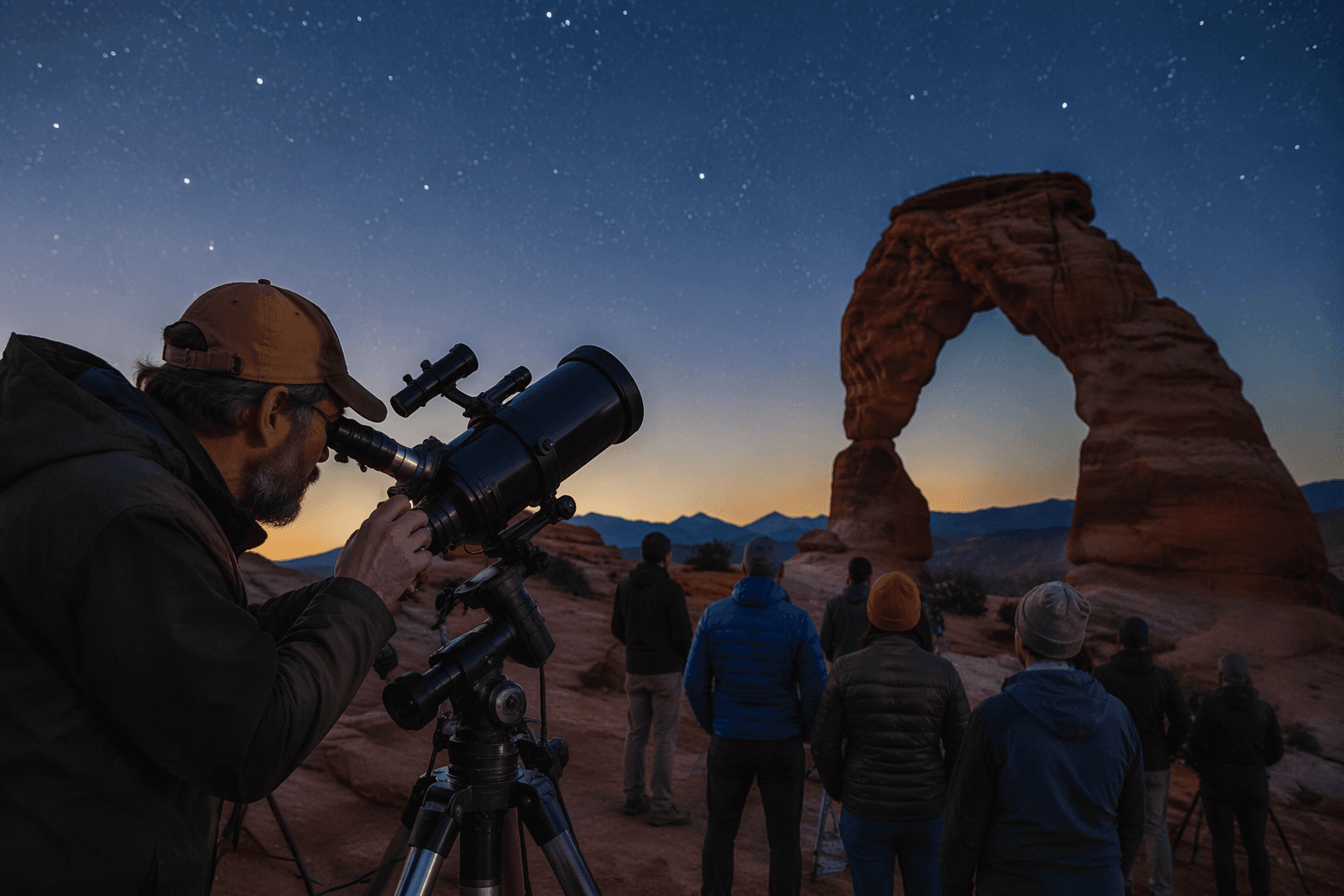
AstroFest also spread into the wider public-land network that makes southeast Utah such a strong base for adventure travel. The lineup reached Utahraptor State Park, Canyonlands’ Needles district, Dead Horse Point State Park, Natural Bridges National Monument and Arches National Park, turning the festival into a route rather than a single venue. That matters for travelers pairing night skies with daytime hikes, because the event naturally favors people already moving between park units and looking for a reason to stay out after sunset.
The program mix showed how the region is packaging astronomy as part of the outdoor experience. Arches hosted The Navajo Cosmos with Ravis Henry at the Arches Visitor Center on June 7 at 8 p.m., while the broader schedule also included family activities, arts and crafts at Dead Horse Point, and other ranger-led dark-sky programming. Canyonlands National Park, a member of the Colorado Plateau Dark Sky Cooperative, sits inside a network established in 2012 to protect natural darkness across the plateau.
The setting has real pedigree, too. Natural Bridges National Monument became the world’s first International Dark Sky Park on March 6, 2007, and Dead Horse Point State Park was recognized as an International Dark Sky Park in 2016. Utah State Parks says Dead Horse Point closes at 10 p.m., a detail that matters when an evening program runs long and the drive out has to happen under a sky full of stars. NPS says night-sky ranger programs are often among the most popular ranger-led activities in national parks, and AstroFest showed why: in southeast Utah, the best campsite conversation sometimes starts after dark.
This article was produced by Prism’s automated news system from verified source data, official records, and press releases, then run through automated quality and moderation checks before publishing. The system is built and supervised by the people who set the standards it runs under. Read our full AI policy.
Did this article answer your question?