Spring Break Hikers Warned of 92°F Heat on South Kaibab Trail
Phantom Ranch is forecast to hit 92°F this weekend while the South Rim stays 20-plus degrees cooler, and the South Kaibab's trailhead water spigot is currently offline.
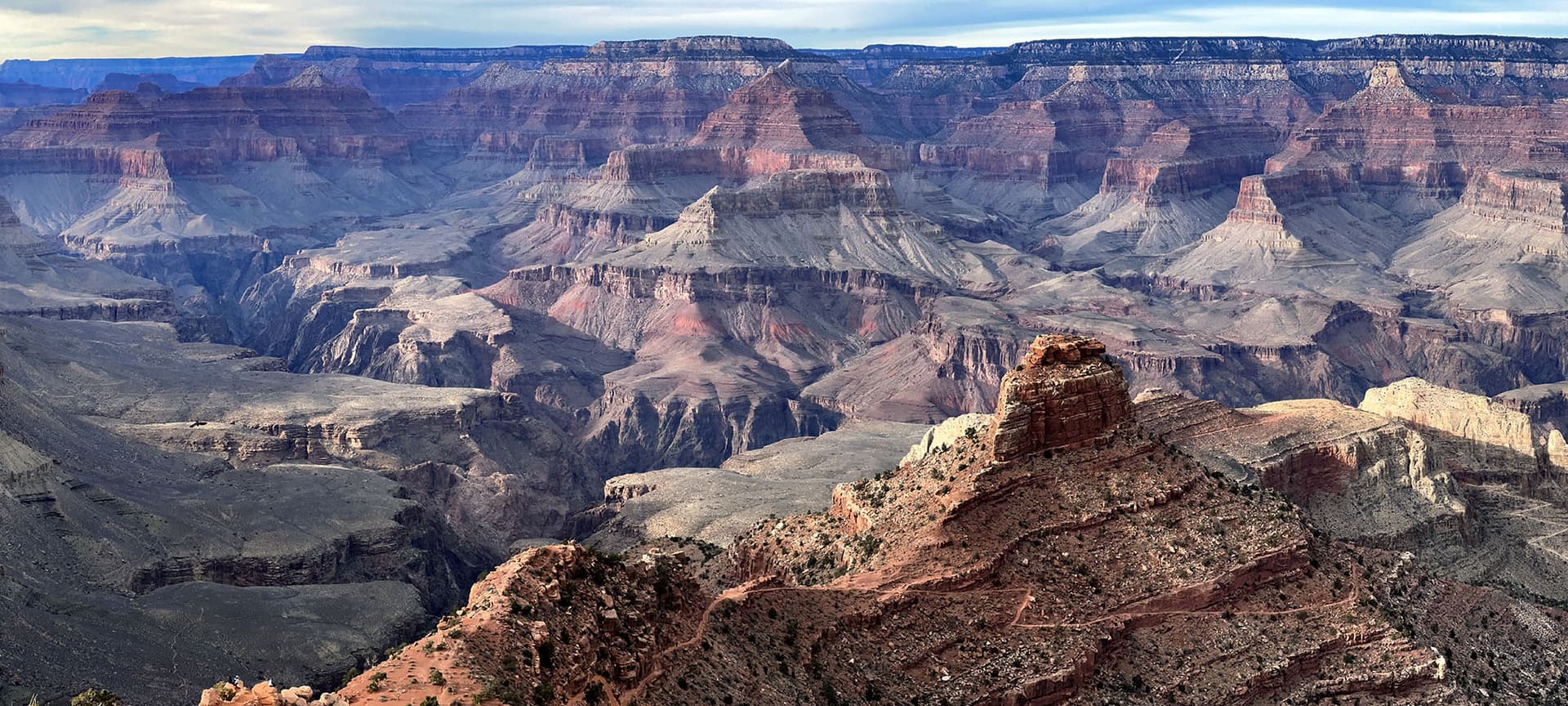
Phantom Ranch, at the base of the South Kaibab Trail, is forecast to reach 92°F this weekend while the South Rim sits roughly 20 to 25 degrees cooler. That gap between where hikers step off the shuttle bus and where the trail bottoms out is not scenic context. It is the condition that drives Grand Canyon rescues, and this spring break it arrives compounded: the water spigot at the South Kaibab Trailhead is currently offline following a localized pipeline break, and Grand Canyon National Park entered Stage 3 Water Restrictions on April 1 after a separate failure in the Transcanyon Water Pipeline. Every drop for a South Kaibab hike must go into the pack before leaving the rim.
The trail opens at the Chimney switchbacks, a steep and narrow descent that moves fast and feels easy heading down. That ease is the first hazard. The National Park Service warns that the grade is deceptive on the way down and that the trail's continuous panoramic views make it effortless to descend further than planned. The return trip takes roughly twice as long as the descent. On a waterless trail with a 92°F forecast at the canyon floor, misjudging that ratio becomes a medical emergency.
For anyone still committed to the South Kaibab this weekend, the turnaround calculus is straightforward. Cedar Ridge, at 1.5 miles down and 3 miles roundtrip with 1,120 feet of elevation change, is the practical ceiling for a day hike in these conditions. Skeleton Point, at 3 miles down and 6 miles roundtrip with 2,040 feet of elevation change, is the NPS-designated maximum for day hikers and requires a direct conversation with a park ranger before attempting. The NPS is explicit that hiking below Skeleton Point as a day trip is not recommended regardless of conditions. Start at dawn to bank as much cool air as possible, and begin heading back up no later than mid-morning.
Pack water alongside electrolytes or salty snacks. The NPS lists hyponatremia, a sodium-depletion condition that develops when hikers drink large volumes of plain water without replacing lost sodium, alongside heat exhaustion and heat stroke as the documented outcomes of canyon heat exposure.
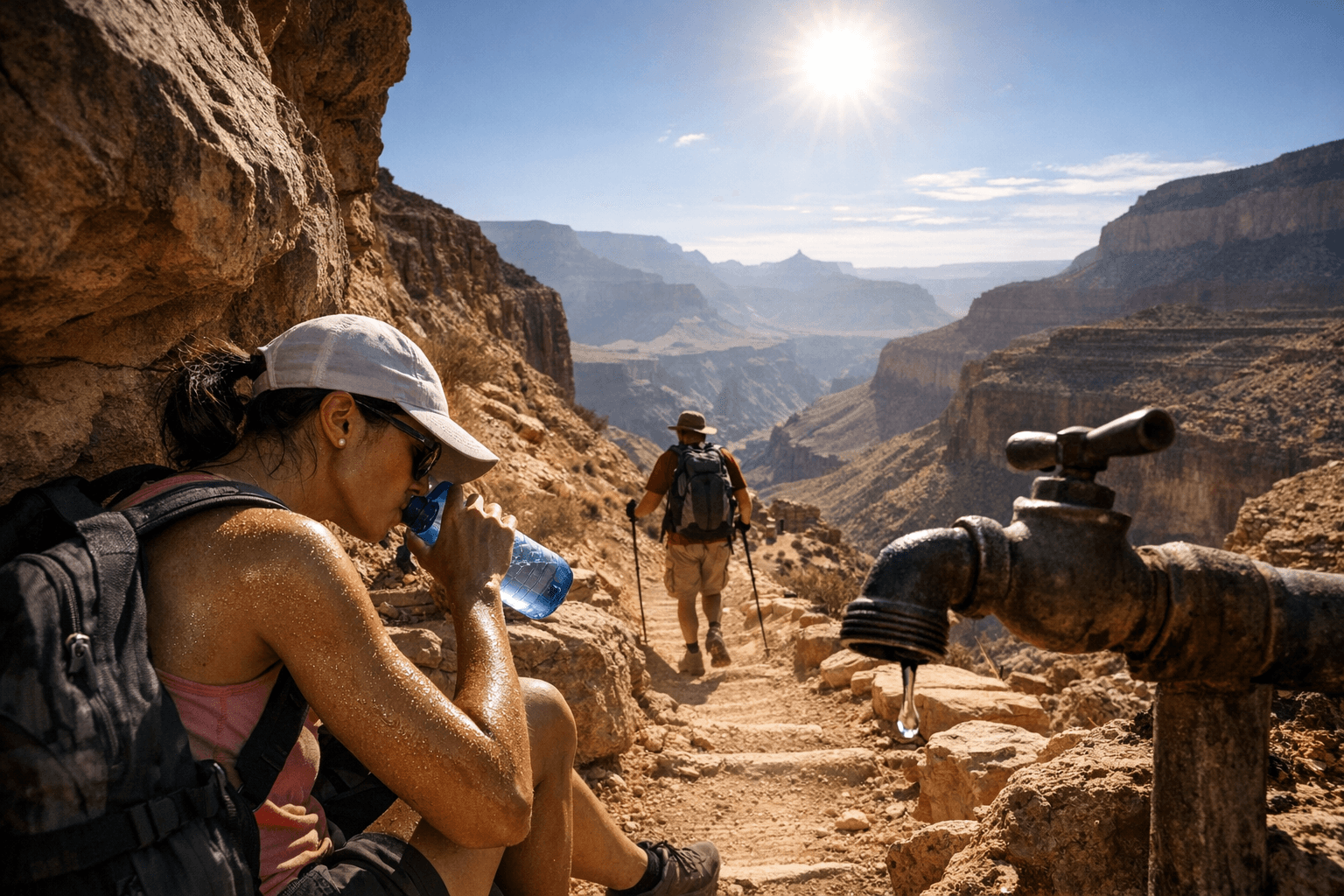
Two alternatives give spring break hikers the canyon without the thermal risk. The paved Rim Trail runs along the South Rim with no elevation change and unobstructed views of the inner canyon. For hikers who want to go below the rim, Bright Angel Trail is the better option: it carries water stations at its Mile-and-a-Half Resthouse and Three-Mile Resthouse during the season and is the trail the NPS recommends for same-day out-and-back hikes. A roundtrip to the 1.5-Mile Resthouse is 3 miles; extending to the 3-Mile Resthouse doubles it to 6, with water access at both stops.
Grand Canyon National Park's Key Hiking Messages page carries real-time water availability, trail closures, and inner canyon weather forecasts updated continuously through the spring season. It is the one resource worth pulling up and screenshotting before leaving the rim, and the one rangers will reference if you need to call for help on the way back up.
This article was produced by Prism’s automated news system from verified source data, official records, and press releases, then run through automated quality and moderation checks before publishing. The system is built and supervised by the people who set the standards it runs under. Read our full AI policy.
Did this article answer your question?