Uinta-Wasatch-Cache road update flags summer access delays in northern Utah
Logan Canyon delays and Mirror Lake fee rules are the summer bottlenecks to plan around, with road work, pass requirements, and slow canyon drives shaping every northern Utah loop.
If your northern Utah weekend runs through Logan Canyon and Mirror Lake, the slowdowns start before the trailhead. The Uinta-Wasatch-Cache National Forest is flagging road work, traffic controls, and fee-site rules all at once, which means the smartest summer loop is the one you plan around bottlenecks instead of reacting to them on the shoulder.
Start with the canyon that will slow you down
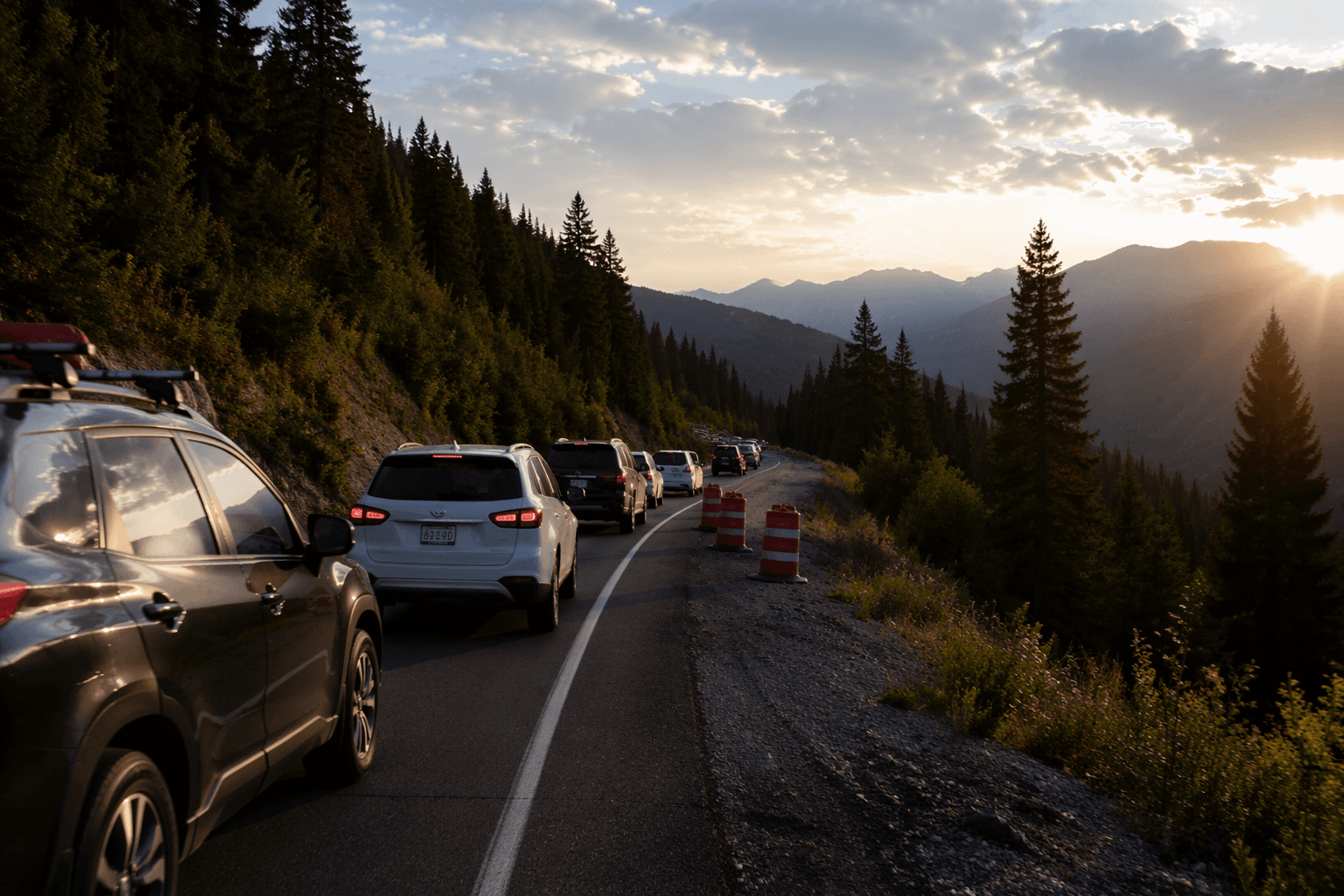
The biggest interruption sits in the Logan Ranger District, where Utah Department of Transportation is installing a fiber optic cable along Highway 89 in Logan Canyon. The forest says to plan for delays, one-way traffic, temporary signals, an uneven road surface, and heavy equipment, support vehicles, and crew members along the roadside. The project starts May 5 and is expected to last 18 months, so it will reach into late 2026 and overlap more than one hiking and camping season.
That timeline matters if you are trying to pack a hike, a campground night, and a scenic drive into one weekend. Logan Canyon is one of the state’s best-known mountain corridors, but with crews and traffic control in the mix, it is no longer the kind of road you can assume will move quickly. Build extra time into the first leg of your trip, especially if you need to be somewhere by a trailhead check-in, campsite arrival window, or afternoon turnaround.
Treat Blacksmith Fork as a second pinch point, not a side note
The same forest-road conditions page also points to construction in Blacksmith Fork Canyon on Highway 101, where a power line is being buried east of AJ Peterson Park and moving toward Hardware Ranch. The forest notes that all dates are subject to change based on weather, flooding, road conditions, public health, and safety concerns, which is exactly the kind of fine print that can turn a casual detour into a lost hour.
If you are trying to thread both canyons into one outing, sequence matters. Use Logan Canyon and Highway 89 with the assumption that traffic may crawl, then decide whether Blacksmith Fork Canyon still fits your daylight and fuel budget. The lesson is simple: in this part of northern Utah, a canyon drive is part of the outing, not just the way to the outing.
Buy your Mirror Lake pass before you roll out of town
Mirror Lake Highway adds a different kind of friction, and it costs money instead of minutes. Fee sites along the highway require either a Uinta-Wasatch-Cache Pass or an Interagency Pass, and a recreation pass is required for all vehicles parked at those fee sites. Chicken Creek East at Strawberry Reservoir also now requires a recreation pass, so do not assume the rules stop at the more obvious mountain pullouts.
The easiest move is to handle the pass stop before you enter the busy mountain corridor. Passes are sold at the Heber-Kamas Ranger District Office, Kamas Food Town, Kamas Chevron, Samak Smoke House, and self-serve fee stations along Mirror Lake Highway. If you wait until you are already threading trailheads and campground entrances, you are turning a simple check-in into an extra stop.
- Uinta-Wasatch-Cache Pass or Interagency Pass: required at Mirror Lake Highway fee sites
- Recreation pass: required for all vehicles parked at those fee sites
- Chicken Creek East at Strawberry Reservoir: now under recreation-pass requirements
- Pass sale points: Heber-Kamas Ranger District Office, Kamas Food Town, Kamas Chevron, Samak Smoke House, and self-serve stations along Mirror Lake Highway
Plan Mirror Lake as a destination, not a drive-by
The Mirror Lake Scenic Byway is described by the Forest Service as one of the most popular mountain routes in Utah, and that reputation shows up in how people use it. Heading east from Kamas through the national forest, the road rises out of farm and ranch land into mountain terrain with multiple access points to the High Uinta Wilderness. That is exactly why the fee-site rules and vehicle requirements matter so much: the highway is doing double duty as a scenic drive and a gateway to trailheads, campgrounds, and alpine access.
For a summer loop, Mirror Lake works best when you treat the road as the anchor for your middle day, not something you squeeze in on the way to somewhere else. Start with the pass stop in Kamas, then head uphill once you know your paperwork is squared away. That keeps you from burning daylight at a fee station when you would rather be on a trail or settling into camp.
Remember how big this forest is, and why the rules feel so specific
The Uinta-Wasatch-Cache spans 2.2 million acres in northern Utah and southwestern Wyoming and receives about 9 million visitors annually, so the road page is doing more than posting inconvenience notes. It is the forest’s way of steering a huge volume of summer traffic onto roads and trails that are especially fragile in spring, when natural resources are wet. The page also reminds visitors that unpaved roads and OHV trails are particularly vulnerable, and that visitors are responsible for knowing which roads and trails are open to motorized use.
That is the kind of reminder hikers, mountain bikers, and off-road travelers often ignore until they are staring at a washed-out spur or a closed gate. In a forest this large and this busy, “I thought it was open” is not a plan. Check before you commit to a side road, especially if your route depends on an unpaved connector or an OHV trail that could change the whole shape of the day.
The bigger infrastructure picture explains the pace
The Logan Canyon fiber project is not just a roadside nuisance. KSL reported that the work involves about 30 miles of fiber optic cable between Logan and Garden City, with a $25.4 million price tag aimed at improving safety and allowing for the installation of a cellphone tower. Earlier coverage also said about $21 million had already been secured for Logan Canyon cell service, which frames the project as a public-safety build as much as a utility upgrade.
That context also helps explain why long construction windows are becoming part of northern Utah travel planning. UDOT completed a $12.17 million State Park to Rock Cut passing-lanes project on US-189 in Wasatch County in March 2026, another reminder that these mountain corridors are being rebuilt and reworked in stages. On the ground, the practical takeaway is the same one that opens this route: the summer loop still works, but only if you respect the bottlenecks, buy the pass before you need it, and let the road set your order of operations instead of the other way around.
This article was produced by Prism’s automated news system from verified source data, official records, and press releases, then run through automated quality and moderation checks before publishing. The system is built and supervised by the people who set the standards it runs under. Read our full AI policy.
Did this article answer your question?